



 10 Min
 In Learning

Follow this topic

Bookmark

Record learning outcomes
Looking after your legs and feet is just as important as taking care of any other part of the body. However, people typically do not pay enough attention to this part of the body until there is a problem. Pharmacy teams need to keep up to date on how best to help patients manage, treat and avoid common leg and foot conditions.
Leg cramps
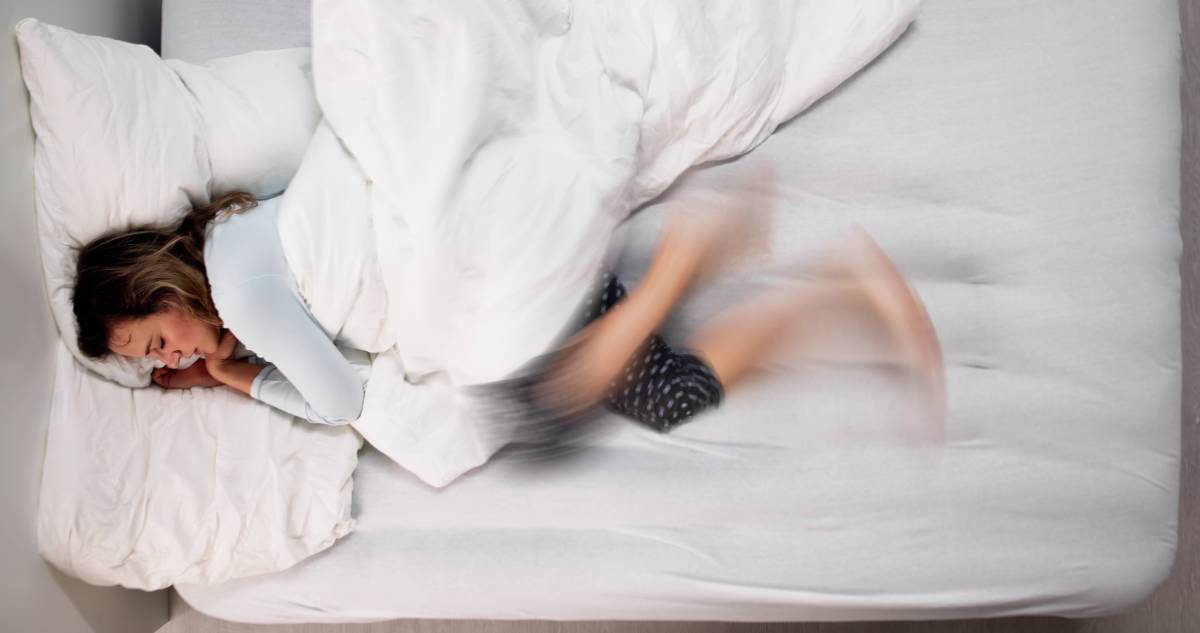
Leg cramps are a common issue. They often occur at night but can happen at any time. They occur when a leg muscle tightens, resulting in sudden pain that can make it difficult to move.
Cramps can last from a few seconds to 10 minutes and usually affect the calf muscle below the knee at the back of the leg and, less often, muscles in the thighs or feet. People might feel soreness in the muscle for up to 24 hours after the cramp has stopped.
Putting too much strain on muscles during exercise, ageing and pregnancy – usually in the later stages – can all cause leg cramps. Certain medications (such as statins) and dehydration can also cause cramps. When experiencing cramp, stretching and massaging the muscle may help to relieve the pain. Taking paracetamol or ibuprofen can help to relieve muscle soreness afterwards.
To help reduce cramps, patients can do regular calf-stretching exercises. People who sleep on their back are advised to point their toes upwards and prop the soles of their feet against a pillow placed at the end of the bed. Those who sleep on their front can hang their feet over the end of the bed to help stop the muscles in their calves from contracting and tensing. Sheets and blankets should be kept loose.
Leg cramps may also be a symptom of a more serious underlying health condition. Cramp in the legs and/or buttocks when walking or exercising that stops after resting could indicate intermittent claudication, which is a common symptom of peripheral arterial disease (PAD).
Other symptoms of PAD can include brittle, slow-growing toenails, hair loss on the legs and feet, weakness or numbness in the legs, and ulcers on the feet and legs that do not heal. Patients with PAD affecting their legs and feet can be at risk of angina, stroke or heart attack. Patients who keep experiencing painful cramps in their lower legs while walking are advised to see their GP.
Leg cramps can also be caused by neurological conditions such as motor neurone disease or peripheral neuropathy, liver disease, or some types of bacterial infection, such as tetanus.
Patients should be referred to their GP if their leg cramps are frequent, interfere with sleep,
affect their quality of life, or if they have swelling or numbness in their legs. Similarly, they should see their GP if their leg muscles are shrinking or becoming weaker.
Urgent GP referral is required if leg cramps last longer than 10 minutes and do not improve when the patient starts moving – or if they develop after contact with mercury, lead or dirt that has entered a cut.
Restless legs syndrome
Also known as Willis-Ekbom disease, restless legs syndrome (RLS) is a neurological disorder in which people have a strong urge to move their legs to stop uncomfortable or unusual sensations such as tingling, throbbing and itching. The condition is also regarded as a sleep disorder, as it usually interferes with sleep. It can also affect other parts of the body, such as the arms, torso and head.
The charity RLS-UK says that up to 10% of people are thought to be affected by RLS. About one in five pregnant women also develop the condition, usually in late pregnancy, and symptoms often continue after childbirth.
There is no known cause for primary or idiopathic RLS, but it is often genetically linked.
It usually starts slowly before the age of about 40-45 years and is often progressive.
With secondary RLS, the onset is often sudden and is typically related to another medical condition, such as iron deficiency anaemia, or the use of certain drugs. It is common for people living with RLS to be misdiagnosed or not diagnosed at all.
The International Restless Legs Syndrome Study Group (IRLSSG) has proposed a set of RLS diagnostic criteria:
- A need to move the legs, usually accompanied or caused by uncomfortable, unpleasant sensations in the legs
- The need to move and unpleasant sensations are exclusively present or worsen during periods of rest or inactivity such as lying or sitting
- Symptoms are partially or totally relieved by movement such as walking or stretching
- Symptoms are generally worse or exclusively occur in the evening or night
- Symptoms are not solely accounted for by another condition such as leg cramps, positional discomfort, leg swelling or arthritis.
Symptoms vary in severity and, in many cases, begin when a person goes to bed. While there is presently no cure for RLS, patients can be advised about making lifestyle changes. There are also treatments to help manage the condition e.g. pregabalin or gabapentin (see later).
RLS is also linked to chronic diseases such as kidney disease, diabetes, Parkinson’s disease, peripheral neuropathy, fibromyalgia, rheumatoid arthritis and thyroid disorders. Triggers that are not the cause of RLS, but can worsen symptoms, include medications such as lithium, antipsychotics, certain antidepressants, metoclopramide, certain antihistamines and calcium channel blockers.
Patients with RLS are advised to take regular moderate exercise and practise daily stretching and even meditation. They could also try hot-cold contrast therapy to increase blood flow to the legs. This involves taking a five-minute shower two to three hours before bed, alternating 20 seconds of cold water followed by 10 seconds of warm water, and then standing under warm water for a few more minutes to relax the nervous system.
Other lifestyle changes include avoiding eating late at night, staying hydrated, and avoiding or limiting alcohol, nicotine and caffeine. All patients with RLS should have their iron status assessed and appropriate oral or intravenous iron therapy should be considered if necessary.
For those who need medication to manage the condition, alpha-2-delta ligands are first-line agents for the treatment of chronic persistent RLS, unless contraindicated. For the management of refractory RLS, low-dose opioid therapy is indicated, with appropriate precautions, or where people with chronic persistent RLS do not tolerate alpha-2-delta ligands well.
Mainly used in the treatment of Parkinson’s disease, dopamine agonists are no longer considered first-line treatment for RLS. This is because there is a high risk of augmentation and impulse control disorders.
For intermittent RLS, medications such as levodopa and benzodiazepines can be helpful. However, because they come with side-effects, they are normally unsuitable for people with chronic persistent RLS or long-term use.
Patients with RLS should be referred if their symptoms prevent them from sleeping, affect their mental health and they have tried to manage the condition themselves without success.
Common foot conditions
Corns
Corns on the feet are caused by pressure or rubbing of the skin. This can result from wearing uncomfortable shoes, high heels, the wrong shoe size or not wearing socks with shoes. If a corn’s central core presses on a nerve, it may cause pain.
According to the Royal College of Podiatry, there are five different types of corn:
- Hard corns are the most common type. They present as a small area of concentrated hard skin, up to the size of a small pea, typically within a wider area of thickened skin or callus. They can indicate that the toes or feet are not functioning properly
- Whitish and rubbery in texture, soft corns appear between the toes where the skin is moist from sweat or inadequate drying. They develop in a similar way to hard corns
- Seed corns are small corns that appear singly or in clusters on the bottom of the foot and are typically painless
- Vascular/neurovascular corns contain nerve fibres and blood vessels, can be very painful and may bleed profusely if cut
- Fibrous corns occur when corns have been present for a while and may be painful. They are more firmly attached to deeper tissues than other types of corn.
To treat and prevent corns, patients are advised to soak them in warm water to soften them, regularly use a pumice stone or foot file to remove hard skin, and use moisturising cream to help keep the skin soft. Wearing thick cushioned socks, wide comfortable shoes with a low heel and soft sole, and soft insoles or heel pads in shoes are also recommended.
Patients should not try to cut off corns themselves. They are also advised not to wear high heels, walk long distances, stand for long periods or go barefoot.
Pharmacists can advise patients about products to treat corns, heel pads and insoles, and different kinds of pain relief. Patients with diabetes, heart disease or problems with their circulation should not try to treat corns themselves, as these conditions can make foot issues more serious. They are advised to see a GP or foot specialist.
Patients should also see their GP if the corn bleeds, has pus or discharge, is causing severe pain, or has not improved after three weeks of OTC treatment.
Patients can also be advised to see a podiatrist, who may be able to offer other treatment approaches. These could include cutting away the corn and applying patches to help soften the hard skin so it can be removed. They can also provide soft pads or insoles to ease pressure on the painful part of the foot.
Verrucas
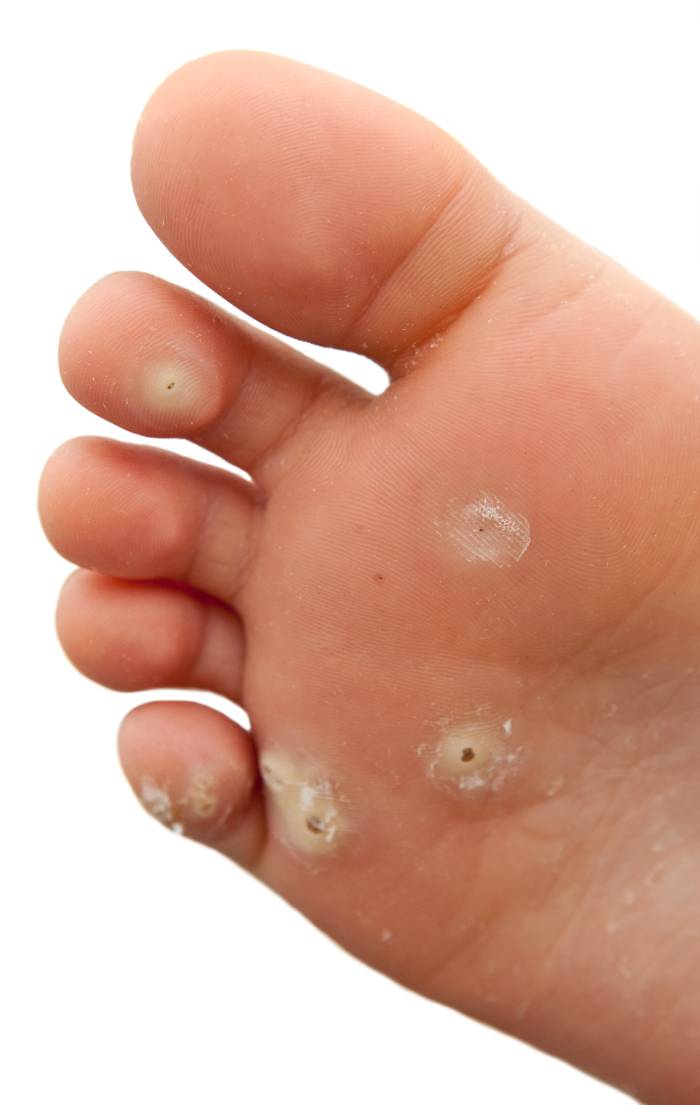
Verrucas are plantar warts i.e. small lumps on the skin. They often appear around the toes or on the soles of the feet. They are caused by the human papilloma virus (HPV), which is passed on through direct person-to-person contact and thrives in moist, damp environments such as swimming pools and changing room floors.
Verrucas commonly occur in children, teenagers and young adults. According to the Royal College of Podiatry, people may develop immunity against the virus over time –however, most people are susceptible.
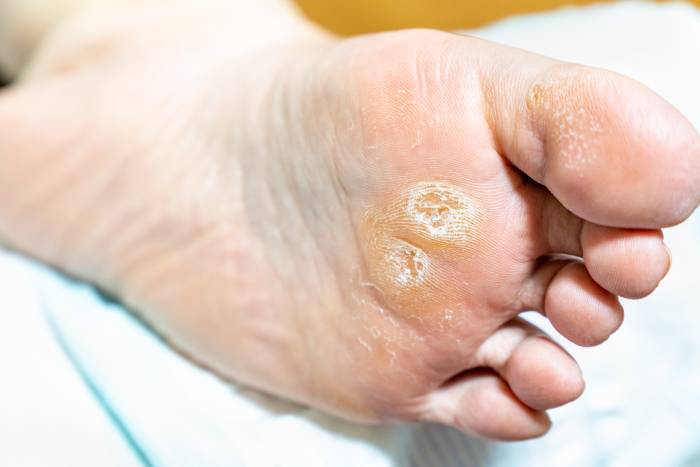
Typically, a verruca (below) appears as a small cauliflower-type growth with small black dots. If the area is painful when pinched, it is likely to be a verruca. A verruca can grow to 1cm in diameter and potentially spread to become a cluster of small warts.
Patients should be advised not to touch or scratch a verruca to help prevent it spreading into a cluster of warts and instead to cover it with a plaster. Often, verrucas go away on their own because the body’s immune system fights the infection naturally, although this can take months in children and up to two years in adults.
If the verruca is painful and/or unsightly, patients can self-treat. Pharmacists can stock creams, gels, paints and medicated plasters to treat verrucas. Treatments are typically based on salicylic acid preparations.
Patients should visit their GP or foot specialist if they have a verruca that keeps coming back, is very large or unusually painful, or if the surrounding skin becomes red.
Patients should not self-treat if they have poor circulation, diabetes, are pregnant, or have any other condition affecting their feet or immune system. Instead, they should see their GP or foot specialist such as a podiatrist.
Pharmacists can advise patients on how to prevent catching verrucas. This includes drying feet thoroughly after washing, not sharing towels, socks or shoes, and wearing flip-flops in communal areas.
Athlete’s foot
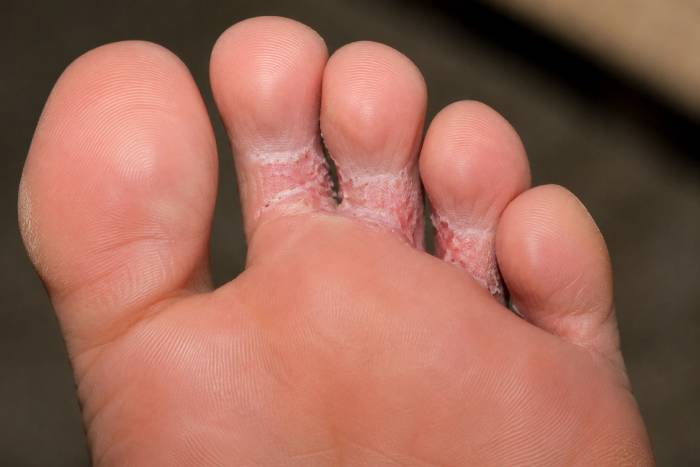
Athlete’s foot is a common fungal infection of the skin. It can result in cracked, peeling, bleeding or blistered areas of skin, scaling, itching and redness. It can appear on moist, waterlogged skin, typically between the fourth and fifth toes initially. It can also occur on dry, flaky skin around the heels or on other parts of the foot.
If left untreated, athlete’s foot (left) can spread to the toenails and result in a fungal nail infection.
Several fungal species cause athlete’s foot. They are acquired from someone who has shed infected skin, usually in communal areas such as changing rooms, swimming pools, showers or other places where people walk barefoot. However, there is no need to avoid sport and exercise if suitable precautions are taken e.g. wearing rubber sandals.
Athlete’s foot can also spread through direct contact with another person. Having wet, sweaty feet or damaged skin on the feet increases the risk of developing the condition.
Most cases of athlete’s foot are minor and can be treated with OTC products and self-care advice on maintaining good foot hygiene – in particular, measures to reduce the risk of transmission e.g. not going barefoot in public places.
Many topical preparations are available OTC including creams, powders, solutions and sprays. Topical allylamines (e.g. terbinafine), imidazoles (e.g. clotrimazole, miconazole, bifonazole and ketoconazole) and tolnaftate are all effective. An oral antifungal preparation (e.g. terbinafine) may be prescribed if the condition is severe and topical treatments don’t work.
Regular application to clean, dry feet is essential and pharmacists should advise patients that, even if symptoms have gone, they should continue their medication, as the fungus can lie dormant and potentially reappear. Some treatments need to be continued for weeks – patients should be instructed on how to use the treatment correctly and advised to follow the instructions carefully. Generally, preparations should be used for one to two weeks after the disappearance of all signs of infection.
Ensuring feet are completely dry after washing and before putting on socks and shoes can help prevent athlete’s foot. Other preventative measures include wearing cotton socks, not scratching affected skin, regularly washing and changing footwear, wearing flip-flops in bathrooms and public showers, and never wearing anyone else’s footwear. Shoes can be dusted with a fungicidal powder to eradicate the fungus.
Although athlete’s foot is typically treatable at home, patients should be referred to their GP if OTC preparations do not work, or if they have diabetes or a weakened immune system. They should also see a GP if their foot or leg is painful, hot and red, or if the infection has spread to the hands or other parts of the body.
Case study: More than “just cramp” |
|
|---|---|
|
A 67-year-old man asks the pharmacy team for advice about painful cramps in his calves that occur when he walks to the shops. He says the pain eases after a few minutes’ rest but has become more frequent over the past three months. During the consultation, he also mentions that the skin on his feet feels colder than usual and that a small sore on his ankle has been slow to heal. His PMR shows he takes a statin and medication for hypertension. The pharmacist explains that, while leg cramps are common, cramps that occur during walking and improve with rest may be a sign of intermittent claudication associated with peripheral arterial disease (PAD). The patient is advised to book a GP appointment promptly for further assessment. The pharmacy team also provides self-care advice, including keeping active within comfort limits, checking his feet regularly for sores or skin changes, and seeking urgent medical attention |
|
|
Additional information in this feature from Symptoms in the Pharmacy, 10th edition (Blenkinsopp, Blenkinsopp and Duerden), published by Wiley. |


Share:


In Learning
This is your ultimate guide to pharmacy learning. Here you can find modules, articles, scenarios and more to improve your knowledge and support your learning in the pharmacy.