



 3.2 The GLP-1s
3.2 The GLP-1s
Safe supply of GLP-1s
A structured method of assessing eligibility for safe and appropriate use of GLP-1s is a basic requirement of any pharmacy weight management service and the key points are shown in Table 2. A good clinical history needs to be taken and accurately recorded at the outset.
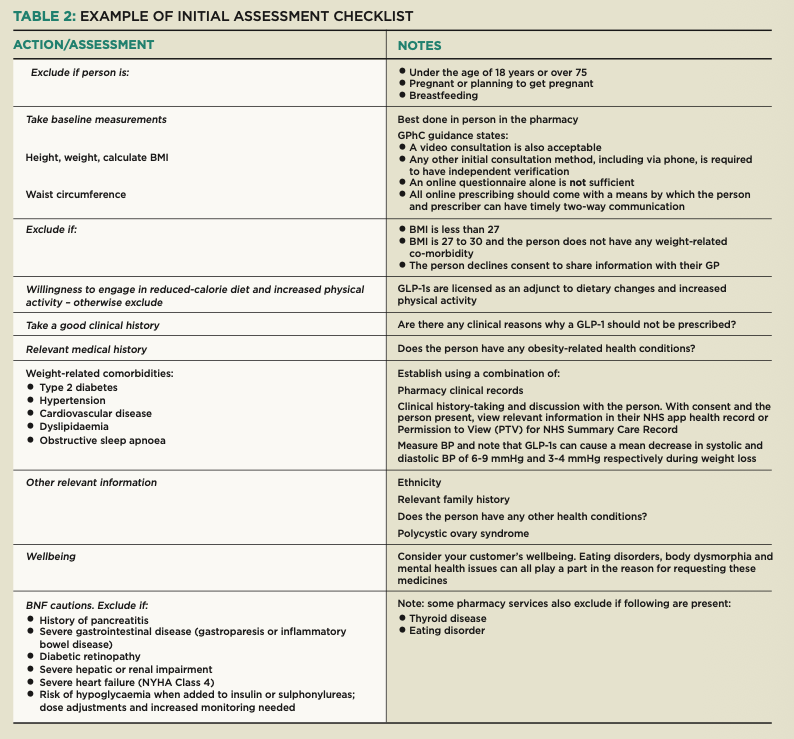
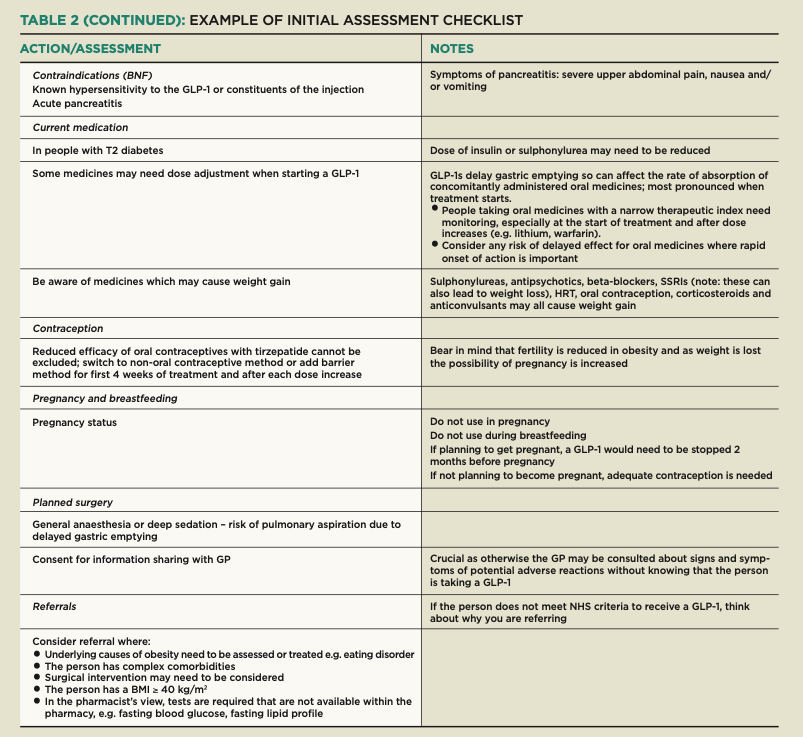
There has been much discussion about how pharmacists might obtain clinical information including relevant medical history when determining whether there might be any clinical reasons why a GLP-1 should not be used.
The pharmacy’s clinical records will, for people who have health conditions and regularly get their repeat prescriptions there, show their medication history. Pharmacists are used to discussing and ascertaining relevant medical history with people after years of applying protocols for OTC medicines and patient group directions.
The British Medical Association has advised GPs to decline requests from private providers to provide clinical information or assess safety of GLP-1 use. At local level GPs may be willing to work together with trusted community pharmacist colleagues.
People requesting weight loss medicines may be willing to share information with the pharmacist from their own online NHS health record, and the Medical Defence Union has said that the private prescriber “would need to go through the patient’s online records with them, to satisfy themselves that they are prescribing in line with relevant guidance”.
Use of GP Connect Access Record became a national requirement from October 1, 2025 and with the person’s consent, permission to view (PTV) can be obtained.