



 3.2 The GLP-1s
3.2 The GLP-1s
Adverse effects of GLP-1s
The SPCs for semaglutide, liraglutide, and tirzepatide include detailed tables of adverse reactions and their frequency; very common and common effects are summarised in Table 3.
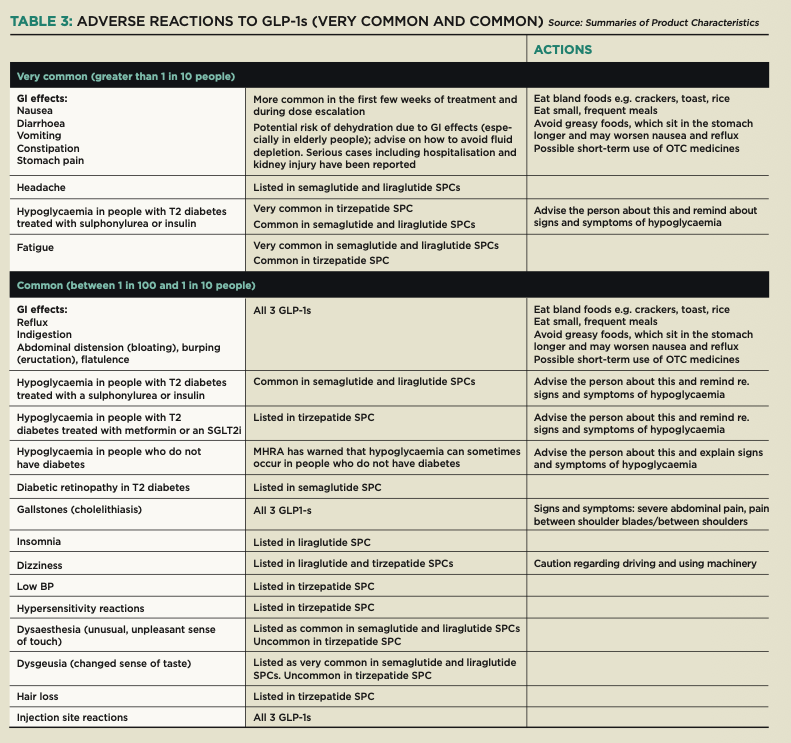
The adverse effect profile for orforglipron is similar (see the SPC on the EMC website for more detail).
Pharmacists can use the PIL to advise on the most common side effects and how to manage them. Pharmacists should familiarise themselves with the rare but serious adverse reactions in the SPCs.
Choosing a treatment
Having a conversation with the person about the pros and cons of different treatments is covered in Toolkit 5 as part of the initial consultation process.
Up-titration of GLP-1s
Treatment starts on a low dose, gradually increased at four-week intervals until the best clinical effect is reached at a maintenance dose without unmanageable side effects.
GLP-1 receptor agonist dosing schedules
Semaglutide (injection): 0.25mg once weekly for 4 weeks; the dose should be escalated over a 16-week period to a maintenance dose of 2.4mg once weekly
Semaglutide (oral): 1.5mg once daily for one month. The dose is then increased to 4mg, 9mg and 25mg with a minimum duration of one month at each dose level.
Tirzepatide (injection): 2.5mg once weekly for 4 weeks, then 5mg once weekly for at least 4 weeks, then increased if necessary up to 15mg once weekly, with doses increased in steps of 2.5mg at intervals of at least 4 weeks.
Liraglutide (injection): 0.6mg once daily, increased gradually to 3.0mg once daily in increments of 0.6mg with at least one-week intervals to improve gastro-intestinal tolerability. Daily doses higher than 3.0mg are not recommended.
Orforglipron (oral): 0.8mg once daily for one month. The dose is then increased to 2.5mg, 5.5mg, 9mg, 14.5mg, and 17.2mg, with a minimum duration of one month at each dose level.
An individual might be content with their weight loss progress and not wish to increase their dose further; this is a decision to be discussed and agreed with the person. Most people do not require the highest dose. For example: in the tirzepatide SURMOUNT-1 trial, 30% of participants had a 20% or greater reduction in body weight at 5mg per week.
For people paying for their medicine privately, there is anecdotal evidence of different strategies to reduce cost. These include:
- Switching between GLP-1s. Switching safely means leaving seven days between treatments. Check the ‘wash-out’ period in the SPC.
- Experimentation with ‘microdosing’. This practice has been encouraged and spread through social media influencers. However, evidence is limited and it is an off-label practice. Pharmacists should ensure that they advise patients to carefully follow the instructions for use as prescribed
- Leaving longer intervals between doses
- Each injection pen contains ‘overage’, which has become commonly referred to as the ‘5th dose’. Pharmacists should explain the reason for the overage and advise against trying to use it.