


 6 Min
6 Min In Practice

Follow this topic

Bookmark

Record learning outcomes
Building on a strong foundation
Mike Hewitson
Qualified as prescriber
2021
Prescribing experience
5 years
Professional memberships
Royal College of Pharmacy
Why did you become a prescriber?
When I talk to pharmacists about prescribing, I always start with 'why'. It shouldn't just be about collecting certificates; you need to think about how prescribing will benefit your practice and your patients. I never thought that I would be a prescriber, but I got fed up of sending patients back to the GP practice when I knew exactly what was wrong with them and how to treat them.
Do you have an area of special interest?
My initial scope of practice was dermatology. Skin was something I stumbled into because it is such a common presenting symptom in community pharmacy. I am often the first healthcare professional to see a patient with a skin problem. This can range from acute infections and allergic reactions, through to long-term skin problems like psoriasis, acne and eczema. No specialist equipment is required; just a pair of ears and eyes.
Initially, I was only able to write private prescriptions, which, while helpful to patients, was a barrier – particularly for those on low or fixed incomes. The IP pathfinder programme was game-changing in that it allowed me to write NHS prescriptions and patients absolutely loved the service. They could visit the pharmacy as a one-stop shop for a range of less serious conditions. Sadly, the demise of the pathfinder scheme has meant I am back to only prescribing privately for the moment.
Have you expanded your scope of practice?
I went on to do some additional postgraduate study with the University of Hertfordshire on its excellent Practical Primary Care Dermatology module. I have been a generalist pharmacist for 23 years of my career, so I already have really valuable and hard-won knowledge and skills. In some ways it is harder to be a generalist than to specialise in one discrete disease or treatment pathway. We must not undersell the importance of good generalist care to patients.
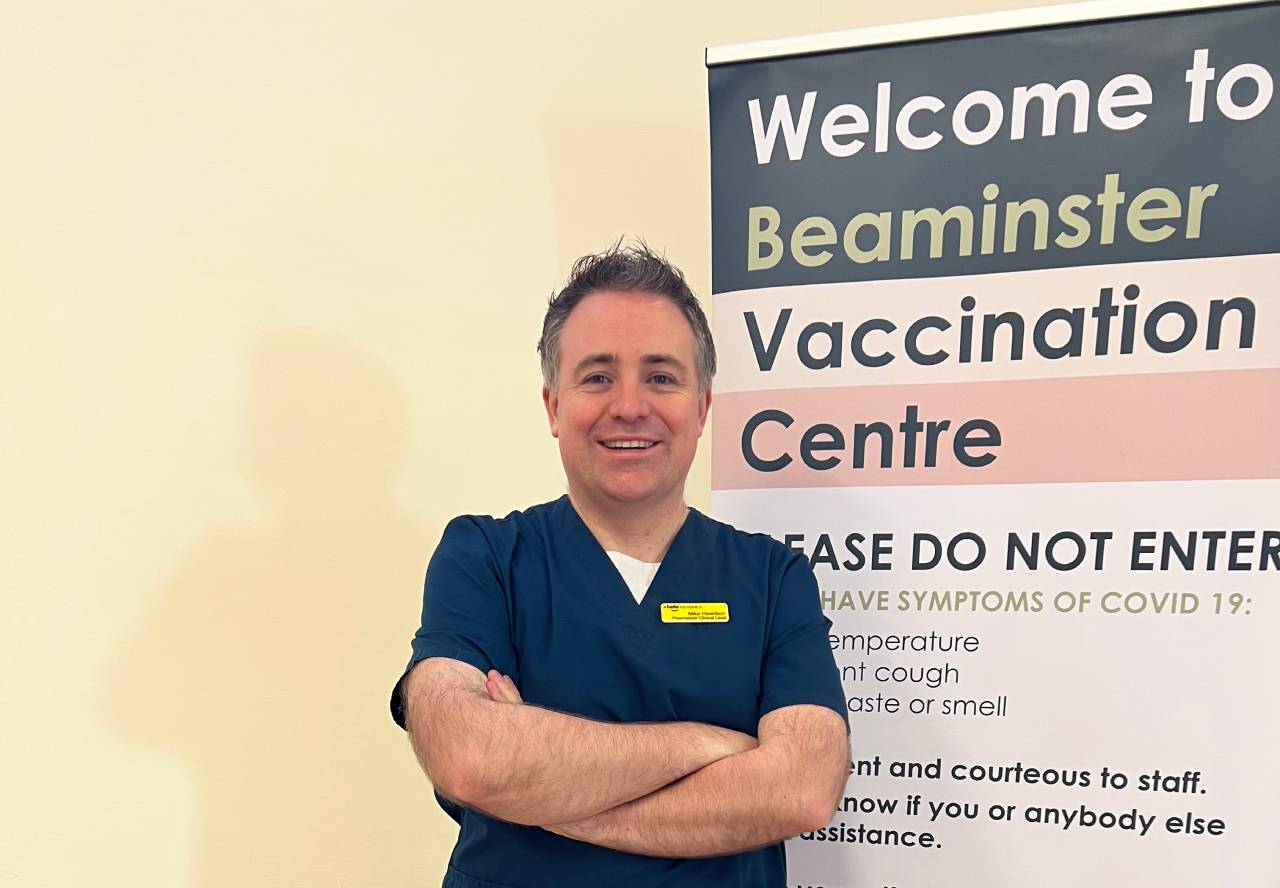
Since the pandemic I've overseen more than 80,000 Covid and flu immunisations, so expanding into other vaccinations such as travel or shingles has not been difficult. The general principles of safe vaccination apply to all vaccines and is an area where we can add real value for patients. Moreover, this cannot be replicated by online pharmacies. Private services like this are essential to keeping bricks-and-mortar pharmacies open.
If you would like to share your experience of being an independent prescriber, email: pm@1530.com
How much time do you spend daily doing consultations and how do you find the time?
To make more capacity for prescribing and other services we use an off-site dispensing hub, which allows me to focus on providing patient care instead of checking prescriptions. There are other ways of doing this – skill mix or local automation, for example – but for us this wasn't possible.
The amount of time I spend with patients varies. During the Covid and flu season it is 99%, but in a typical day it is probably about 30% of my time. We hope to double the amount of time spent delivering services and are looking at a wider range of services to help fill this capacity.
What are the risks involved in providing this service and how do you manage them?
When you are prescribing it is important to look at the risks involved, from those of misdiagnosis to the risks of patient data being accessed or shared inappropriately. When you first start out as a prescriber, your scope of practice will be fairly limited – and as pharmacists we tend to be quite risk-averse anyway – so it is important to say that these risks can be managed safely.
I do sometimes worry about the newly qualified pharmacist prescribers who register this year, because they might not always know what they don't know, and as such could have a faulty radar for risk. But for more experienced pharmacists this is absolutely manageable with the right governance in place: clear boundaries about what is in or out of scope, regular prescribing reviews (audit), and appropriate procedures and oversight.
What do patients think about your prescribing service?
Patients absolutely love the service because they can get ready access to a healthcare professional that they know and trust, and can obtain a range of treatments that are more effective than they would otherwise buy over the counter.
Most importantly, they don't have to do an e-consult, navigate GP receptionists or have to trust an online provider they will never meet. The only drawback since the pathfinder programme was decommissioned is that patients now have to pay privately for prescribing services again.
Both participating pharmacists and patients miss the pathfinder services because they actually allowed us to provide more holistic care for patients without worrying if they met a set of criteria.
Is prescribing financially successful for the pharmacy?
Financially, prescribing was a real lifeline as it recognised the higher costs of employing IP pharmacists and the 'sunk cost' of my own training. It wasn't just the financial reward that was important. Finally, we were part of the NHS family and could write NHS prescriptions – patients started to view us differently. It was so much more professionally rewarding because we were using our skills and knowledge to directly help patients.
What about peer support?
As part of the pathfinder programme we had peer support through a local GP, which was really helpful because it provided reassurance, particularly when I encountered more challenging conversations – for example, when a patient fell slightly outside my scope of practice.
It was also really helpful just to talk to another person who understood the challenges of providing care to patients, albeit in different settings. I think that helped boost my self-confidence, and reassured me I was doing the right thing and approaching these challenges in the right way.
What advice would you give someone starting out as a prescriber?
For anyone thinking about doing a prescribing qualification, I'd say just go for it. It has been the single most rewarding and powerful tool I have added to my professional portfolio and career. I would, however, start out with the end in mind: how are you going to use the qualification? As long as you have a plan – and you have a means to use the qualification – then eventually, no matter how small you start off, you will get better.
The biggest waste is when people go to the trouble of getting a prescribing qualification but never use it. Over time you will build your confidence, knowledge and skills. The most satisfying feeling is when you are able to help a patient who you would otherwise have referred back to the GP. Not only will they be grateful, they will also gain much more confidence in you.

Share:


In Practice
We know you want to continue to build on your practice, why not hear from others in the sector striving to do the same.