It takes less than a minute to create your secure account – you just need to tell us
a few details about yourself and create a password.
I can’t remember my password
Please click on the “Forgot my password” link in the login form and follow the
instructions.
I can’t remember the email address I registered my account with
Please email info@pharmacy-network.co.uk so we can check for you.
What learning content do you have?
Pharmacy Magazine contains a library of high-quality
educational e-learning modules, videos and articles to support your ongoing
learning.
Is the learning suitable for all pharmacy team members?
Yes, we have content suitable for all abilities, with topics covering business
management, clinical, practice and OTC. Our aim is to help you keep up to date and
develop your skills and knowledge to positively influence patient outcomes and customer
experiences.
Can I access the library on my mobile?
Yes, you can access all learning at work or at home on any mobile, PC or tablet
device
What’s the best way for me to find relevant content for my role?
There are three ways you can find relevant content. Firstly, the homepage will display
suggestions for you. If you are logged in, we can tailor the content to your particular
job role and topics of interest, as well as making it easy for you to see what’s
trending. Secondly, you can use the “search” function at the top of the website.
Finally, you can click on “explore” in the main menu and browse topics of interest to
you.
How long do modules take?
We have a range of modules and videos ranging from 2 minutes up to 15 minutes. There
is something for everyone, even if you are short on time.
Can I save content for later?
Yes. If you see a piece of learning you would like to take, but haven’t got time right
now, you can “Bookmark” it for later. Please note you need to have a registered account
and be logged in to access this feature.
Can I record my learning outcomes?
Yes, logged in members can record their learning outcomes on any piece of content and
save them in their learning log. Pharmacists and technicians can do this using recording
templates in line with GPhC requirements.
How do I get a learning log?
You have to register an account on Pharmacy Magazine and login
to access your personal, secure learning log.
What does my learning log do?
It documents all the learning you have recorded, including completed learning, learning
in progress and bookmarked learning you have saved to do later.
If I’m a pharmacist or pharmacy technician, can the log help me fulfil the GPhC’s
revalidation requirements?
Yes, pharmacists and pharmacy technicians also have the ability to record and add their
own revalidation entries to their learning log in line with GPhC requirements.
If I’m a member of more than one website on The Pharmacy Magazine,
can I access all my learning in my learning log even if I’ve recorded it on different
websites?
Yes, if you record learning on more than one website, it will be displayed in your
learning log which is shared across all the accounts you have registered with The
Pharmacy Magazine.
How do I view/print a certificate of my learning?
Certificates are available at the end of every module, after the assessment questions.
They are also accessible via the learning log.
How do I change my personal details, email address and password?
Login and click on “Settings” in your member menu and click on the relevant links to
change any of your details. All saved changes take immediate effect.
If I leave the industry and want to delete my account, can I do so?
Yes absolutely. You are able to delete your account at any time but please be aware that
by doing so you will also delete any historical learning records you have in your
learning log.
If I have a query or I’m stuck, how can I get help?
You will need to have registered an account to get help. Logged in members can click on
the “Helpdesk” link in their Settings and submit a Helpdesk ticket. We endeavour to
respond to new Helpdesk tickets within 24 hours during office hours (9pm to 5pm Mon to
Fri)
How can I check on your Terms of Service, Privacy Policy and Cookie Policy?
You can click on the relevant links in the footer of the website. If there are any
proposed changes to any of our Policies, we will email registered members in
advance.
Is Pharmacy Magazine GDPR compliant?
Yes we are and we take your privacy and the security of your data extremely
seriously. Please read the Privacy Policy for further details. Logged in members can
click on the “My data” link in “Settings” to download a copy of all the personal
data we currently hold on you.
Who is the company that owns and operates Pharmacy Magazine?
Communications International Group Limited (CIG), the largest, most experienced publisher
in the UK pharmacy sector. CIG is one of the UK’s leading provider of sector-specific news and
training, publishing 15 healthcare and beauty titles including Pharmacy Magazine,
Training Matters, P3Pharmacy, Independent Community Pharmacist and Beauty Magazine. Over
the years the company has built an enviable reputation in pharmacy, journalism,
education, training, regulatory, awards and conferences, that today amounts to more than
350 years of healthcare industry experience.
How do I sign out?
Click on the Sign Out link that can be found at the top of the website, in you member
menu.
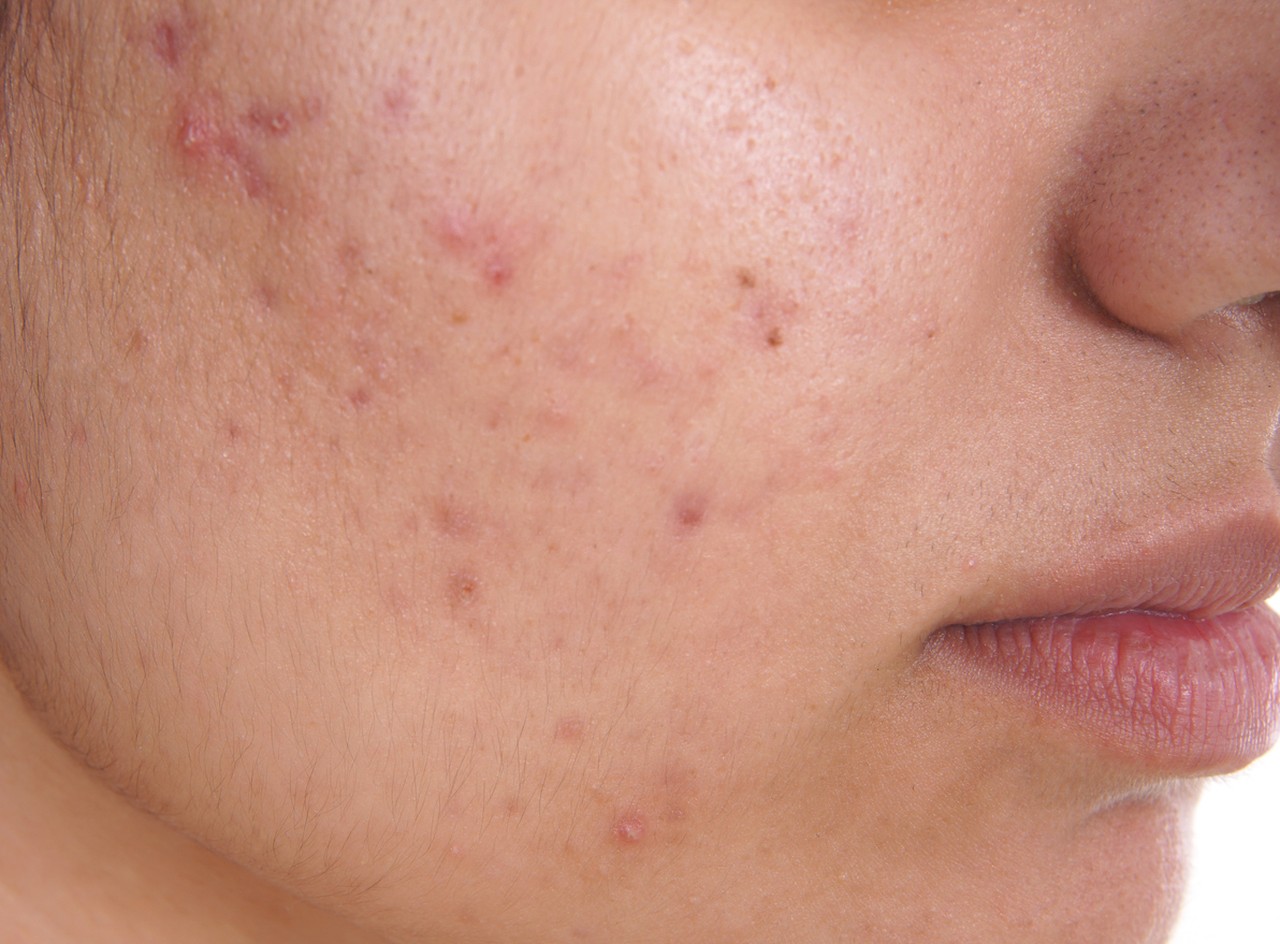
Mild to moderate acne in people aged 12 and over: from over-the-counter products to prescribed topical treatment, a summary of the Pharmacy First pathway with referral criteria and self-care advice.
Consider rosacea, perioral dermatitis, folliculitis or keratosis pilaris1
Referral
Urgent (GP or A&E depending on circumstances)
●
Suspected acne fulminans (sudden, severe, ulcerated or crusted acne with fever, malaise or joint pain): same-day referral to general practice for urgent dermatology assessment; A&E if systemically unwell1,2
●
Current suicidal thoughts or self-harm: urgent mental health support first (NHS 111 mental health option, or A&E or 999 if immediate risk; under 18, also follow local safeguarding procedures). Acne treatment can continue once immediate safety is addressed1,2
General practice
●
35 or more inflammatory lesions, or 3 or more nodules1,2
●
Nodulo-cystic acne, or acne conglobata (urgent appointment)1,2
●
Suspected rosacea or perioral dermatitis; acne less likely: general practice or other provider as appropriate1,2
●
Unable to apply topical treatment effectively, or oral treatment required1,2
Advise the person to try OTC treatment first (if they haven't already), such as benzoyl peroxide, plus self-care1
●
Offer a prescription if OTC treatment has been tried for 6–8 weeks without adequate improvement, or is unsuitable or not tolerated1
●
Treat only if there has been no prescribed course from this pathway or another service in the past 12 months, and no prescribed topical treatment used for 6–8 weeks without adequate improvement, or worsening1,2
●
Offer a 12-week course of topical treatment only, plus self-care1
●
If the shelf life is under 12 weeks, a second prescription at a separate consultation completes the course1
●
Topical retinoids: do not prescribe in pregnancy or when planning a pregnancy (discuss contraception). If breastfeeding, check NICE NG198 for information on specific products. Record pregnancy status, the contraception discussion and the advice given1,2
NICE CKS first-line options, applied once daily in the evening for 12 weeks
●
Adapalene with benzoyl peroxide (adapalene 0.1% or 0.3% with benzoyl peroxide 2.5%)3
Topical retinoids: avoid in severe acne, perioral dermatitis, rosacea, or a personal or family history of non-melanoma skin cancer; avoid eyes, nostrils, mouth and broken skin3
●
Benzoyl peroxide: avoid eyes, mouth and broken skin; may bleach fabrics and hair3
●
Topical clindamycin: caution with a history of inflammatory bowel disease or antibiotic-associated colitis; stop if diarrhoea occurs3
●
All: increased sunburn risk, so use sunscreen or protective clothing3
Self-care and advice
Self-care
●
Apply thinly to the whole area prone to spots, not just individual spots, avoiding the eyes and lips1,3
●
Benzoyl peroxide and retinoids can irritate: start on alternate days or wash off after an hour, then increase as tolerated1,3
●
Do not apply other skin products at the same time of day1
●
Use non-alkaline cleanser twice daily; avoid over-cleaning, and avoid oil-based and comedogenic products1,3
●
Avoid picking spots, which increases the risk of scarring1,3
●
Provide patient information: British Association of Dermatologists acne leaflet1,4
Safety-netting advice for patient
●
Improvement can take 6–8 weeks: complete the 12-week course1,3





 19 Min


