



 5 Min
5 Min In Clinical reviews

Follow this topic

Bookmark

Record learning outcomes
It’s a peculiar fact of life that as we age, our feet tend to get progressively longer and wider as ligaments and tendons lose their elasticity and feet flatten out. In fact, feet can go up by one or two shoe sizes.
Pharmacy teams are ideally placed to help customers look after their feet. For instance, those who suffer from repeated friction-related problems such as corns, blisters and bunions can be encouraged to get their feet professionally measured in case their shoe size has changed. Additional advice is as follows:
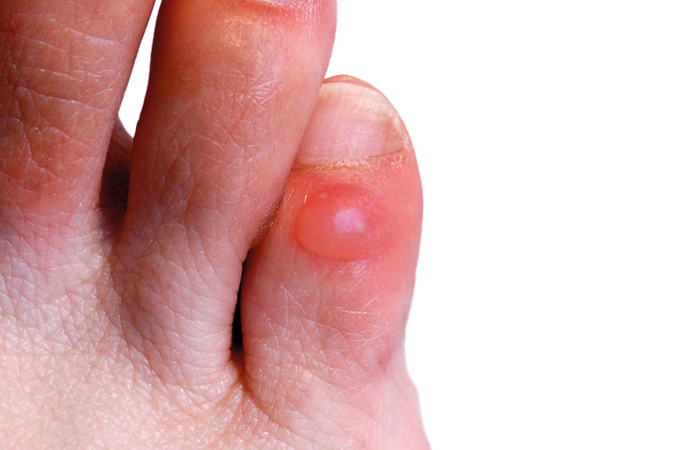
1. Blisters
The key to dealing with blisters is to cover and protect the affected area to avoid further damage and allow healing. Numerous blister plasters and dressings are available OTC in range of sizes and shapes. Hydrocolloid dressings have the advantage of creating a moist wound healing environment that reduces pain and accelerates healing.
Blisters that show signs of infection such as redness or warmth in the surrounding skin or exudation of pus may require antibiotics because of the risk of skin or blood infections.
To prevent blisters from developing, it is important to choose comfortable, well-fitting shoes and to wear thick socks during exercise. Blister protection tape is also available that conforms to the skin and stays in place for up to a week to prevent chafing and ‘hot spot’ formation.
2. Corns and calluses
Corns are caused by pressure or rubbing from overly tight shoes that leads to small cone-shaped areas of thickened skin. Hard corns are layers of thick, dead skin that build up on the toe surface.
They contain a packed centre with the tip pointing inwards, which presses on nerve ends in the foot, causing pain. In contrast, soft corns are white and rubbery in texture, and appear between the toes.
Calluses are areas of hard, dry skin caused by pressure or friction on bony parts of the feet. Typically, they affect the ball of the foot, the outside of the big toe and the side of the heels. They cause a generalised burning sensation.
Salicylic acid, usually applied as a medicated plaster or ‘cap’, is the cornerstone of treatment for corns and calluses, and works by removing the excess layers of hard skin. Corn and callus removal pens are also available containing trichloroacetic acid (TCA), which is applied as a gel.
Cushioning products can be used to help relieve pressure on the affected area, ease pain and stop the problem from recurring. Regular use of foot files, pumice stones and moisturising creams can help prevent hard skin build-up.
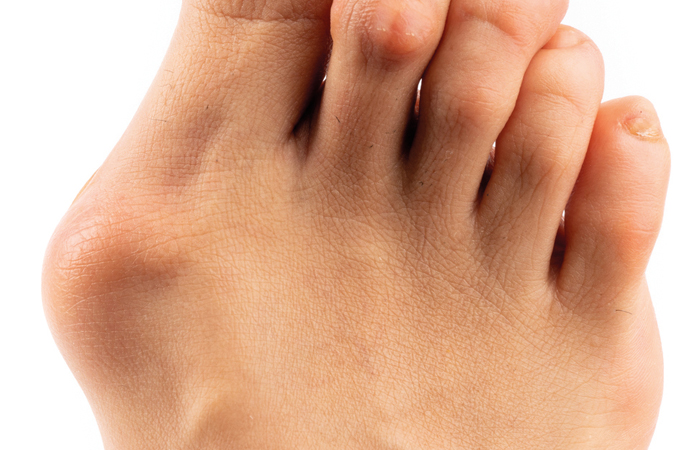
3. Bunions
Bunions are caused by a slow dislocation of the big toe joint. They can be hereditary and hard to prevent, but key self-care steps include avoiding high heels and pointed-toe shoes.
Pain can be relieved with non-medicated bunion pads and plasters, while bunion protectors are available to protect the affected area and absorb friction.
Surgery is the only definitive cure, but to help correct the underlying deviation and relieve pain, patients can try flexible bunion correctors, which are worn inside the shoe and act to push the toe back into alignment.
An ice pack can also help to relieve pain and swelling, and OTC analgesics can be recommended if required.
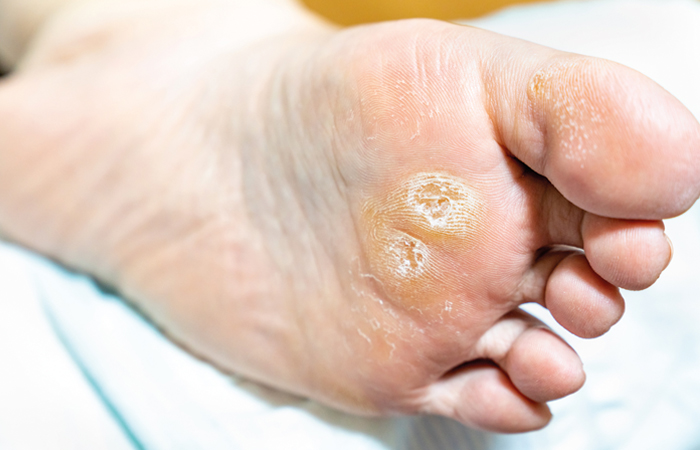
4. Verrucas
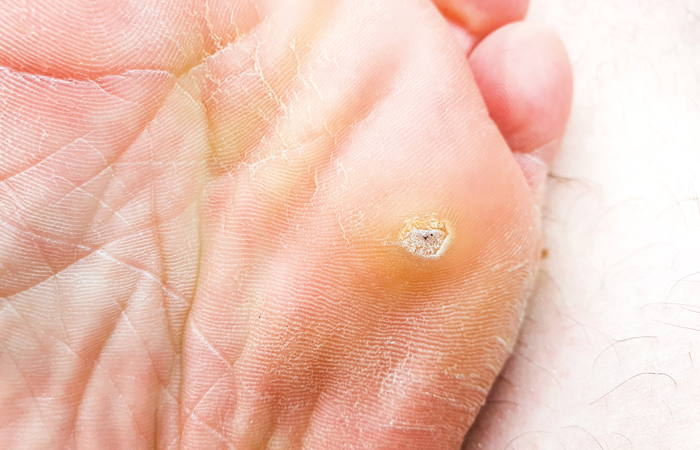
A verruca is simply a wart that occurs on the sole of the foot and appears as a flat, round lump peppered with one or more black spots. Treatment options include topical liquid or gel formulations of acids such as salicylic acid or TCA, and ‘freeze’ treatments that contain gases that work by rapidly freezing the core of the verruca. Both types of treatment may take time to work and often need to be repeated.
Customers can be reassured that, even without treatment, verrucas will eventually heal with time. However, this can be a protracted process lasting up to two years and hinges on the strength of the immune system.
To avoid spreading a verruca, or catching one in future, advise customers to wear flip flops in communal showers, not to share foot products or shoes/socks, and to cover the affected area when swimming.
5. Athlete’s foot
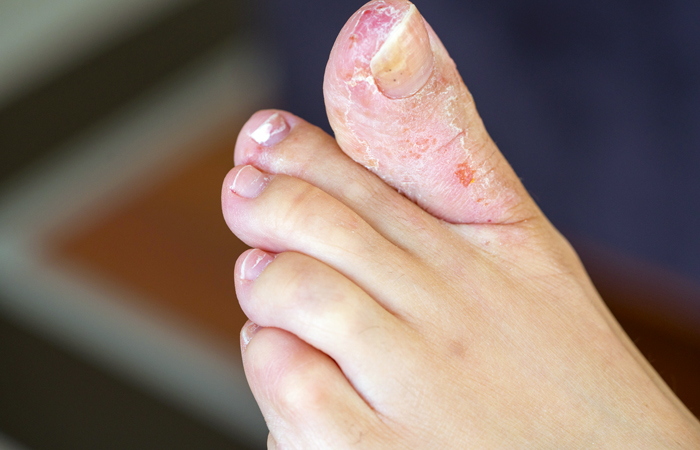
Athlete’s foot typically targets the space between the fourth and fifth toe, causing itchy, red skin that may become white, inflamed and weepy.
Left untreated, the causative tinea pedis fungus can spread to other areas of the foot and the toenails, leading to a fungal nail infection.
OTC antifungals are available to treat active infections. These contain either fungistatic agents such as clotrimazole or miconazole, or the fungicidal terbinafine.
Most require repeated application over a week or more, but terbinafine is also available as a single-dose treatment. Key preventative steps include avoiding going barefoot in damp places, keeping feet dry and clean, and wearing breathable footwear.
Identification aid


Diabetes and good foot care
Pharmacists can help raise awareness of the importance of good foot care among patients with diabetes by providing advice on the causes of diabetic foot disease, emphasising the risk of developing these problems and highlighting the potentially serious, but preventable, consequences.
Diabetes UK’s advice includes: checking feet for any changes every day; cutting toenails carefully; using moisturising cream every day (but not between the toes); not using blades or corn plasters; and getting expert advice for any foot problems.
For more on diabetic leg ulcers, see this learning article.

Share:


In Clinical reviews