




 Supporting formula-fed infants
If parents are using formula milk to feed their baby, a formula milk that has a protein profile closer to breast milk helps to support healthy growth.18 The amino acid profile of breast milk is the best estimate of an infant’s amino acid requirements. There are four amino acids that, when supplied in excess, have been shown to increase the release of insulin. This can cause a cascade of reactions in the body, which may result in faster growth.19 Faster growth rate is associated with increased risk of overweight and obesity.2,3
Combining the practical elements of responsive feeding13 with a formula clinically proven to result in a growth rate comparable to a breastfed baby18 may help give formula fed infants the best chance for healthy growth and the associated lifelong benefits.
SMA® PRO First Infant Milk
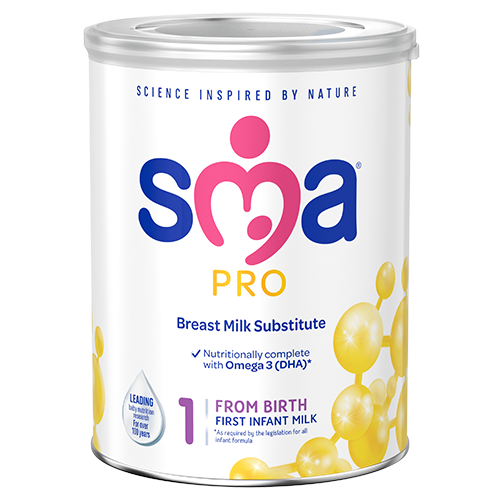
Appropriate growth
- Clinically proven to achieve growth rate comparable with a breastfed baby18
- Contains closer amino acid profile to that of breast milk, which is thought to help support appropriate growth19
Immunity
- Contains vitamin D which contributes to the normal functioning of baby’s immune system20
- Contains 2’FL* Human Milk Oligosaccharide (HMO): research suggests that infants fed a formula supplemented with 2’FL* HMO had immune markers closer to breast-fed infants21
Comparison of insulinogenic amino acid levels in SMA® PRO First Infant Milk versus Aptamil First Infant Milk22

Percentage difference of insulinogenic amino acids compared to breast milk
*2'FL: structurally identical human milk oligosaccharides, not sourced from breast milk