


 Models of care and social prescribing in the NHS
Models of care
The most common medical intervention is the supply of a medicine. Medicines allow the prevention, treatment and ongoing management of a wide range of illnesses at relatively low cost.
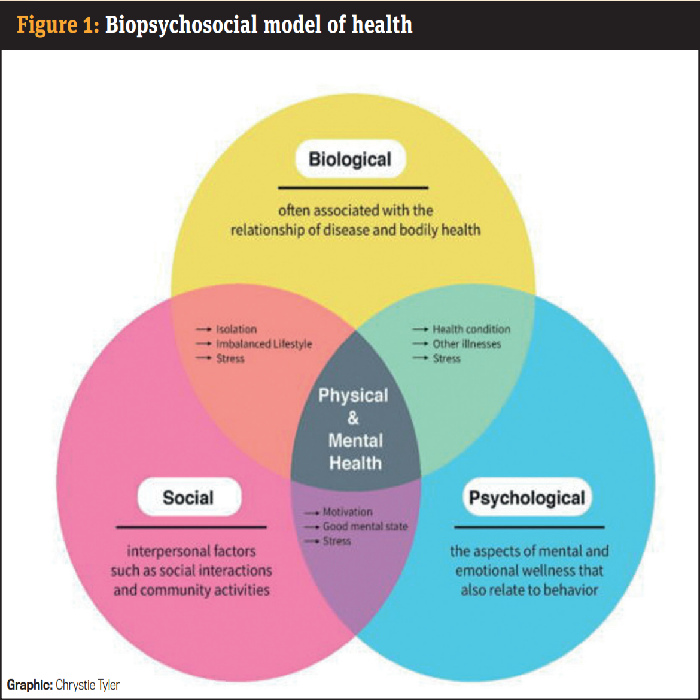
In contrast to this biomedical approach, the biopsychosocial model of health (Figure 1) considers social, environmental and psychological factors that impact health and wellbeing, and empowers individuals to take responsibility for their own health.
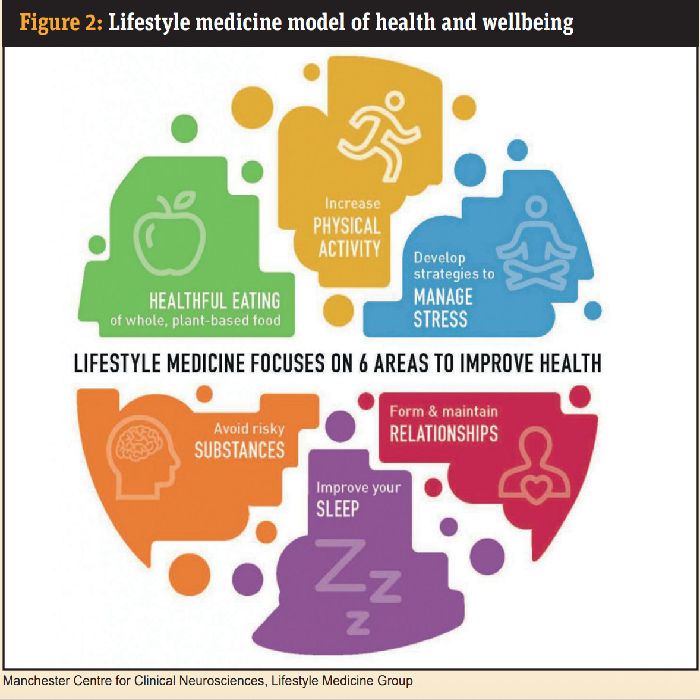
Similarly, the lifestyle medicine model (Figure 2) considers six areas impacting on health and wellbeing: sleep, relationships, stress management, physical activity, healthy eating and use of risky substances/behaviours.
A wider patient view is key to the more holistic, person-centred approach now being advocated. Practically, in primary care, with GP appointments limited to 10 minutes, this approach can be challenging.
Social prescribing in the NHS
It is well recognised that health and wellbeing is influenced by a range of factors and problems cannot be resolved solely through conventional health services. A decade ago, the NHS Five Year Forward View highlighted emerging models of care regarding the positive impact of the social and voluntary sector on patients, referencing specific social prescribing services.
In 2016, the GP Forward View acknowledged the role that the voluntary, community and social enterprise (VCSE) sector plays alongside GP services offering people community-based support, particularly social prescribing. In 2019, the NHS Long Term Plan stated its intention to build an infrastructure for social prescribing through primary care networks to help create an extra 50 million general practice appointments.
In 2023, PCNs were contracted to provide a proactive social prescribing service for all registered patients. In July this year, another NHS 10 Year Health Plan for England reinforced the central nature of community-based holistic care. In short, social prescribing is here to stay.