




 Clinical developments (continued)
Repeat prescribing toolkit
The Royal Pharmaceutical Society and the Royal College of General Practitioners (RCGP) published a new toolkit in 2024 – the first good practice guidance on repeat prescribing in 20 years. The RCGP is encouraging all GP practices to work together with their local community pharmacies and to consider if their repeat prescribing systems can be improved in terms of safety and reducing overprescribing.
An ‘oversupply dashboard’ is now available to all general practices in England with seven key medicines that have a straightforward daily dosage schedule (so that expected quantities can be easily calculated) being targeted first.
The dashboard aims to highlight where cumulative amounts of prescribing are considered excessive for a 12-month period. The seven medicines are:
- Aspirin 75mg
- Statins (solid oral)
- Glucose monitors/sensors
- Blood glucose testing strips
- Fixed dose inhalers
- Daily laxatives
- Oral nutritional supplements.
(rpharms.com/resources/repeat-prescribing-toolkit)
Oral nutritional supplements
Malnutrition is common in older people and since the Covid-19 pandemic, more older people are likely to be undernourished or malnourished because of social isolation, anxiety and practical issues such as difficulty with shopping. This is important because malnutrition and under-nutrition are linked to the development of frailty, which in turn is associated with declining health and an increased risk of falls.
The cost of prescribing oral nutritional supplements (ONS) to try and address problems with nutrition in older people has increased markedly. NICE guidance CG32 (Nutritional Support for Adults) says to provide “oral or artificial nutritional support where clinically indicated” in care settings.
Various efforts have been made to reduce and control prescribing; care homes in particular have been a target for some years. Use of ONS is now one of the targets in the new RPS/RCGP Repeat Prescribing Toolkit and it is likely more attention will be paid to their use, so community pharmacy teams will see more activity in this area.
Joint guideline on the diagnosis, monitoring and management of chronic asthma
In a new collaboration, the British Thoracic Society (BTS), Scottish Intercollegiate Guidelines Network (SIGN) and NICE have developed a joint guideline for a new asthma pathway.
Traditionally, two separate inhaled drug treatments have generally been used: an inhaled corticosteroid (ICS, to reduce inflammation) and a drug to increase bronchodilation (usually a short-acting beta agonist, SABA). The guideline recommends a SABA-free pathway to treatment, combining a licensed ICS and the long-acting beta agonist (LABA) formoterol.
There are two acronyms for treatment – AIR and MART. Anti-Inflammatory Reliever (AIR) is used to treat mild asthma (for those who get symptoms less than twice a month). Maintenance And Reliever Treatment (MART) is used for asthma patients who have symptoms most days or wake with asthma once a week or more. This is a major change from previous practice and, over time, will become the new normal in asthma management. Watch out for a new CPD module in Pharmacy Magazine in early 2025 covering this important guideline.
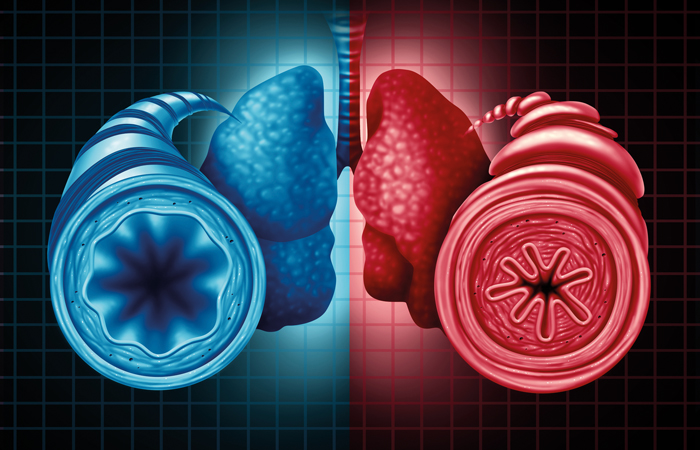
Maintenance or combination treatments form the mainstay of a new asthma pathway.
Reflection exercise
The new asthma pathway recommends SABA-free treatment. How will you:
- Explain to newly-diagnosed patients with asthma the thinking behind combined LABA/ICS treatment?
- Explain to patients who have been using SABAs and have been changed to the new treatment pathway, why this has been done and what the benefits are?