




 4 Min
In Clinical update

Follow this topic

Bookmark

Record learning outcomes
As anyone who has survived a severe attack knows, asthma affects more than the lungs. Severe asthma can be terrifying and unpredictable, and can undermine many activities that other people take for granted.
So, asthma can exert a heavy mental toll: people with asthma are up to six times more likely to have anxiety or depression than the general population.1 In the UK, for example, 1% of the general population but 16% of people with asthma live with panic disorder.1
Meanwhile, increasing evidence suggests that asthma can directly damage the brain and increase cardiovascular risk.
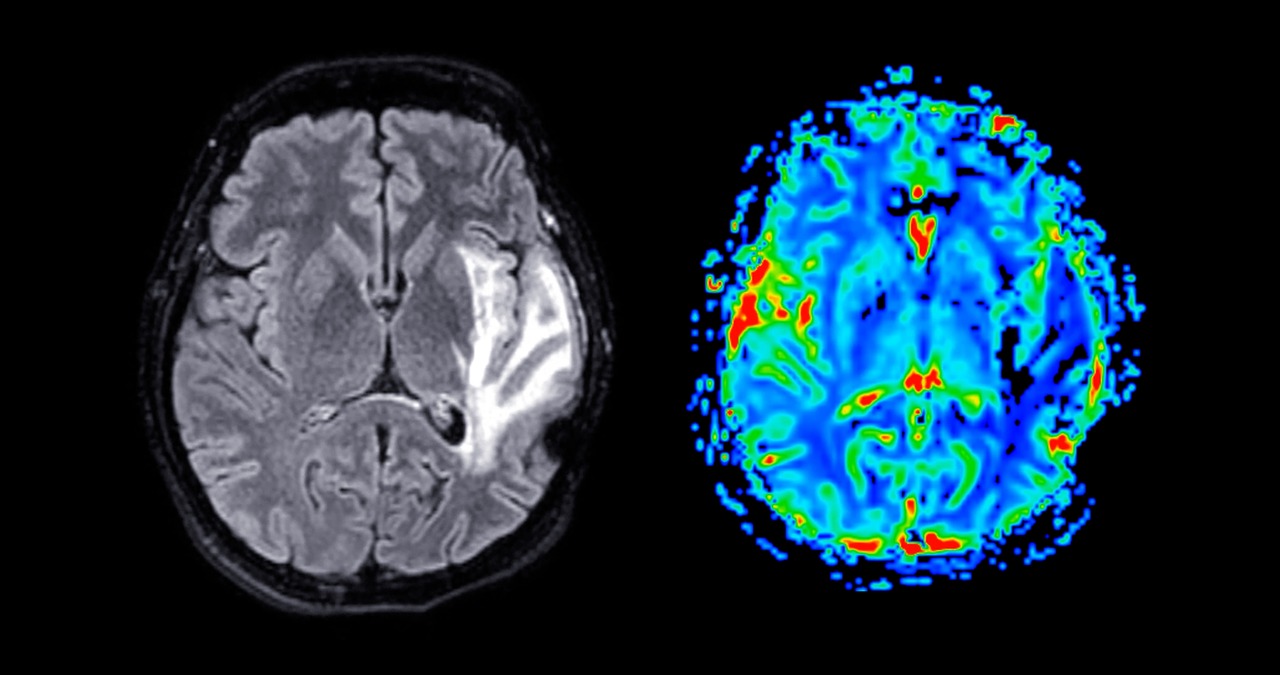
For example, some people with severe asthma show subtle differences in brain structure, according to research presented during the recent European Respiratory Society Congress.
“Asthma is usually thought of as a disease of the lungs, but growing evidence suggests its effects may extend well beyond the airways,” says study author Dr George Nava from the National Institute for Health and Care Research, and academic clinical lecturer, Bristol Academic Respiratory Unit.
It takes type-2…
The study used magnetic resonance imaging to compare 50 people with severe type-2 asthma due to start mepolizumab with 25 controls with well-controlled mild or moderate type-2 asthma. People with severe asthma had, on average, five exacerbations a year; controls had none.
Several immune cells drive type-2 inflammation, including dendritic cells, T-helper 2 cells, basophils, mast cells and eosinophils. These release cytokines, such as interleukin (IL)-4, IL-5 (mepolizumab blocks IL-5) and IL-13, that promote inflammation.2,3
People with severe asthma had less organised white matter than controls. Several brain structures and regions, such as the hippocampus and the temporal lobes, were smaller in people with severe, compared with well-controlled, asthma.
The hippocampus is involved in various aspects of memory. The temporal lobes’ roles include emotional regulation, processing sensory information, storing and retrieving memories, and aiding language comprehension.
“Across all participants, higher levels of type-2 inflammation were associated with greater differences in brain white matter,” Dr Nava adds. “While this study cannot prove that inflammation causes these changes, it does suggest there may be a biological link that deserves further investigation.” The researchers are now investigating whether six-month treatment with mepolizumab alters neuroimaging.
Further studies need to assess whether asthma increases the risk of neurodegenerative disorders – but accumulating evidence supports a link.
For instance, a US study of 5,460,732 participants reported that asthma increased the two-year incidence of Alzheimer’s disease by 20–33%, depending on the statistical analysis. The two-year prevalence rose by 25–48%.4 The findings suggest that early steps towards risk reduction could include aggressively treating airway inflammation to reduce systemic effects.
Beyond the brain
An emerging link between asthma and neurodegeneration appears biologically plausible. Asthma has several actions that could promote chronic neuroinflammation and, in turn, neurodegeneration, including hypoxia that disrupts the blood–brain barrier, an imbalance between free radicals and antioxidants (increased oxidative stress), mitochondrial dysfunction and sleep disturbances.5
On current evidence, asthma is “unlikely” to be “a sole or sufficient cause of neurodegenerative disease”. But “severe, persistent, or exacerbation-prone asthma may lower the threshold for the clinical manifestation of underlying neurodegenerative processes”, say researchers.5
Asthma’s extra-pulmonary effects are not confined to the brain. Asthma increases the risk of arterial injury, atherosclerotic cardiovascular disease, atrial fibrillation, hypertension and degenerative valvular heart disease.3,6
A recent study followed 483,735 participants from the UK Biobank for 13.8 years. Asthma increased the risk of pulmonary regurgitation (by 34%), aortic stenosis (31%), aortic regurgitation (24%) and mitral regurgitation (19%). These findings suggest a potential shared inflammatory pathway and highlight the need for cardiovascular surveillance in those with asthma, the authors say.6
Systemic disease?
Contending with asthma’s respiratory symptoms and their impact on everyday life can be difficult enough to trigger psychiatric disorders. Evidence also increasingly highlights asthma’s effects on the cardiovascular system and brain. Perhaps the time has come to consider asthma as a systemic, rather than ‘just’ a respiratory, disease.
|
||||||||||||||

Share:


In Clinical update