

Minimax Pharmacy contract removal a sign of 'emboldened' ICBs, says expert
Arthur Walsh,
10 Dec 2025 1 Min
1 Min

Arthur Walsh,
10 Dec 20251 Min
Arthur Walsh,
10 Dec 20251 Min


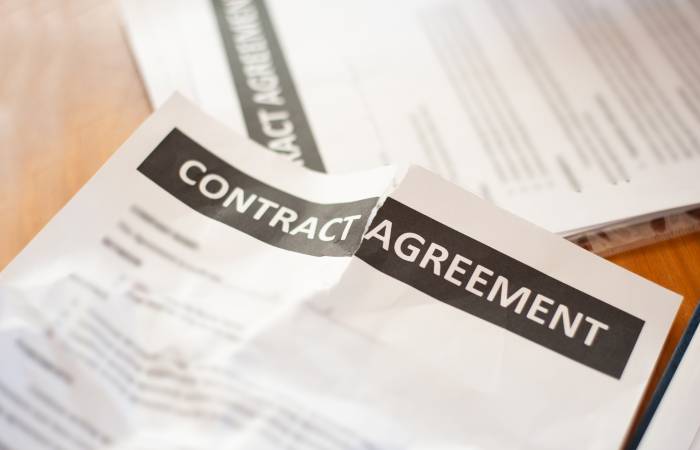
Exclusive: A Hampshire pharmacy's failed attempt to overturn the local Integrated Care Board's decision to strike it off the pharmaceutical list could signal that commissioners are taking a tougher approach to service failures in the wake of widely reported problems at Jhoots Pharmacy, an expert in sector law has told P3pharmacy.
David Reissner, chair of the Pharmacy Law and Ethics Association, spoke to P3pharmacy in the wake of NHS Resolution upholding Hampshire & Isle of Wight ICB's decision to strip Minimax Pharmacy of its NHS contract.
The Eastleigh pharmacy is currently under investigation by the General Pharmaceutical Council over allegations it took part in the diversion of controlled drugs and promethazine-containing medicines from the legitimate supply chain.
GPhC enforcement orders barred the business from obtaining or supplying these medicines, resulting in repeated terms of service breaches that the ICB considered were likely to persist for some time.
Despite assertions from legal firm Temple Bright that the pharmacy could not be expected to breach the enforcement orders and that the allegations remain unproven, both the ICB - which also removed a Jhoots Pharmacy branch from the NHS list in a landmark decision - and NHSR found there was 'no good reason' for the pharmacy breaching its terms of service.
Mr Reissner suggested this case could indicate that commissioners are more prepared to implement tough sanctions than in the past.
He commented: "In the past, Primary Care Trusts and NHS England, which managed pharmaceutical lists before ICBs took over, used sanctions against pharmacies that breached their terms of service, but those sanctions fell short of removing pharmacies from the pharmaceutical list - equivalent to removing the NHS contract.
"For example, PCTs and NHS England seemed reluctant to seek the removal of contracts in the case of 100-hour pharmacies that repeatedly failed to open during all of their contracted hours.
"This reluctance to use the ultimate sanction was probably because sanctions must be proportionate and NHS contracts can be worth very large sums of money, so removal did not seem proportionate."
Mr Reissner also said it "may not be coincidental" that the decision to remove the Minimax contract was made by the same ICB that earlier this year de-listed an Isle of Wight branch of Jhoots, whose system-wide failings had been the subject of a parliamentary debate and which now faces many of its pharmacies being struck off.
He added: "Hampshire and the Isle of Wight ICB may have felt emboldened by the dismissal of the appeal in the Jhoots case to take similar action against Minimax.
"Equally, the outcome of the Jhoots and Minimax cases may encourage other ICBs to consider similar sanctions against other pharmacies that they consider have failed or are likely to fail to comply with terms of service on a repeated basis."
Mr Reissner said pharmacy owners will also take note of the decision, commenting: "A factor in the Minimax case that stands out is that Minimax were unable to comply with their terms of service because of an interim order made by the GPhC's fitness to practise committee, which had not made any final determination of whether the facts alleged against Minimax had been proved.
"It is usually very difficult to resist an interim order when the GPhC seeks one from its fitness to practise committee, even though the pharmacist or company may not be found guilty at a final hearing in the future."
The PLEA chair told P3pharmacy the case "may therefore impact on whether and how applications for interim orders are contested in future, and will probably affect how companies at risk of ICB sanctions deal with applications to remove their contracts".
A GPhC spokesperson told P3pharmacy: “Our inspection reports and enforcement actions are publicly available on our website. We share draft inspection reports with owners and superintendents prior to publication to ensure there are no factual inaccuracies as part of our quality assurance processes.
“GPhC acts independently of NHS Resolution and commissioners, and our role is to protect, promote and maintain the health, safety and wellbeing of members of the public by upholding standards and public trust in pharmacy.
"We are not involved in decisions about inclusion or removal from the pharmaceutical list, which is a matter for commissioners.”
Neither Hampshire & Isle of Wight ICB nor Temple Bright responded to requests for comment.