



 Treating IBS
Treating IBS
ABC for IBS signs2
A diagnosis of IBS can be made in primary care (in the absence of alarm symptoms or signs) if any of the following symptoms have been present for a minimum of 6 months:2
A ABDOMINAL PAIN
B BLOATING
C CHANGE IN BOWEL HABIT
Current OTC IBS treatment pathway2
Advise sufferers on IBS in the context of the gut-brain axis and the impact of stress on IBS symptoms
Offer self-care tips to help manage stress and associated anxiety and/or depression appropriately, and signpost for further information and support
Recommend a healthy, balanced diet, adjusting their fibre intake according to symptoms, and drinking plenty of fluids (we will cover this in more detail later in the module)
Encourage regular physical activity
If symptoms persist despite initial dietary and lifestyle advice, OTC medicines can be considered:
Laxatives for constipation relief (IBS-C)
Antidiarrheal agent for diarrhoea (IBS-D)
An antispasmodic drug for abdominal pain or spasm
Various prescription medicines to help manage abdominal pain may be considered and referral to a specialist diet may also be an option.
NOTE: These treatment recommendations only support acute treatment management, not the root cause of IBS.
Targeting the root cause
THE TREATMENT OPTIONS LISTED ABOVE TARGET SYMPTOMS
RATHER THAN THE ROOT CAUSE – THE DAMAGED GUT BARRIER.

The FyboCalm* range is clinically proven and contains Gutshield Technology (a combination of XYLOGLUCAN and PEA PROTEIN). As you saw in the video, this unique Gutshield Technology forms a protective film to soothe, strengthen and promote repair of the gut barrier.5-11
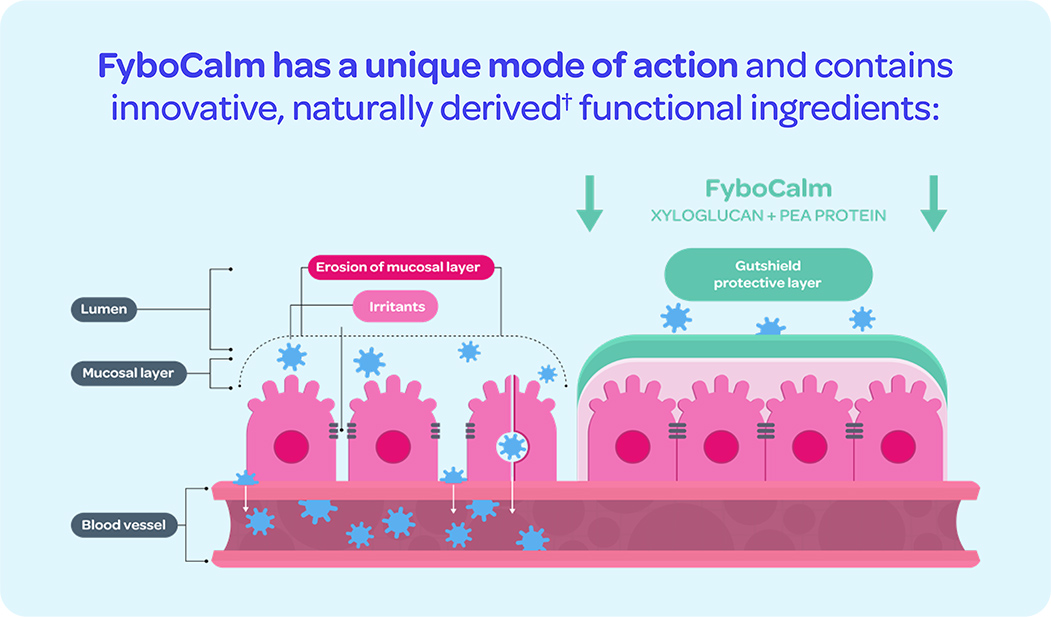
*FyboCalm is a medical device. Always read the instructions
†Xyloglucan and pea protein
The FyboCalm range*
THE FYBOCALM RANGE CONTAINS 3 DIFFERENT PRODUCTS,
tailored to your customer’s predominant IBS type and most prevalent symptom.
> CLICK BELOW EACH PACKSHOT TO LEARN MORE.
FOR PATIENTS WITH FREQUENT WIND & BLOATING:
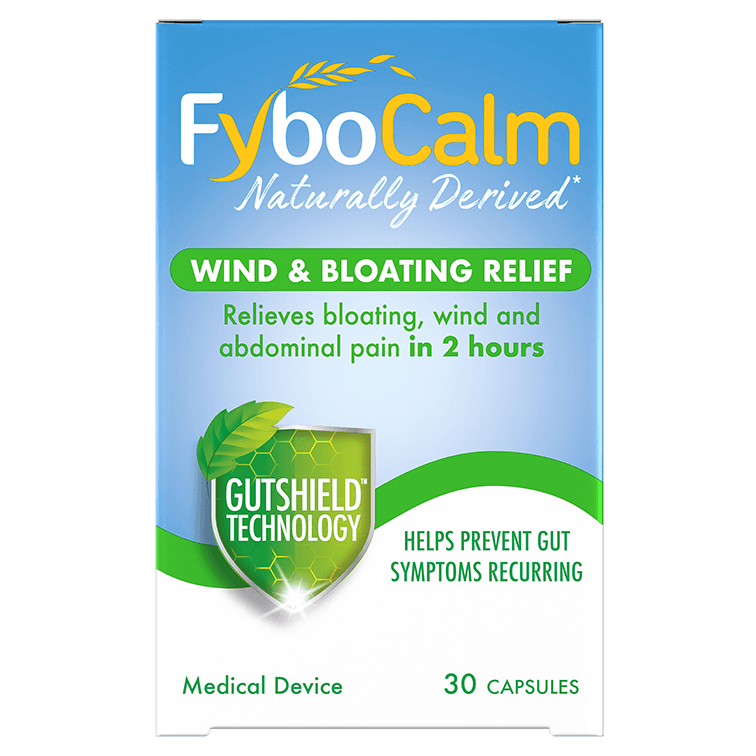
Clinically proven to be effective within 2 hours in RELIEVING recurrent wind, bloating and abdominal pain and significantly superior to simethicone – with lasting relief from recurrent gut symptoms such as abdominal pain, wind and bloating for 8 days and 20 days for abdominal distension.5
Treatment can be maintained, if a maintenance therapy is necessary.
FOR PATIENTS WITH IBS:
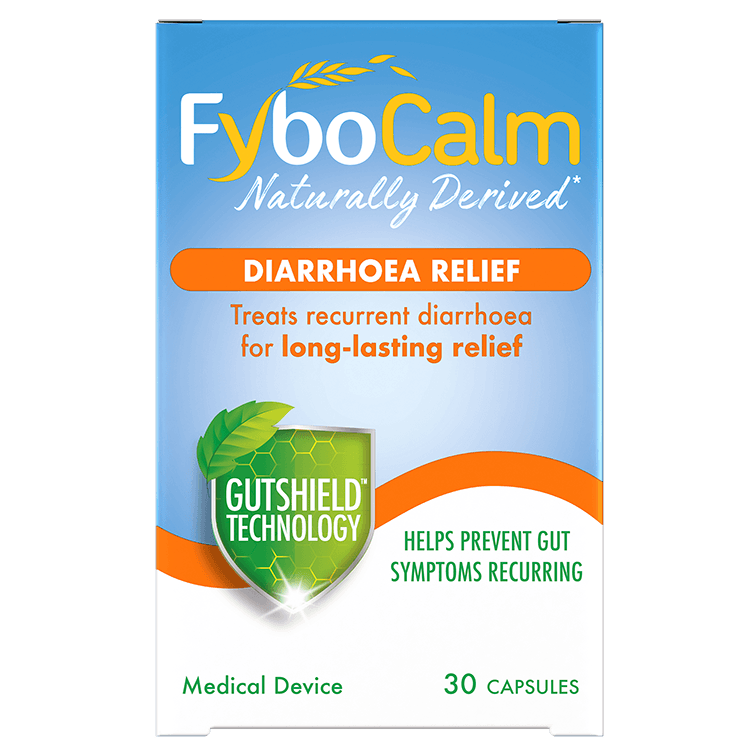
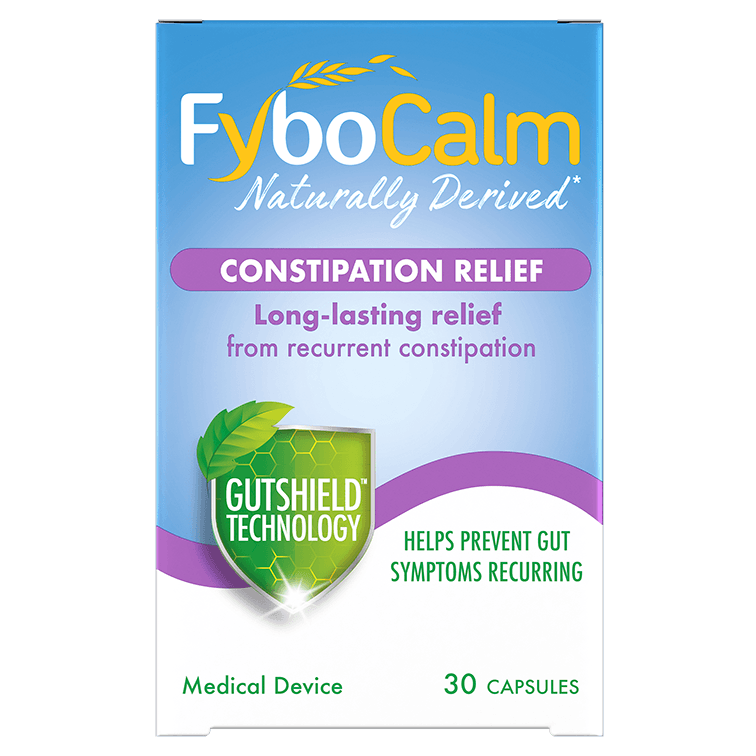
Clinically proven, long lasting, multi-symptom IBS RELIEF for 1 month.‡
Advise customers to try it for a full month’s duration to see optimum benefits.7,12,13
Can be used LONG TERM§ in customers with IBS-type diarrhoea/constipation and accompanying abdominal pain/bloating.7,12,13
*Fybocalm is a medical device. Always read the instructions
‡Stool consistency significantly improved in treatment group at days 15 (p =0.04) and 28 (p<0.001) vs. placebo.
All patients in the treatment group reported normal stools at day 28.7
§FyboCalm constipation relief can be used for up to 1 month for long-term maintenance treatment compared to other OTC constipation treatments which can only be used for maximum of 3-5 days.14-16
Spotlight on FyboCalm Constipation Relief
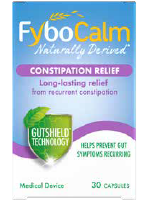
In addition to the Gutshield technology, FyboCalm Constipation Relief also contains chia seeds, which help to provide a bulk-forming laxative effect.
> CLICK BELOW TO READ HOW FYBOCALM CONSTIPATION RELIEF
is clinically proven to provide long-lasting relief from IBS-C for 1 month.‡7
FYBOCALM CONSTIPATION RELIEF

Clinically proven, long-lasting relief from IBS-CII symptoms for 1 month‡7
RANDOMISED, PLACEBO-CONTROLLED CROSSOVER STUDY
AT 15 DAYS7
-
SIGNIFICANT REDUCTION IN CONSTIPATION vs placebo (both p<0.001)
-

SIGNIFICANT REDUCTION IN ABDOMINAL PAIN AND BLOATING vs placebo (both p<0.001)
-

SIGNIFICANT IMPROVEMENT IN QUALITY OF LIFE with clinically meaningful improvement at 1 month (both p<0.001)
AT 1 MONTH7
-

REDUCTIONS IN ABDOMINAL PAIN AND BLOATING were maintained for an additional 8 weeks post a 4-week treatment course
AFTER 1 MONTH7
-

Of patients had RETURNED TO NORMAL STOOLS at the end of the 28-day treatment course, vs 0% taking placebo (p<0.001)

‡Stool consistency significantly improved in treatment group at days 15 (p =0.04) and 28 (p<0.001) vs. placebo.
All patients in the treatment group reported normal stools at day 28.7
‖IBS-C: IBS with predominant constipation, i.e. more than 25% of bowel movements that are hard or lumpy
(Types 1 and 2 on the Bristol Stool Form Scale).
¶Bristol Stool Form Scale score at baseline = Type 1 or Type 2.1
When to refer17
Your customer should ask for an urgent GP appointment or get help from NHS 111 if they:
Have lost a lot of weight for no reason
Are bleeding or have bloody diarrhoea
Find a hard lump or swelling in the abdomen
Have shortness of breath, palpitations and skin that's paler than usual