




 1 Min
1 Min
In CPD Modules
CPD modules help to expand your clinical knowledge on a whole range of topics. Make sure you log your learning so you can track your progress and add to your online revalidation record.
Bookmark
INTRODUCING NEW
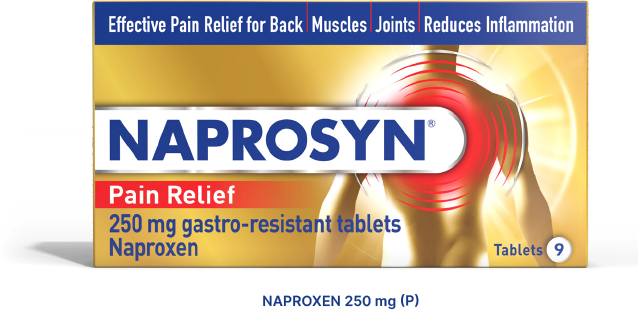
NAPROSYN® PAIN RELIEF
for acute musculoskeletal pain & inflammation
Scroll to start learning
MUSCULOSKELETAL CONDITIONS AFFECT THE MUSCLES, JOINTS, BONES AND SPINE, AND IMPACT THE QUALITY OF LIFE OF MORE THAN 20 MILLION PEOPLE IN THE UK.1
They are the leading cause of pain and disability, accounting for millions of lost working days each year.1,2
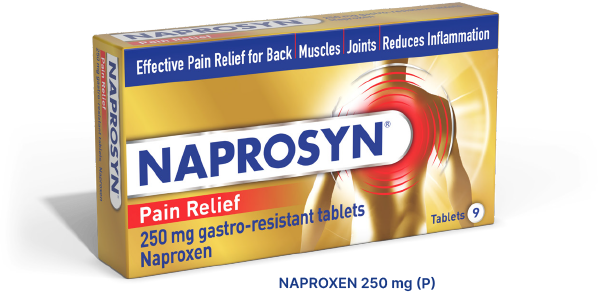
This module introduces Naprosyn® Pain Relief, the UK'S FIRST OVER-THE-COUNTER NAPROXEN treatment for adults suffering from acute back, muscle and joint pain associated with musculoskeletal conditions.
LEARNING OBJECTIVES
Understand the benefits of Naprosyn® Pain Relief in relieving acute musculoskeletal pain and inflammation
Recognise the specific benefits of naproxen for musculoskeletal pain and inflammation
To be able to make suitable recommendations by understanding how Naprosyn® Pain Relief works and where it fits into the pharmacy pain category
MUSCULOSKELETAL PAIN AND INFLAMMATION
Many conditions are characterised by musculoskeletal pain and inflammation, affecting various parts of the body.
>CLICK ON EACH HOTSPOT to reveal the prevalence for that type of pain:
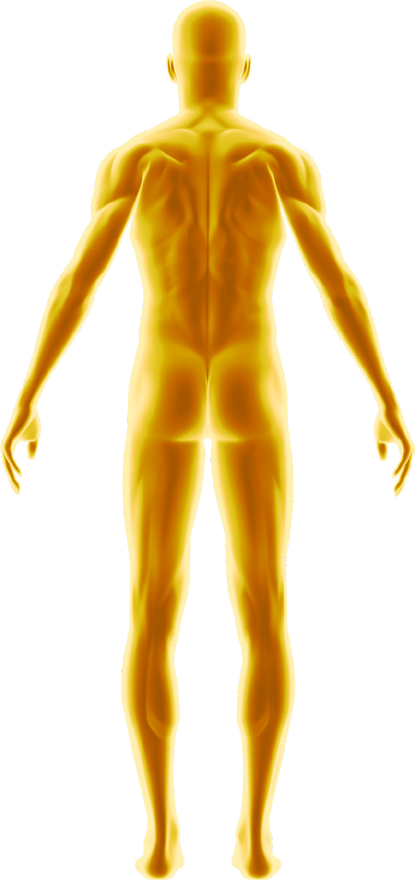
SHOULDERS
Up to 67% of people may have shoulder pain in their lifetime3
KNEES
19% of adults have had knee pain in the past month4
FEET
Plantar fasciitis causes heel pain and a tight Achilles tendon in around 4-7% of the population3
NECK
Up to 70% of people have neck pain during their lifetime3
LOWER BACK
Up to 60% of adults experience low back pain at some point3
ANKLES
The most common type of sprains and strains, with up to 70% experiencing this injury at some point3
Musculoskeletal pain and inflammation are present in many common conditions that prompt pharmacy consultations. While such conditions are more prevalent in older patients, it is important to recognise that musculoskeletal complaints can affect patients of any age.3 Even amongst younger age groups, you can provide tailored support to empower your customers to keep their bones, muscles and joints healthy by:
Providing simple and basic information about musculoskeletal health
Helping them understand potential triggers
Encouraging them to stay active
Recommending manageable lifestyle changes when appropriate
GENERAL LIFESTYLE ADVICE
>CLICK THROUGH THE CAROUSEL for lifestyle advice you can share with your customers.

PHYSICAL ACTIVITY5
Regular exercise promotes bone density, healthy joints, strong muscles, tendons and ligaments, reducing the risk of developing musculoskeletal conditions.
BODY WEIGHT6,7
Obesity is an often avoidable risk factor that can contribute to joint disorders and future physical disability. Maintaining a healthy weight is important to preserve joint health and reduce the risk of developing osteoarthritis.

INJURIES8,9
Injuries to joints, bones and muscles can lead to musculoskeletal problems. Modifying high risk physical environments, if possible, engaging in suitable warm-up routines and accessing effective treatment after an injury can help prevent long-term problems.
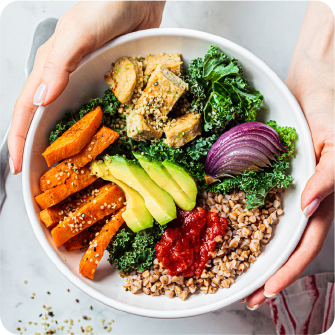
NUTRITION10
A well-balanced diet with adequate nutrition, including sufficient protein, vitamin D and calcium, plays a role in improving and maintaining musculoskeletal health.

SMOKING11,12
Smoking has negative effects on the musculoskeletal system, including adverse effects on joints, muscles and ligaments. Quitting can bring all-round health benefits, including better blood flow to muscles.
NAPROSYN® PAIN RELIEF
Naprosyn® Pain Relief is a pharmacy (P) medicine containing the non-steroidal anti-inflammatory drug (NSAID) naproxen. It is indicated in adults aged 18 to 50 years for the relief of short-term muscle and joint pain and inflammation, including:13,14
Sprains and strains
Sporting injuries
Lower back pain
Neck pain
Pain in the wrists or feet.
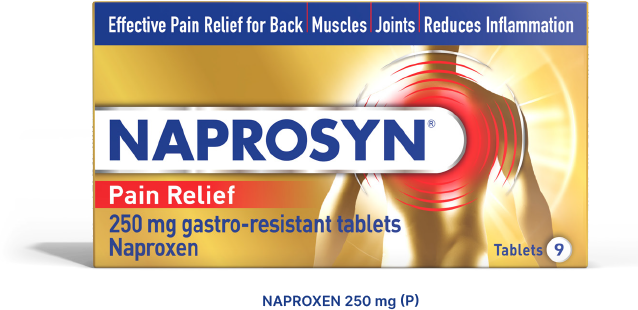

WHY RECOMMEND NAPROSYN® PAIN RELIEF
NAPROSYN® PAIN RELIEF:3
Contains naproxen, a long-established prescription NSAID with clinically proven efficacy in the management of pain and inflammation due to musculoskeletal conditions13
Provides powerful, long-lasting relief for up to 12 hours15
Targets inflammation13 to help relieve its 5 signs: pain, swelling, heat, redness and reduced function16
Opioid-free
Gastro-resistant formulation13 helps minimise the risk of adverse gastrointestinal (GI) effects associated with NSAIDs.
SUPPLYING NAPROSYN® PAIN RELIEF
Once you have assessed that the request is from an adult within the indicated age range with acute muscle and joint pain and / or inflammation, you should consider the following questions to determine whether it would be suitable to supply Naprosyn® Pain Relief.
>CLICK ON EACH QUESTION to learn more:
Q1. DOES YOUR CUSTOMER HAVE ANY SYMPTOMS THAT REQUIRE FURTHER INVESTIGATION?
The following signs and symptoms accompanying musculoskeletal pain are considered RED FLAGS and warrant further investigation:13
Unexplained weight loss
Unexplained mass or swelling in the affected area
History of cancer
Bladder or bowel dysfunction
Sudden worsening of symptoms or symptoms spreading to other joints or parts of the body
Muscle or joint weakness or loss of sensation
Suspected fracture, e.g. misaligned joints and difficulty weight-bearing
Pain that doesn’t ease, is present at rest or is worse at night
Extreme difficulty moving or stiffness
Signs of an infection, e.g. fever, feeling unwell, swelling or redness of the affected area
A new and severe headache
The person has diabetes or is immunocompromised.
Q2. DOES YOUR CUSTOMER HAVE ANY CONTRAINDICATIONS?
NAPROSYN® PAIN RELIEF IS NOT SUITABLE FOR EVERYONE.
It should NOT be recommended if the customer has any of the below contraindications:13
Active or history of peptic ulceration
Active GI bleeding
History of GI bleeding or perforation related to previous NSAID therapy
In the last trimester of pregnancy
Severe heart, kidney or liver failure
Aspirin or NSAID sensitivity*
Hypersensitivity to naproxen* or the other tablet excipients
Those who are breastfeeding
*Since the potential exists for cross-sensitivity reactions, Naprosyn® Pain Relief should not be supplied to those in whom aspirin or other NSAIDs / analgesic drugs induce asthma, rhinitis, nasal polyps or urticaria. Severe, fatal anaphylactic-like reactions to naproxen have been reported in such cases.3
Naprosyn® Pain Relief can be recommended if an asthmatic has not previously had a reaction to aspirin or other NSAIDs.13,17
Q3. DOES YOUR CUSTOMER HAVE ANY OTHER CONSIDERATIONS THAT WARRANT CAUTION?
RESPIRATORY PROBLEMS
Bronchospasm can occur in those with a history of bronchial asthma or allergic disease. Always ask about asthma before recommending Naprosyn® Pain Relief and advise patients to stop using if asthma worsens. However, most asthmatics do not react to NSAIDs, and Naprosyn® Pain Relief is only contraindicated in those who have experienced an asthmatic or allergic reaction to aspirin or other NSAIDs.13,17
CARDIOVASCULAR OR HEPATIC IMPAIRMENT OR RENAL FAILURE
NSAIDs can cause a dose-dependent reduction in prostaglandin formation, resulting in renal failure. Those most at risk are those with impaired renal function, cardiac impairment, liver dysfunction, those taking diuretics and older patients; renal function should be monitored.13 Naproxen and low dose ibuprofen are the NSAIDs with the most favourable cardiovascular safety profile.18
HISTORY OF HYPERTENSION AND/OR MILD-TO-MODERATE HEART FAILURE
Those with history of hypertension, uncontrolled hypertension, congestive heart failure, established ischaemic disease, peripheral arterial disease and/or cerebrovascular disease should only take Naprosyn® Pain Relief under supervision of a doctor.3
GI CONDITIONS
Naprosyn® Pain Relief may exacerbate Crohn’s disease and ulcerative colitis in those with a history of these GI conditions.13
COAGULATION
Those with coagulation disorders, those taking medication that interferes with coagulation or who are at high risk of bleeding, may be at an increased risk of bleeding if they take naproxen.
SYSTEMIC LUPUS ERYTHEMATOSUS AND MIXED CONNECTIVE TISSUE DISORDERS
These patients are at increased risk of aseptic meningitis.
Q4. IS YOUR CUSTOMER TAKING ANY OTHER MEDICINES THAT MAY INTERACT WITH NAPROSYN® PAIN RELIEF?
Naproxen may interact with other medications. Other medicine may cause an increased risk of bleeding or other effects, such as an increased risk of nephrotoxicity or of convulsions.13 Full details are available in the Summary of Product Characteristics (SmPC)13 to enable you to consider the importance of the interaction and make a decision based on benefit and risk.
NSAIDs should NEVER be taken together as they may lead to an increased risk of side effects.

WHEN YOU SUPPLY NAPROSYN® PAIN RELIEF, ADOPT A SAFETY-NETTING APPROACH;
advise the patient that they should return for more advice or consult their doctor if their pain does not improve after 3 days of continuous use,13 or if it gets worse, or if they notice any changes in their symptoms.
Side effects from Naprosyn® Pain Relief can be minimised by using the LOWEST EFFECTIVE DOSE for the SHORTEST DURATION NEEDED to control symptoms.13
The most common side effects, as with all NSAIDs including ibuprofen, are GI-related and include heartburn, nausea, vomiting, diarrhoea, flatulence, constipation, dyspepsia, abdominal pain and epigastric distress (pain or discomfort in the upper abdomen).13
Naprosyn® Pain Relief is available as an enteric-coated, gastro-resistant formulation, that stays intact in the stomach and only disintegrates once it reaches the small intestine.13 This formulation design aims to minimise the risk of adverse GI effects often linked with NSAIDs.
Please see the SmPC for full information of potential adverse reactions.
SELF-CARE ADVICE
Naprosyn® Pain Relief can bring long-lasting15 pain relief of acute back, muscle and joint pain. It can be recommended alongside self-care advice. An ice pack or a bag of frozen peas wrapped in a tea towel can be used for up to 20 minutes every 2 to 3 hours to help with knee pain, shoulder pain, strains and sprains, lower back pain or neck pain (use only for 5 minutes three times a day for neck pain22). For neck, shoulder and lower back pain, a hot water bottle wrapped in a tea towel for 20 minutes, 2 to 3 times a day may also help.19-24
>CLICK THROUGH THE TABS for additional advice for individual types of pain.
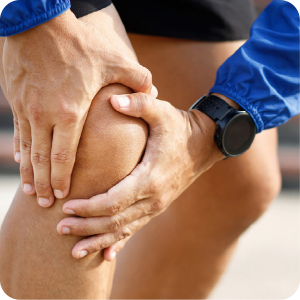
KNEE PAIN19
Put as little weight as possible on the knee, e.g. by avoiding standing for a long time.

SHOULDER PAIN20
Stay active and gently move the shoulder. Stand up straight with the shoulders down and gently back and use a cushion behind the lower back when sitting.
Shoulder exercises for 6 to 8 weeks may help to stop pain returning.

SPRAINS AND STRAINS21
In the first 2 to 3 days after the sprain or strain, follow PRICE therapy to help bring down swelling and support the injury:
PROTECTION – protect the injury, e.g. by using a support
REST – stop exercise or activities and try not to put any weight on the injury
ICE – apply an ice pack
COMPRESSION – wrap a bandage around the injury to support it during the day
ELEVATE – keep it raised on a pillow as much as possible.
Avoid heat like hot baths and heat packs, alcohol and massages for the first couple of days to help prevent swelling. Once it is possible to move the injured area without pain stopping the movement, keep moving it so the joint or muscle does not become stiff.

NECK PAIN22
The following may help; using a low, firm pillow, putting heat or cold packs on the neck or trying neck flexibility exercises.
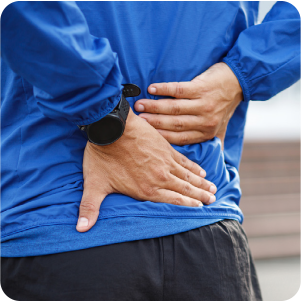
LOWER BACK PAIN23
Stay active without over-exertion, but try to continue with daily activities. Exercises and stretches may also help.
PUTTING KNOWLEDGE INTO PRACTICE
>CLICK ON EACH SCENARIO below:

A 42-year-old woman presents with sudden onset of lower back pain after awkwardly swinging a heavy laptop bag onto her shoulder a couple of days ago. The pain is worse when she bends forward or twists and it is making it difficult for her to sit comfortably. It is also affecting her sleep. She has no tingling, weakness, numbness or other concerning symptoms. Her medical history includes mild asthma.
>CHOOSE HOW YOU WOULD YOU PROCEED:
REFER HER TO HER GP BECAUSE NOTHING IN THE PHARMACY WOULD BE APPROPRIATE TO TRY BECAUSE OF HER HISTORY OF ASTHMA
ADVISE HER THAT PARACETAMOL IS THE BEST TREATMENT OPTION FOR LOWER BACK PAIN
ASK MORE QUESTIONS TO DETERMINE WHETHER NAPROSYN® PAIN RELIEF MIGHT BE APPROPRIATE FOR HER
THIS IS NOT CORRECT ADVICE. Asking a few additional questions will help you determine whether she could take Naprosyn® Pain Relief. THIS IS NOT CORRECT ADVICE. Paracetamol on its own is not recommended for back pain, although it could be used with other analgesics.23 Asking a few additional questions will help you determine whether she could take Naprosyn® Pain Relief.
THIS IS CORRECT.
You decide to continue questioning to determine whether she has previously experienced asthma, rhinitis, nasal polyps or hives after taking aspirin or other NSAIDs. If not, Naprosyn® Pain Relief may be an appropriate option depending on whether she has any other medical conditions or is taking other regular medicines.

A 32-year-old man presents at the pharmacy with pain, swelling and bruising around his ankle. The injury occurred last night when he ran across the road in the rain. He accidentally stepped into a puddle that turned out to be a pothole and sprained his ankle. He rested the ankle overnight and used some ice packs again this morning, but commuting has made his pain worse, and he is looking for long-lasting relief to get him through his busy day.
Consider what questions you would ask to determine relevant information that will help you provide suitable advice and treatment.
>CLICK BELOW TO REVEAL FURTHER INFORMATION FROM YOUR CUSTOMER
Upon questioning, your customer reveals no significant medical history and no red-flag symptoms. He is not taking any other medication apart from the odd paracetamol for headaches. While he is talking, he recalls taking ibuprofen this morning. “Now that I’m thinking about it, it hasn’t made much difference to this ankle pain.”
WHAT WOULD YOU RECOMMEND NEXT?
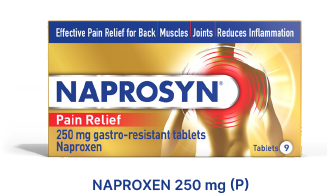
YOU CAN RECOMMEND NAPROSYN® PAIN RELIEF FOR UP TO 3 DAYS.
It can provide long-lasting relief for up to 12 hours15 to help him get on with his day. Remind him to take it with or after food.
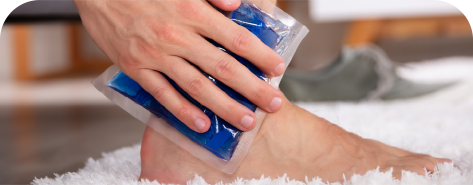
REINFORCE PRICE PRINCIPLES
for another couple of days and advise him that a sprain may take up to 2 weeks to improve. Once he is able to, he should begin gentle exercises to reduce stiffness.21

A 62-year-old woman complains of knee pain after her knee ‘gave way’ on the stairs a couple of days ago. Her leg feels weak and she has pins and needles in her foot. She has heard of Naprosyn® Pain Relief from her daughter who has been using it for a couple of days for shoulder pain. She is wondering whether this might help as she really doesn’t want to bother her GP.
>HOW WOULD YOU PROCEED?
RECOMMEND NAPROSYN® PAIN RELIEF AS THIS PROVIDES LONG-LASTING PAIN RELIEF AND WILL HELP TO RESTORE HER MOBILITY
RECOMMEND PARACETAMOL INSTEAD BECAUSE YOU SUSPECT SHE HAS OSTEOARTHRITIS
REFER HER TO HER GP AS NAPROSYN® PAIN RELIEF IS NOT A SUITABLE OPTION FOR HER
THIS IS NOT CORRECT. This customer has weakness in her leg and has lost some sensation in her foot. She is also 62 years old and therefore outside of the indicated age range. You need to refer her to her GP for further investigation. Naprosyn® Pain Relief is not a suitable OTC option for her. THIS IS NOT CORRECT. While this customer may have some symptoms that could relate to osteoarthritis, the weakness in her leg and loss of sensation in her foot need to be investigated. Refer her to her GP.
THIS IS CORRECT.
This customer has additional symptoms, weakness in her legs and needles in pins in her foot, that warrant further investigation. Explain this to her and refer her to her GP.
1. NHS England. Musculoskeletal health. Available at: https://www.england.nhs.uk/elective-care/best-practice-solutions/musculoskeletal/
2. Department of Health and Social Care. Musculoskeletal health profile. 2025. Available at: https://fingertips.phe.org.uk/profile/msk
3. Naprosyn® Pain Relief. Pharmacy Training Guide. 2025. Available at: https://naprosynpainrelief.com/media/dh1phr3n/pharmacy-training-guide-naprosyn-pain-relief.pdf
4. Webb R, et al. Oppo rtunities for prevention of 'clinically significant' knee pain: results from a population based cross sectional survey. J Public Health (Oxf).
2004 Sep;26(3):277-84. doi: 10.1093/pubmed/fdh162.
5. Dhuli K, et al. Physical activity for health. Prev Med Hyg. 2022; 63(suppl. 3): e150-e159. doi: 10.15167/2421-4248/jpmh2022.63.2S3.2756.
6. Georgiev T and Kabakchieva P. Weight loss, but not at any cost: risks and challenges in patient s with osteoarthritis. Mediterr J Rheumatol.
2025 Mar 31;36(1):28–35. doi: 10.31138/mjr.121224.wlc
7. Wluka AE, et al. Tackling obesity in knee osteoarthritis. Nat Rev Rheumatol. 2013 Apr;9(4):225-35. doi: 10.1038/nrrheum.2012.224.
8. Woods K, et al. Warm-up and stretching in the prevention of muscular injury. Sports Med 2007; 37 (12): 1089-1099. doi: 0112-1642/07/0012-1089/$44.95/0
9. Bergman S. Management of musculoskeletal pain. Best Pract Res Clin Rheumatol. 2007 Feb; 21(1):153-66. doi: 10.1016/j.berh.2006.10.001
10. Dominguez LJ, et al. Nutrition and ph ysical activity in musculoskeletal health. Endocrines. 2025, 6(1), 10. doi: 10.3390/endocrines6010010
11. Al-Bashaireh AM, et al. The effect of tobacco smoking on musculoskeletal health: a systematic review. J Environ Public Health. Jul 11; 2018:4184190. doi: 10.1155/2018/4184190
12. NHS. Benefits of stopping smoking. No date. Available at: https://www.nhs.uk/better-health/quit-smoking/why-quit-smoking/benefits-of-quitting-smoking/
13. Naprosyn® Pain Relief 250 mg Gastro-resistant Tablets. Summary of Product Characteristics. 2025. Available at: https://www.medicines.org.uk/emc/product/101361/smpc
14. Naprosyn® Pain Relief 250 mg Gastro-resistant Tablets. Patient Information Leaflet. 2025. Available at: https://www.medicines.org.uk/emc/product/101361/pil
15. Cooper SA, et al. Longer analgesic effect with naproxen sodium than ibuprofen in post-surgical dental pain: a randomized, double-blind, placebo-controlled, single-dose trial.
Curr Med Res Opin. 2019. 35:12, 2149-2158, doi:10.1080/03007995.2019.1655257
16. Punchard NA, et al. Journal of Inflammation 2004, 1:1 doi:10.1186/1476-9255-1-1.
17. Global Initiative for Asthma. Global Strategy for Asthma Management and Prevention. 2023.
Available at: https://ginasthma.org/wp-content/uploads/2023/07/GINA-2023-Full-report-23_07_06-WMS.pdf
18. Gov.uk. Drug Safety Update. Non-steroidal anti-inflammatory drugs (NSAIDs): cardiovascular risks. 2014.
Available at: https://www.gov.uk/drug-safety-update/non-steroidal-anti-inflammatory-drugs-nsaids-cardiovascular-risks
19. NHS. Knee pain. 2023. Available at: https://www.nhs.uk/symptoms/knee-pain/
20. NHS. Shoulder pain. 2023. Available at: https://www.nhs.uk/symptoms/shoulder-pain/
21. NHS. Sprains and strains. 2024. Available at: https://www.nhs.uk/conditions/sprains-and-strains/
22. NHS. Neck pain. 2023. Available at: https://www.nhs.uk/symptoms/neck-pain-and-stiff-neck/
23. NHS. Back pain. 2022. Available at: https://www.nhs.uk/conditions/back-pain/
24. NHS. Joint pain. 2022. Available at: https://www.nhs.uk/symptoms/joint-pain/
Online sources last accessed October 2025
Naprosyn® Pain Relief 250 mg gastro-resistant tablets (Naproxen) PL 42807/0004.
Indication: for the relief of short-term muscle and joint pain (such as sprains and strains, inflammation caused b y sporting injuries, lower back pain, neck pain, or pain in t he wrists or feet) in those aged 18-50 years.
Posology: On the first day two tablets (500 mg) to be taken initially and then if needed, one tablet (250 mg) after 6-8 hours. On days 2 and 3, one tablet to be taken every 6-8 hours, if needed. Maximum daily dose of 3 tablet s (750 mg), for a maximum of 3 days continuous use.
Contraindications: hypersensitivity to naproxen, naproxen sodium or any of the excipients, patients with a history of, or active peptic ulcers and active gastrointestinal (GI) bleeding (two or more distinct episodes of proven ulceration or bleeding), history of GI bleeding or per foration related to previous NSAID therapy, aspirin or NSAID sensitivity, those taking any other NSAID or aspirin, patients with severe heart, hepatic or renal failure, women in the third trimester of pregnancy.
Precautions: in the first 6 months of pregnancy, when breast-feeding or in women attempting to conceive. Caution in patients with bronchial asthma or allergic disease, cardiac impairment, hypertension, impaired renal function, liver dysfunction, peripheral arterial or cerebrovascular disease, history of GI disease (e.g., ulcerative colitis, Crohn’s disease), coagulation disorders, connective tissue disease, hyperlipidaemia, diabetes, smokers, and those taking oral corticosteroids, anticoagulants, antiplatelet agents, or SSRIs.
Side effects: Hypersensitivity reactions including non-specific allergic reactions and anaphylaxis, respiratory tract reactivity e.g., asthma, bronchospasm, dyspnoea, various skin reactions e.g., pruritus, urticaria, purpura, angioedema, bullous reactions including epidermal necrolysis, erythema multiforme, Stevens-Johnson Syndrome, DRESS. GI ulceration or haemorrhage, peptic ulceration, or perforation, hyperkalaemia, cardiac and congestive heart failure, myocardial infarction, stroke, renal failure, jaundice, hepatitis, meningitis.
MA Holder: Maxwellia Ltd, Alderley Park, Alderley Edge, Cheshire, SK10 4TG, UK.
Classification: P. RRP: 9 tablets £6.95. Date: August 2025.

Content developed by Maxwellia Ltd working together with CIG Healthcare Partnership.
© 2025 CIG Healthcare Partnership
November 2025