



 2.5 Why behavioural science is crucial
2.5 Why behavioural science is crucial
There is still probably too much emphasis on diet and exercise when it comes to losing weight. In other words, “eat less, exercise more” – with little or no mention of behavioural change, the pressures of the food environment and demographics.
In this section we look at why interventions in weight management need to take on board the evidence from the many studies that have applied the principles of behavioural science.
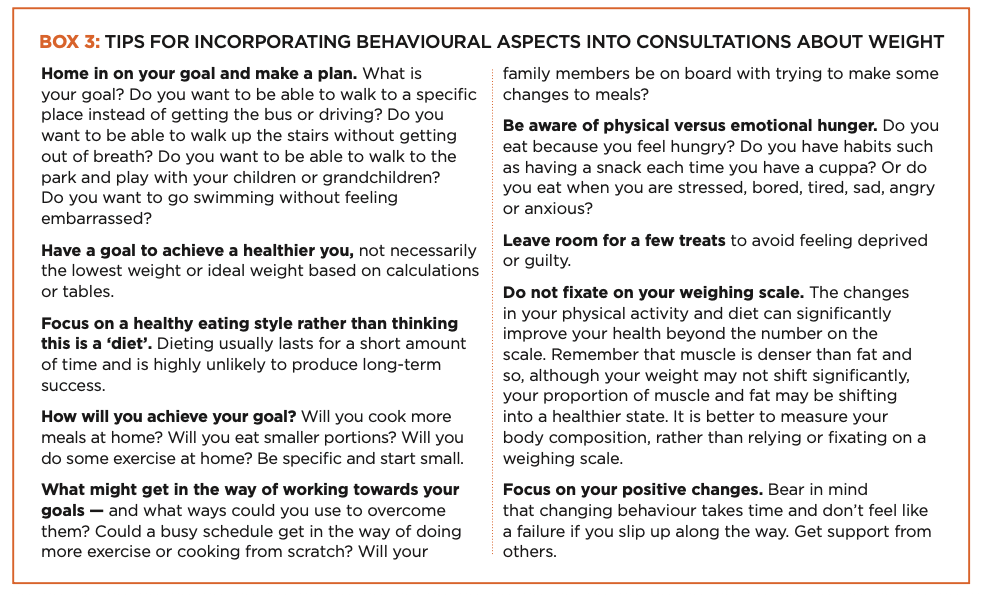
Systematic reviews show that goal setting has a positive effect on health outcomes and on levels of physical activity (Box 3 below).
Regular follow-up is an opportunity to review which changes have become routine and those that have been harder to keep up. Keeping track of weight and waist circumference enables praise when a goal is reached, and reassurance and suggestions if progress is not what was hoped for.
It is inevitable that ‘relapse’ will sometimes happen. Recognising this and having a backup plan to restart is essential. Weight regain is a normal part of weight management and does not necessarily mean that someone has failed. Early intervention is important and pharmacy monitoring can make a difference.
Food portion sizes may have crept up, or physical activity might be less vigorous or shorter than the person thinks. Drinking alcohol in moderate to large amounts can sabotage efforts to lose weight, not only because of the calories it contains but also because it can lower inhibitions and lead to eating more.
During festive or celebratory seasons, people often overindulge. It is important to accept that this can occur without guilt but isn’t a reason to give up and relapse. It is important for people to enjoy themselves but to reintegrate positive changes back into their lifestyle as soon as they can.