



 2.2 Diet and nutrition
2.2 Diet and nutrition
Most people need between 1.5 and 2.5 litres of fluid a day. The NHS recommends 6 to 8 “cups or glasses” a day (1 medium-sized glass ~200ml; 1 mug ~250ml; 1 cup ~200ml; 1 can of fizzy drink ~330ml). Doing more exercise will increase fluid intake needs through sweating and this will be relevant for anyone who starts to be more active.
Most people find tips and hints useful about choosing and cooking healthier food and swapping foods (see Box 2 below).
| BOX 2: PRACTICAL TIPS FOR COOKING AND EATING |
|
Protein has gained a higher profile because of its importance in building and maintaining muscle (particularly as people get older) as well as creating a feeling of fullness. Having more muscle results in an increased metabolic rate, helping weight loss. The Eatwell Guide shows a range of protein sources including plant-based options (Figure 2).
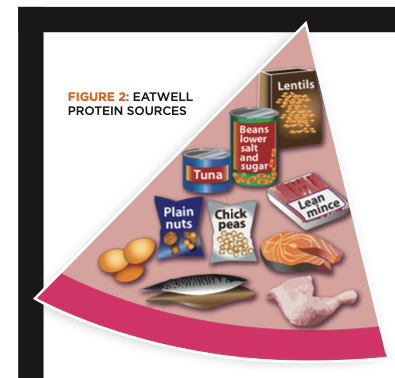
You may find that people are less aware of non-meat sources of protein (e.g. an egg contains 5-6g, half a standard tin of baked beans 9.6g and Greek yoghurt (150g tub) contains 10g. There is an increasing range of food products with added protein including bread, yoghurt, cereal bars and even milk.
Muscle loss has always been a potential issue during efforts to lose weight and is being highlighted as a particular problem in people taking GLP-1 medications such as semaglutide and tirzepatide (discussed further in the Toolkit 3: Pharmacological interventions).
Finally, bear in mind affordability and the person’s cooking skills. Pharmacy teams who live locally will know the places where best value foods can be bought. Not everyone will be at a point where they will have the store cupboard ingredients that may seem ‘everyday’ to you.
Having considered practical aspects of food choices, and before we go on to discuss physical activity, it is important to recognise that psychological, social, cultural, and environmental factors affect the size of meals.
We will consider this further in Section 2.5: Why behavioural science is crucial.