1.2 How overweight and obesity are defined and measured
1.2 How overweight and obesity are defined and measured
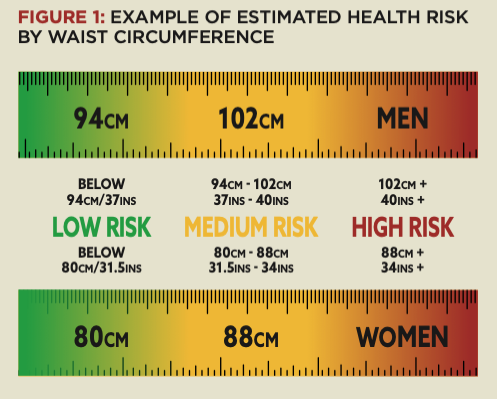
Other measures such as waist circumference (Figure 1), waist:height (WHtR) ratio and waist:hip (WHR) ratio are also used.
BMI is still used for specifying the point at which weight loss drugs are licensed and when NHS services will accept referrals. Waist:height ratio is increasingly used as a practical tool to discuss weight management with individuals in practice.
Establishing a person’s weight and height in the pharmacy is feasible with appropriate equipment and adequate space. Being weighed can be hard for people and needs to be done sensitively and without judgement. Doing this in a video consultation or online is less easy and the GPhC has issued specific advice about verifying measurements before proceeding to any pharmacological treatment.
Evidence has shown that waist circumference is a predictor of risk and Figure 1 is an example of estimated risk levels. The waist-to-height ratio (WHtR) is a useful measure that is becoming more widely used.
Measuring waist circumference is often perceived by health professionals as something patients would not find acceptable. However, patient feedback indicates acceptability so long as a clear explanation is given about why and how, with the offer of a chaperone.