




 Why is polypharmacy a public health issue? (2)
Appropriate polypharmacy should be considered at every point of initiation of a new treatment for a patient and when a patient moves across different care settings. Community pharmacists may not have access to information about why a medicine is prescribed and whether a patient’s medicines are achieving their therapeutic objectives.
However, a pharmacist might be the only person who sees the full picture to identify potentially inappropriate polypharmacy in terms of possible ADRs and patient adherence (or not) to treatment. Community pharmacists are an essential part of the health and care system. Feeding this information back to either a practice pharmacist or the patient’s GP will help to improve outcomes.
The risk of harm is generally higher in older people with multimorbidities than in younger patients due to the former’s reduced ability to clear drugs (e.g. due to renal and/or hepatic impairment) and increased vulnerability to drugs’ adverse effects (due to general frailty and drug-drug and drug-disease interactions) and medication burden.
However, the increased risk of harm is not always offset by increased benefits and for many preventive medicines such benefits may never be realised due to shortened life expectancy.
The '7-Steps' approach
The 7-Steps approach to medication review was developed with patient groups and doctors, and pharmacists in primary and secondary care. It is a clear structure for both the initiation of new and the review of existing treatments, which places a greater emphasis on what matters to the individual.
The person-centred 7-Steps review process starts by matching therapeutic objectives to current life priorities with the individual.
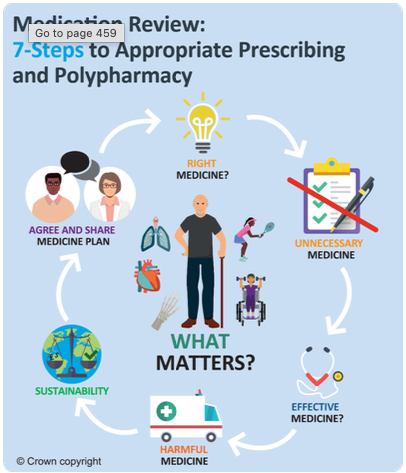
Step 1: sets the context within which all further decisions are made, namely establishing what matters to the patient
Step 2: identify essential treatment
Step 3: determine if the patient is taking unnecessary treatment
Step 4: identify whether therapeutic objectives that matter to the patient are achieved and that there is evidence of the effectiveness of the medicines (NNT)
Step 5: assess if any medicines are too risky or cause unacceptable adverse effects
Step 6: consider which medicines are cost-effective and environmentally sustainable
Step 7: determine whether the patient is willing and able to manage their medicines in a way that avoids harm and maximises benefit.
According to the Scottish Government Polypharmacy Guidance: Appropriate prescribing, making medicines safe, effective and sustainable, applying the 7-steps as part of a holistic medication review has the potential to address all six dimensions of quality in healthcare: efficacy, safety, efficiency, timeliness, equity, and acceptability.
There are significant opportunities to reduce this burden by timely and effective interventions and the Royal Pharmaceutical Society’s polypharmacy report highlights how pharmacists can make a difference.