



 1 Min
1 Min In Practice

Follow this topic

Bookmark

Record learning outcomes
By Professor Paul Rutter, University of Portsmouth
Hypothesis generation
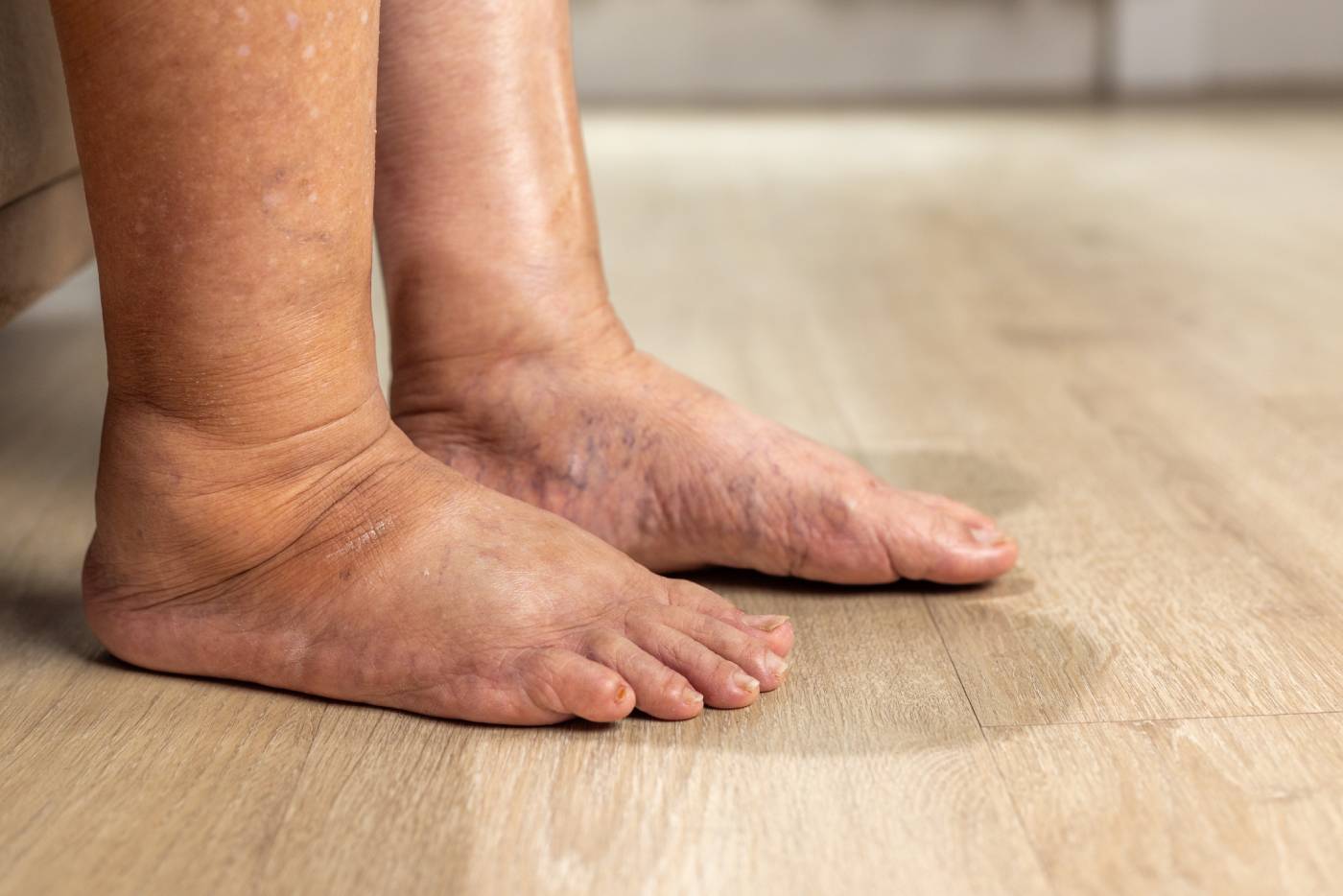
Peripheral oedema involves the lower limb (e.g. calf), ankle and foot. It may have a local, regional or systemic cause resulting from various pathological mechanisms, although venous insufficiency is the most common, especially in people over 50. Oedema that predominantly affects the ankle can be precipitated by prolonged sitting or standing, a lack of exercise and obesity. It is also frequently observed during pregnancy.
Likely diagnoses
- Cellulitis
- DVT
- Heart failure
- Insect bites/stings
- Medicines
- Musculoskeletal injuries
- Pregnancy (not applicable in this case)
- Venous insufficiency
Possible diagnoses
- Anaemia
- Filariasis
- Hypothyroidism
- Kidney failure (nephrotic syndrome)
- Liver failure
- Premenstrual syndrome (not applicable in this case)
Critical diagnoses
-
Malignancy involving lymph nodes.
Key points
- Ankle oedema is typically seen in older patients, especially if they are immobile
- Always take a medication history as many medicines can cause bilateral ankle swelling
- Investigations are often required to check FBC, U&E and liver function.
Continued information gathering
We know the patient’s symptoms are only affecting his left ankle area. This is very useful in narrowing down our thinking as a number of likely conditions cause bilateral ankle swelling and can therefore be discounted. These include heart failure, medicines and venous insufficiency. All possible diagnoses are also bilateral. We are therefore looking at cellulitis, DVT, bites or trauma as the cause of his ankle swelling.
Trauma and bites can be easily assessed. A history of a recent trip or fall will establish if trauma is the cause, and an inspection of the ankle should reveal signs of the patient being bitten. An examination reveals no obvious signs of bites and the patient says he has not fallen or hurt his ankle recently.
This suggests that we are dealing with a DVT or cellulitis. While DVTs are more associated with calf swelling, they can occur around the ankle.
Problem refinement
Both DVT and cellulitis will have an acute presentation associated with redness, warmth, tenderness/pain over the affected area. However, cellulitis should also show systemic symptoms such as malaise and fever, which may proceed swelling.
You ask the patient about his general health. He tells you that he feels okay but not 100 per cent himself. You ask when he started to feel like this, and he tells you it has been over the last two or three days. This is consistent with ‘malaise-like’ symptoms associated with cellulitis.
You make a diagnosis of cellulitis.
Red flags
This patient has not complained of marked systemic symptoms, or swelling that is causing severe pain, which might suggest worsening infection requiring onward referral for further evaluation.
Management
Self-care
Analgesia can be recommended for pain, and the patient could elevate his leg to help relieve the swelling.
Prescribing options
Antibiotics are recommended. Flucloxacillin 500-1000mg qds for up to seven days should be given – unless the patient has a penicillin allergy, in which case doxycycline would be an alternative. Clarithromycin should be avoided due to potential interaction with his statin.
Safety netting
You tell the patient that his swelling is due to an infection, and a course antibiotics should get rid of the problem. However, if he feels poorly or his symptoms get worse over the next two or three days, he needs to come back and see you.
Common causes of ankle swelling
Likely diagnoses
Cellulitis
Typically, a break in the skin allows Streptococcus or Staphylococcus bacteria to invade, causing acute onset swollen and tender skin that is red and painful to the touch. It is almost always unilateral. Systemic symptoms can also be present, including fever and malaise. It can spread rapidly, and recurrence is common.
DVT
Classically this affects one calf but it can occur around the ankle. Other than oedema, DVT is associated with throbbing pain, redness, warmth and tenderness. Patients who develop DVT commonly have risk factors, such as increasing age, obesity, active cancer, recent surgery or trauma, hospitalisation, immobilisation, pregnancy, a preceding long flight, or oral contraceptive use.
Heart failure
Onset of symptoms tends to be slow, insidious and non-specific, making an early diagnosis challenging. Typically, shortness of breath, night-time cough, fatigue, decreased exercise tolerance and painless bilateral ankle and lower limb swelling are seen. It is a condition of the elderly, and prevalence increases with increasing age.
Insect bites and stings
Ankles are a common site for insect bites and stings. Classically, they are associated with itching papules, which can be intense. Lesions are often localised and grouped together. Erythema and oedema follow but usually subside within a few hours or days, depending on severity.
Medicines
Medicine-induced leg swelling is relatively common. Presentation is usually acute and bilateral. Medicines where peripheral oedema is common include hormone therapy, steroids, gabapentinoids, anti-hypertensives (especially calcium channel blockers), antiparkinson medicines (e.g. ropinorole and pramipexole) and anti-cancer drugs.
Musculoskeletal injuries
Sprains, strains and fractures affecting the ankle result in localised swelling and pain. An ankle sprain is usually obvious from the history, although in a small number of cases, the patient may not recall a specific event that triggered their symptoms. Most patients will walk with a limp because the ankle cannot support their full weight.
Venous insufficiency
Chronic venous insufficiency typically causes chronic leg or ankle oedema accompanied with discomfort/heaviness in the legs, aching, itching and skin discolouration or eczema, or sometimes skin breakdown. Patients often have a history of hypertension, smoking, obesity, inactivity, or a family history.
Possible diagnoses
Anaemia
Bilateral ankle oedema can be observed when anaemia becomes severe (e.g. haemoglobin levels are less than 70g/L (note: adult male Hb level is normal if >130g/L). Although some patients can tolerate low levels of Hb with few symptoms, it would be unusual if more common signs and symptoms of anaemia were not present (e.g. dyspnoea, fatigue, headache, pruritus and cognitive dysfunction).
Filariasis
This is a parasitic infection rarely seen in the UK. It is spread from host to host via the bites of certain flies and mosquitoes, and is a disease of tropical countries. Signs and symptoms vary depending on the type of filarial infection but cutaneous presentation, especially swelling, is common.
Hypothyroidism
One of the symptoms of hypothyroidism is swollen feet/lower limbs, but this is more likely to be seen with advanced or severe disease. Other more obvious symptoms of tiredness, dry skin, hair loss, weight gain, constipation, cold intolerance and difficulty concentrating should be more prominent.
Kidney failure (nephrotic syndrome)
Nephrotic syndrome manifests with a wide range of signs and symptoms. Diffuse oedema is the predominant symptom. This can cause bilateral ankle and lower leg swelling as well as swelling of the hands and face. Other symptoms include breathlessness, signs of infection, dizziness and fatigue. It is frequently accompanied by dyslipidaemia, abnormalities in coagulation, reduced renal function and immunological disorders.
Liver failure
Ankle and leg swelling are recognised symptoms of advanced disease. Early symptoms include fatigue, loss of appetite, feeling sick and abdominal pain. More advanced symptoms in addition to swelling include bruising easily, weight loss, itchy or yellow discolouration of the skin, hair loss, weight loss and cognitive dysfunction.
Critical diagnosis
Malignancy
Malignant lymphoedema that block structures of the lymphatic system can cause ankle swelling, but other symptoms such as breathlessness, weight loss and fatigue should be present.
Now check your understanding of swollen ankles by answering the following questions:
1. Which ONE of the following conditions is most likely to cause ankle swelling associated with proteinuria and facial puffiness?
-
Chronic venous insufficiency
-
Deep vein thrombosis
-
Heart failure
-
Liver disease
-
Nephrotic syndrome
2. Which class of medicines is most likely to cause ankle swelling?
-
ACE inhibitors
-
Antiparkinson medicines
-
Beta-blockers
-
Calcium channel blockers
-
Statins
3. Which ONE of the following is characterised by sudden onset of unilateral ankle swelling with pain and warmth?
-
Congestive heart failure
-
Chronic kidney disease
-
Deep vein thrombosis
-
Liver cirrhosis
-
Medicine-induced
4. Ankle swelling that worsens at the end of the day and improves with leg elevation is most suggestive of which ONE of the following conditions?
-
Chronic venous insufficiency
-
Hypothyroidism
-
Lymphoedema
-
Nephrotic syndrome
-
Premenstrual syndrome
5. Which ONE of the following is the most common cause of bilateral ankle swelling in older adults?
-
Anaemia
-
Cellulitis
-
Congestive heart failure
-
Deep vein thrombosis
-
Lymphoedema
Answers: 1.e 2.d 3.c 4.a 5.c

Share:


In Practice
We know you want to continue to build on your practice, why not hear from others in the sector striving to do the same.