




 5 Min
5 Min In Practice

Follow this topic

Bookmark

Record learning outcomes
As far as Daniel Lee is concerned, hub and-spoke is one answer to the sector’s chronic capacity and workload crisis that could help pave the way for significant role expansion for pharmacists. For the founder of Pharmacy2U and now chief executive of HubRx, the UK’s first large scale centralised dispensing facility for independent pharmacies, automation is not the end goal — capacity for clinical care is.
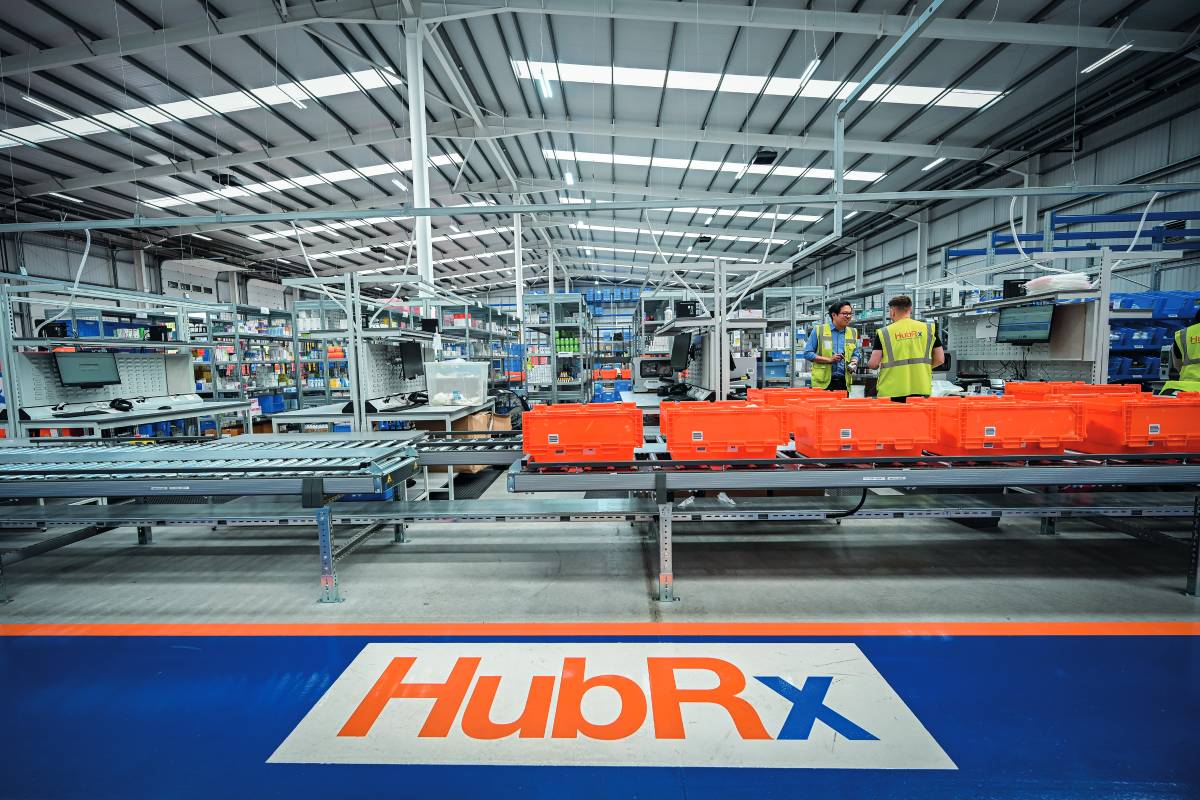
For years, only the large chains could fully leverage centralised dispensing. After what seemed an interminable wait, legislation to allow hub-and-spoke dispensing across different business entities was finally enacted in October 2025. However, Lee had already taken the plunge five years previously by building a state-of-the-art £15m 40,000 square foot facility in Leeds with the aim of removing routine dispensing volume from independents. Why did he take the gamble?
“My ambition was pretty straightforward,” he says. “I wanted to release pharmacy teams from routine prescription assembly so they could fully use their clinical skills. It’s what the NHS wants – and it’s better for patients too.”
His belief is that the long-awaited green light for inter-company hub-and-spoke could finally unlock the clinical potential independent pharmacy has talked about for years. But only if capacity is released first.
Lee frames the challenge succinctly. The NHS wants pharmacies to deliver more advanced patient care; pharmacists want to use their clinical skills; patients want easier access to treatment and advice. That is only possible, he argues, if the burden of the 1.2 billion prescription items dispensed by pharmacies each year – a figure that continues to rise relentlessly – is reduced through automated off-site prescription assembly.
He accepts that the model isn’t for everyone and that some pharmacy owners will have concerns about costs, transaction fees and reliance on third-party infrastructure. Others fear loss of control or the risk of vertical integration if hubs are owned by competitors. There are even questions about whether releasing time in-branch is meaningful without sustained NHS investment in services.
However, Lee’s response is pragmatic. It’s about choice, he says. Not every pharmacy will adopt hub-and-spoke, but those struggling with capacity need options for their business.
For independents historically excluded from centralised dispensing, shared hubs level the playing field with multiples that already benefit from scale and reach. And by spreading infrastructure costs and charging a per-item fee (HubRx does not add a margin to the medicines it purchases), independents can access automation without major capital investment.
Redefining pharmacy’s role
The levelling-up argument certainly has merit, but Lee also frames hub-and-spoke as part of a broader transformation of pharmacy practice. The goal isn’t just efficiency but redefining the role of community pharmacists and their teams. He maintains that the ability to maximise clinical service provision depends on removing routine dispensing workload. Without that shift, pharmacy’s clinical ambitions will remain a long way from being realised.
But his pitch isn’t purely operational – it is financial as well. Lee positions hub-and-spoke as a route to improved margins, not just more efficient workflow. At scale, centralised medicines purchasing and dispensing can improve buying terms for independents and reduce stock holding by up to 50%, creating headroom for more profitable clinical services, he argues.
Lee’s strategy was to prove the model within his own network first. The acquisition of the 33-branch Pharmacy Group in 2023 – rebranded as Pharmacy+Health – was designed as a working showcase. The plan was to integrate automated hub dispensing with PMR provider RxWeb, redesign branches around consultation spaces and demonstrate how capacity to provide more clinical services translates into revenue.
He describes it as a blueprint for independents. If the concept works at scale with other PMR providers, it can be rolled out more widely, potentially supporting hundreds of pharmacies and dispensing millions of items annually. The HubRx facility is currently operating at only 5–10% capacity.
“If we can prove that this works – and we absolutely believe it can – we want to share it with everybody,” he says.
So how does the process work? “It’s plug in and play,” explains Mark Pedder, commercial director of HubRx. “Pharmacies simply use their PMR system to send prescription assembly data directly to the HubRx unit. And we do the rest – picking, checking and labelling each prescription item from our facility every two seconds.”
Around 99% of orders arrive at the pharmacy the next working morning, bagged and ready for the patient to collect. Dispensing that previously took pharmacy teams hours now takes minutes, he says. Buying leverage currently brings the cost of using HubRx to around 50p per prescription item – and this will fall as the business builds scale, Pedder points out. “Our longer-term aim is to make HubRx cost neutral, with group buying benefits covering the fee for our customers.”
Optimistic realism
Daniel Lee and Mark Pedder can both be described as optimistic realists as far as the future of pharmacy is concerned. “Pharmacy has always been inventive and there is real capability and passion within it, but its design has been limited by the funding model – a model that’s now completely broken,” says Pedder, adding that dispensing simply doesn’t make sense anymore, unless it is automated.
This is where hub-and-spoke moves from “nice to have” to strategically essential, he maintains. The NHS is effectively signalling that dispensing efficiency must improve, clinical capacity must increase and workforce pressure must reduce to make pharmacy sustainable. Traditional, in-branch dispensing models struggle to deliver all three things simultaneously.
“The direction is clear: more services and more clinical responsibility,” says Pedder. “Pharmacies that rely solely on traditional dispensing models risk being misaligned with the future contract. In that sense, hub-and-spoke is not just an operational innovation – it is a contract-aligned transformation strategy,” he believes.
Independent pharmacy owners have reached a crossroads and the choices they make now will determine their future, he says. They can turn towards evolving into clinical hubs, focusing on higher value services by changing how they dispense. Or they can continue to struggle on the same dispensing path and hope that funding somehow dramatically changes.
This is highly unlikely, says Daniel Lee. Independents have the potential and desire to offer a wide range of clinical services and help alleviate pressure on an overstretched primary care system. However, they need to change and adapt to better ways of working to succeed in a massively underfunded sector, he warns.
“Creating significant capacity to deliver these higher margin services is key,” he says. “For many independents, automated hub-and-spoke prescription assembly could be the solution to a viable future.”
When the marketing blurb is stripped away and the economic model scrutinised closely, the central premise of HubRx is actually very simple: it offers a lifeline. Pharmacy is changing and policymakers’ and the public’s expectations are rising as quickly as funding pressures are intensifying. At the same time, the tools to adapt, like hub-and-spoke – and more importantly the time and capacity that they create – are now accessible for all pharmacies to capitalise on.
As Daniel Lee and Mark Pedder see it, independent pharmacies that recognise this shift – and act on it – won’t just survive the next contractual cycle. They’ll define it.

Share:


In Practice
We know you want to continue to build on your practice, why not hear from others in the sector striving to do the same.