




 18 Min
 In Pharmacy First

Follow this topic

Bookmark

Record learning outcomes
Infected insect bites and stings: when to treat
This toolkit is designed to support pharmacists and their teams to deliver Pharmacy First and similar services in the UK for infected insect bites. It covers:
- Taking a relevant history and assessing skin appearance to decide whether to treat or refer patients with infected insect bites
- Knowing what the red flags are and when referral is required
- Deciding whether antibiotic or symptomatic treatment alone is warranted and explaining the reasoning to the patient.
|
After reading this toolkit you will be able to:
|
|
||||||||||||||||
Introduction
Insect bites and stings tend to be a seasonal phenomenon and mostly occur in rural areas. Most are uncomplicated and will heal spontaneously. They may be intensely itchy and inflamed for a few days, so patients may need reassurance and first aid measures and require some symptomatic treatment.
However, inflamed and often excoriated skin presents an opportunity for infection and a small number of insect bites or stings will become infected a few days after the initial injury. These require treatment to prevent the development of more serious conditions such as cellulitis or sepsis.
There is no need for prophylactic antibiotic treatment of insect bites and stings. Rapid-onset reactions to bites or stings are more likely to be allergic or inflammatory in nature rather than an infection.
People can be bitten by insects (which have six legs) such as mosquitoes, midges and horseflies, and by arachnids (which have eight legs) such as mites and ticks. In this toolkit, the term 'insect' is used for both groups.
Some insects (such as mosquitoes, bed bugs and fleas) have piercing mouth parts that cause little trauma and may not be noticed immediately. Others (such as horseflies and midges) lacerate the skin and lap up blood from the wound. Such bites are painful and are noticed immediately.
Stinging insects include bumble bees, honeybees, wasps and hornets. They inject venom, which contains a mixture of pharmacologically active substances (e.g. allergens, histamine). The sting is usually felt immediately. Honeybees have a barbed stinger and venom sac, which is left in the skin as the insect flies away.
Taking a history
Ask about the onset, site, appearance and duration of symptoms including:
- Local symptoms such as pain, swelling and erythema
- Symptoms that could indicate a systemic reaction such as urticaria, rhinitis, wheezing, abdominal pain, vomiting and dizziness
- Risk factors for insect bites or stings such as outdoor activities, contact with domestic pets, overseas travel or contact with infested individuals (scabies)
- Was the bite or sting witnessed as being inflicted by a specific insect?
- Has there been a history of serious reactions to insect bites or stings in the past?
- Have any over-the-counter or prescribed preparations been used? In some people, topical preparations can cause allergic or sensitivity reactions.
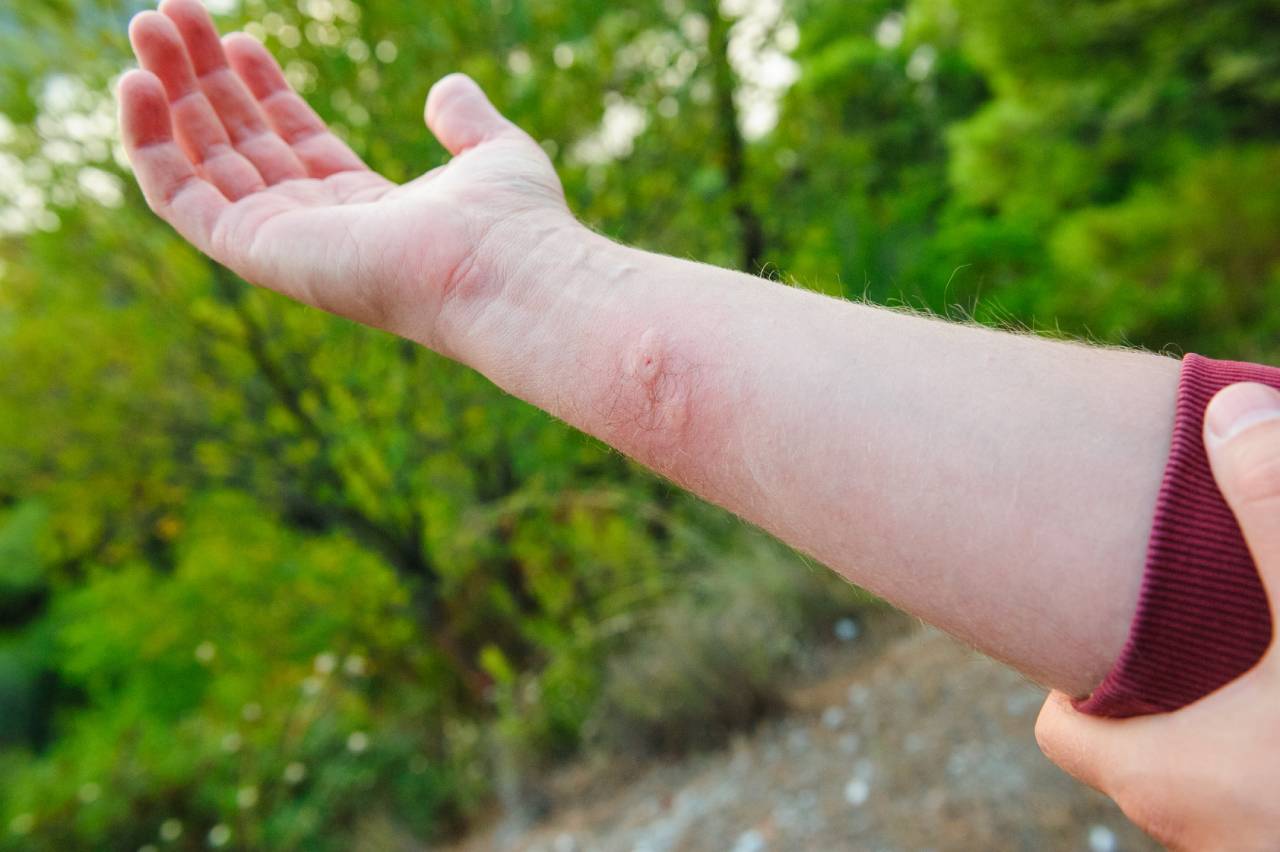
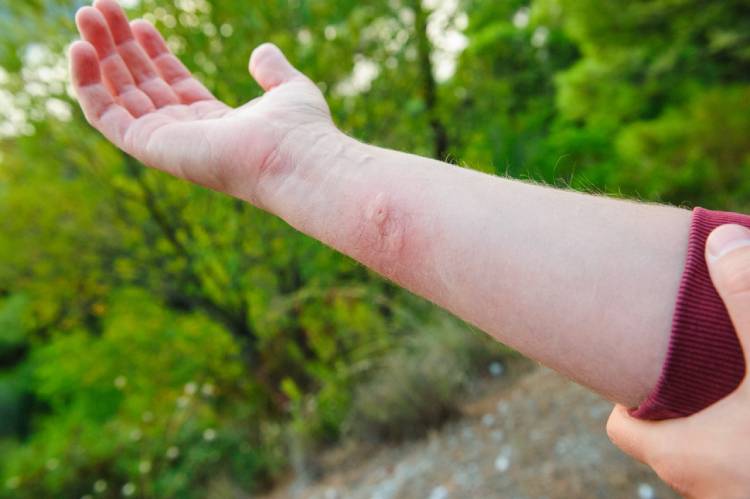
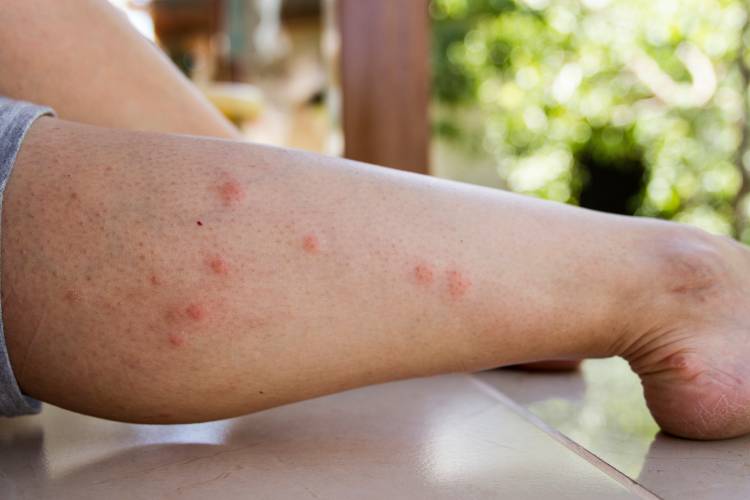
The appearance of bites and stings varies. Many will start as a small red mark or papule. Sometimes there is inflammation or swelling around the initial bite or sting and this may develop over several days.
Occasionally, insect stings can cause large local reactions (LLR), with inflammation spreading over an area greater than 10cm within 24 to 48 hours and resolving in three to 10 days.
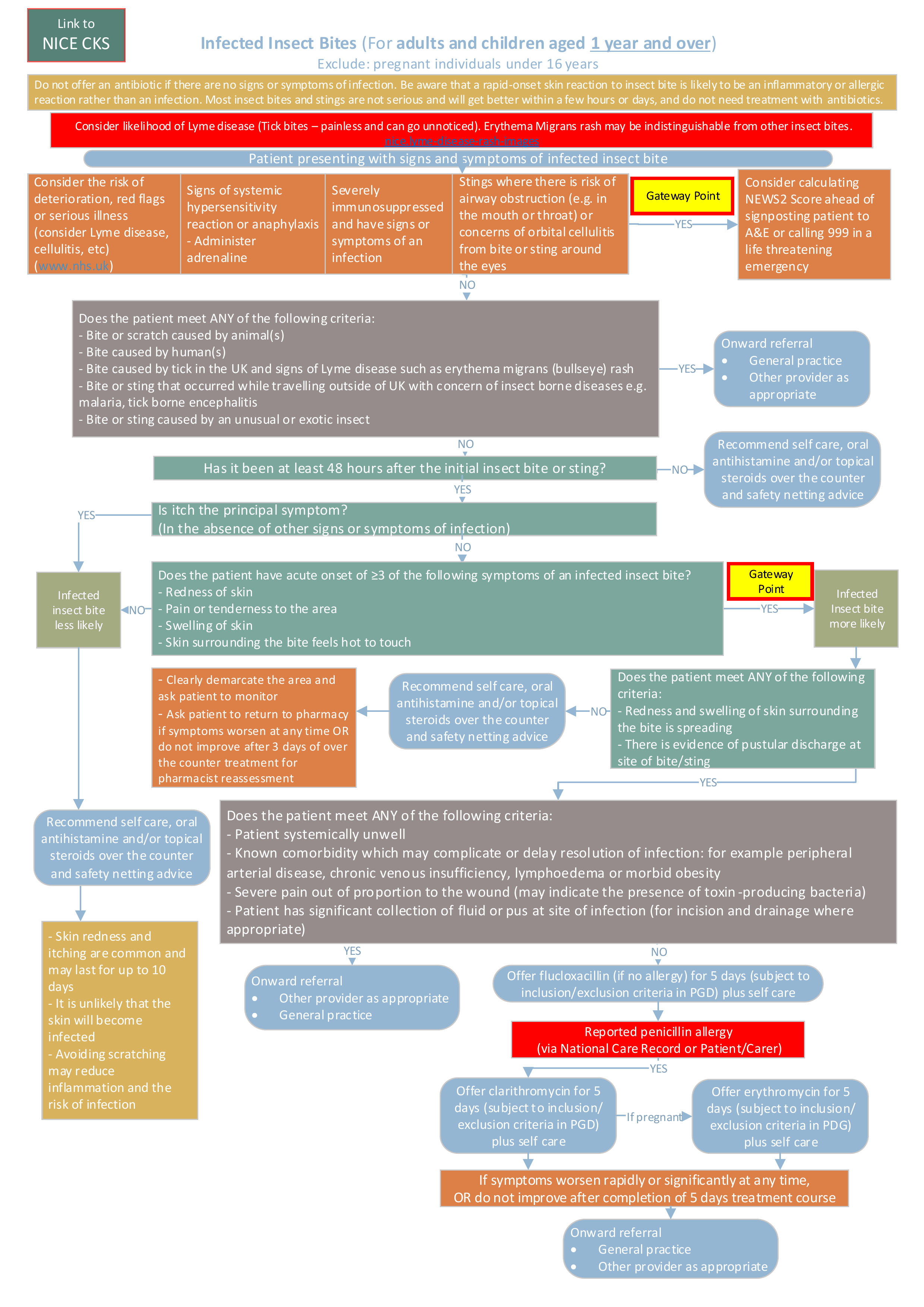
The prime purpose of the examination is to look for the clinical features of an infected insect bite or sting. Use the clinical pathway for infected insect bites and stings to guide your diagnosis.
Patients who have bites inflicted by animals, unusual insects or while travelling abroad where there is a risk of malaria or tick-borne encephalitis, may require onward referral to their GP. This may also be the case if the bite was caused by a tick in the UK and the patient is showing signs of Lyme disease such as erythema migrans (bullseye) rash.
However, if the bite occurred over 48 hours previously and the patient is showing three or more of the following symptoms, an infected insect bite is more likely:
- Redness of the skin (erythema may be more difficult to distinguish on darker skin tones)
- Pain or tenderness to the area
- Swelling of the skin
- Skin surrounding the bite(s) feels hot to touch.
If the redness and swelling of the skin surrounding the bite is spreading, or there is evidence of pustular discharge at the site of the bite/sting, then antibiotic treatment should be offered (unless GP referral is warranted).
If these features are not present, recommend self-care and ask the patient to return to the pharmacy for reassessment if symptoms worsen or do not improve after three days of OTC treatment.
Differential diagnoses
Conditions that can manifest similarly to insect bites and stings include:
- Skin infections such as abscess, folliculitis or cellulitis
- Skin tumours such as basal cell carcinoma, squamous cell carcinoma, melanoma and Kaposi's sarcoma
- Trauma
- Plant sting
- Contact dermatitis
- Chickenpox
- Urticaria.
Who to refer and red flags
The PGDs for insect bites list specific criteria for referral. Most of the people who attend pharmacy with suspected infected insect bites or stings will not be systemically unwell but may be concerned because of local pain and inflammation.
A few patients may have symptoms suggesting more severe illness (e.g. signs of a systemic hypersensitivity reaction) or are at risk of severe illness (e.g. immunosuppressed individuals). It is important to recognise severely ill patients and ensure they get urgent care.
Also, some patients may seek assessment for conditions that cannot be treated under the PGD (e.g. people with tick bites and signs of Lyme disease). These patients will need referral. Potentially serious infected skin conditions that are outside the scope of the PGD are listed in the clinical pathway and PGDs.
Refer to A&E or call 999 if:
- There are signs of a systemic hypersensitivity reaction or anaphylaxis
- There is airways obstruction (e.g. sting in the mouth or throat) or concerns for orbital (around the eye) cellulitis due to bite or sting being close to the eye(s)
- The individual is severely immunosuppressed and has signs or symptoms of infection.
|
Definition of severe immunosuppression
|
Management options
Rapid-onset reactions to bites or stings are likely to be allergic or inflammatory responses. Infection is unlikely to be evident until at least 48 hours after the bite or sting. Local inflammation, shown by redness, heat, swelling and pain, will usually subside.
However, if it spreads over next three days and/or a purulent discharge develops, then infection is likely. One way to gauge spread is to draw around the affected area with an indelible marker and ask the patient to monitor and return if it worsens.
The decision not to supply an antibiotic until the Gateway Point is reached will need to be communicated clearly and carefully – including that there is no need for antibiotics 'just in case'.
Suggested points to cover during the consultation with the patient about suspected infected insect bites are shown in Table 1. Self-care advice should also be provided.
If the Gateway Point on the clinical pathway is reached, the first-line treatment is a five-day course of flucloxacillin. Remember to check for penicillin allergy and supply alternative (clarithromycin or erythromycin subject to inclusion/exclusion criteria) if necessary.
A discussion based on the CHESTSSS framework (see Table 1) will provide an opportunity to educate patients about appropriate and effective use of antibiotics and to reinforce good antimicrobial stewardship.
| Table 1: Communicating with patients and parents about treatment decisions for infected insect bites | |
|
C Concerns – Ask directly: What are you most worried about? |
Concerns about appearance and risk of spreading |
|
H History and examination. Discuss what you see and relate to relevant history |
Provide a commentary – e.g. describe how your diagnosis of whether the insect bite is infected or not is made |
|
E Ask specifically about prior knowledge and Expectations. Patients who appear 'demanding' may just be seeking reassurance |
Antibiotics may be expected but are not needed if there is no evidence of infection |
|
S Provide non-serious explanation for Symptoms |
Insect bites and stings inject allergens and irritants under the skin: the body reacts with local inflammatory responses. Redness and itching can last for up to 10 days |
|
T Be specific about illness Timeline/usual course |
Minor local reactions clear in a few days; large local reactions can take up to 10 days to clear. Residual marks (post-inflammatory hyperpigmentation) may take weeks or months to fade |
|
S Explain Shortcomings of antibiotics |
Most insect bites and stings are not infected. There is no place for prophylactic antibiotics – the risk of side-effects, such as diarrhoea, is one in 10 with no clinical benefit |
|
S Self-care advice |
Inflammation and itching can be the worst symptoms – scratching can damage skin and risk infection. Oral antihistamines and topical corticosteroids can help |
|
S Provide Safety-netting advice |
Provide patients with specific information on red flag symptoms and when they should seek further help |
| Check understanding | Summarise what has been found together with your advice. Check that the patient is reassured and satisfied |
Self-care advice
Ensure that patients get the best out of treatment by providing self-care advice:
- If the stinger is visible in the skin (from a honeybee), remove as soon as possible by scraping sideways with a finger nail or credit card
- If a tick is visible, remove as soon as possible using a tick remover or suitable tweezers. Pull up gently but firmly perpendicular to the skin. Avoid squeezing or leaving mouth parts in the skin
- Oral analgesics – paracetamol or ibuprofen – can be taken for pain
- Oral antihistamines such as chlorphenamine (sedating) or topical corticosteroids (hydrocortisone 1% cream or ointment) may help to reduce itching and limit the temptation to scratch and further damage the skin
- Topical treatments such as antihistamine creams should be avoided as they can cause allergic skin reactions.
Using the infected insect bites and stings PGDs
For patients who pass the Gateway Point and are likely to have an infected bite or sting, there are three antibiotic options for treatment:
- Flucloxacillin – for children aged 1 year and over and adults
- Clarithromycin – for children aged 1 year and over and adults, where flucloxacillin is not appropriate due to hypersensitivity
- Erythromycin – for young people and adults aged 16 years and over who are pregnant, or where pregnancy is suspected and where flucloxacillin is not appropriate due to hypersensitivity.
Confirm the patient meets the criteria for inclusion, but before offering flucloxacillin as first choice antibiotic, check whether the patient:
- Is systemically unwell
- Has a known comorbidity which may complicate or delay resolution of the infection (e.g. peripheral arterial disease, chronic venous insufficiency, lymphoedema, morbid obesity)
- Has severe pain out of proportion to the wound
- Has a significant collection of fluid or pus at the site of infection.
If any of these conditions are present, the patient should be referred to their GP. Then determine whether there are other reasons why the patient might be excluded from treatment.
General criteria for exclusion include:
- Pregnancy or suspected pregnancy in individuals under 16 years of age
- Individuals who are immunosuppressed or are currently taking immunosuppressants (including systemic corticosteroids) or immune modulators
- Severely immunosuppressed individuals (as defined in Chapter 28a of the Green Book – see panel)
- Known hypersensitivity to the antibiotic
- Failed previous antibiotic for this episode of infected insect bite or sting
- Individuals following a ketogenic diet
- Any individual suspected of having a systemic reaction to an insect bite or sting, i.e angio-oedema or anaphylaxis
- Previous systemic allergic reaction to the same type of bite or sting
- Previous or current known methicillin resistant Staphylococcus aureus (MRSA) colonisation or infection
- Previous or current history of liver disease
- Known chronic kidney disease (CKD) stage 5 (eGFR<15ml/min/1.73m2)
- Less than 3 days before receiving, or within 3 days after receiving, oral typhoid vaccine
- Concurrent use of any interacting medicine.
Refer to the PGDs for a specific list of exclusions for:
- Flucloxacillin
- Clarithromycin
- Erythromycin.
In addition to medication, each patient treated under a PGD should:
- Be given the appropriate medicine patient information leaflet
- Provided with self-care advice
- Provided with TARGET self-care leaflet
- Given information on insect bites and stings e.g. from the NHS website
- Where relevant, patients should be provided with information from:
- UKHSA: Tick awareness
- The Anaphylaxis Campaign: Insect sting allergy – the facts.
Medicines that can be supplied, dose and frequency
Duration of treatment – five days
| Medication | Dose and frequency |
|
Flucloxacillin 250mg capsules 500mg capsules 125mg/5ml oral soln or susp x 100ml 250mg/5ml oral soln or susp x 100ml (or sugar-free alternatives) |
Children aged 1 year and over and under 2 years of age: 125mg four times a day Children 2-9 years: 250mg four times a day Children 10-17 years and adults: 500mg four times a day |
|
Clarithromycin 250mg tablets 500mg tablets 125mg/5ml oral susp or soln x 70ml 250mg/5ml oral susp or soln x 70ml |
Children 1-11 years: Body weight:
Children 12-17 years and adults: 500mg twice daily (every 12 hours) |
|
Erythromycin 250mg tablets 250mg gastro-resistant tablets 500mg tablets 125mg/5ml oral susp or soln x 100ml 250mg/5ml oral susp or soln x 100ml (or sugar free alternatives) |
Young people and adults aged 16 years and over: 500mg four times daily |
Useful resources
NHS Pharmacy First service specification, clinical pathways and PGDs: www.england.nhs.uk/publication/community-pharmacy-advanced-service-specification-nhs-pharmacy-first-service
Clinical guidance and resources
NICE CKS: Insect bites and stings: https://cks.nice.org.uk/topics/insect-bites-stings/
NICE Guideline 182: Insect bites and stings: antimicrobial prescribing: https://www.nice.org.uk/guidance/ng182
NHS Health A-Z:
- Insect bites and stings: https://www.nhs.uk/conditions/insect-bites-and-stings/
- Lyme disease: https://www.nhs.uk/conditions/lyme-disease/
- Sepsis: https://www.nhs.uk/conditions/sepsis/
NICE CKS: Urticaria: https://cks.nice.org.uk/topics/urticaria/
NICE CKS: Corticosteroids – topical (skin), nose and eyes: https://cks.nice.org.uk/topics/corticosteroids-topical-skin-nose-eyes/
NICE Guideline (NG95: Lyme disease): https://www.nice.org.uk/guidance/ng95
Patient UK Insect bites and stings: https://patient.info/doctor/insect-bites-and-stings-pro
Primary Care Dermatology Society: Papular urticaria: https://www.pcds.org.uk/clinical-guidance/papular-urticaria
RCGP TARGET antibiotics toolkit hub (includes Resources for community pharmacy setting): https://elearning.rcgp.org.uk/course/view.php?id=553
General information
RCP: NEWS2: https://www.rcp.ac.uk/resources/national-early-warning-score-news-2/
Green Book ch28a: Definition of immunosuppression: https://assets.publishing.service.gov.uk/media/689cba1b1c63de6de5bb12a9/Green-book-chapter-Shingles_12_8_24.pdf
Electronic Medicines Compendium: https://www.medicines.org.uk/emc
British National Formulary: https://bnf.nice.org.uk/
NICE: Competency framework for health professionals using PGDs: https://www.nice.org.uk/guidance/mpg2/resources
Information for patients
NHS Health A-Z: https://www.nhs.uk/conditions/insect-bites-and-stings/
Patient UK: Insect bites and stings: https://patient.info/skin-conditions/insect-bites-and-stings-leaflet
First Aid for Life: What bit me?: https://firstaidforlife.org.uk/what-bit-me-a-guide-to-bites-stings-ebook/
UKHSA: Be tick aware: https://assets.publishing.service.gov.uk/government/uploads/system/uploads/attachment_data/file/1148613/Tick-awareness-A5-leaflet-April-2023.pdf
The Anaphylaxis Campaign: Insect sting allergy: https://www.anaphylaxis.org.uk/fact-sheet/insect-sting-allergy-the-facts/
Last reviewed: September, 2026
Next scheduled review: September, 2027

Share:


In Pharmacy First