Coroner urges review of apixaban leaflets after head trauma death
Arthur Walsh,
27 Jan 2026 1 Min
1 Min

Arthur Walsh,
27 Jan 20261 Min
Arthur Walsh,
27 Jan 20261 Min


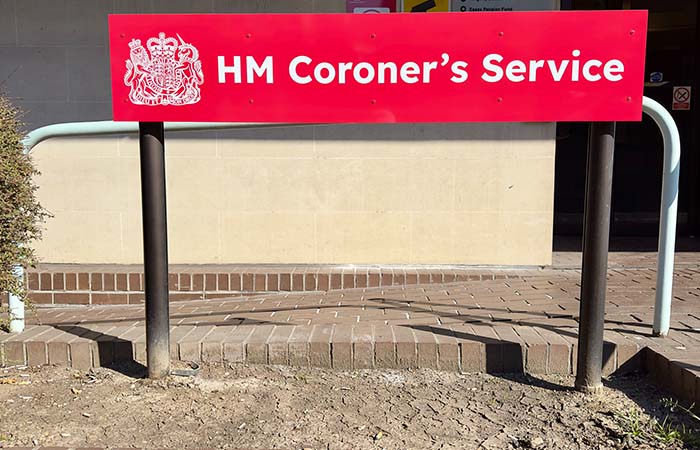
A London coroner has written to the MHRA urging a review of apixaban patient information leaflets following the death of a man who continued taking the medicine after sustaining a head injury.
Inner North London assistant coroner Sarah Bourke raised concerns about the safety information available to patients taking apixaban following an inquest into the death of 64-year-old Clive Hyman on August 10, 2025, nine days after he fell and hit his head on marble stairs while at work.
Mr Hyman, who was prescribed apixaban after being treated for atrial fibrillation and receiving a coronary artery bypass graft and was “in general good health,” told a colleague he felt “fine” after the August 1 fall and did not seek medical attention.
“Neither he nor his wife was aware that taking apixaban presented a risk in relation to head trauma,” Ms Bourke reported.
After he fell ill at home on August 5 last year, paramedics brought him to his local emergency department, where a CT scan indicated a haemorrhage on the left side of his brain.
Mr Hyman was given prothrombin and tranexamic acid “to help reverse apixaban” and underwent further treatment at a regional trauma centre that included an emergency craniectomy to relieve pressure on the brain.
Imaging on August 9 confirmed that he “had had an extensive stroke affecting the entirety of the left hemisphere of his brain”. He died in the early hours of August 10.
The primary cause of death was found to be trauma-related subdural haemorrhage, with the secondary cause described as “atrial fibrillation (treated with apixaban) [and a] coronary artery bypass graft”.
Considering the case, Ms Bourke raised concerns that because head trauma patients can be asymptomatic for some time, they may not realise they have intracranial bleeding – and that as a result “bleeding may continue” in patients who are taking apixaban.
“By the time symptoms of a brain injury emerge (e.g. a sudden, severe headache) the patient may be critically ill and have a reduced potential for delivery,” she wrote.
Having reviewed a number of patient information leaflets issued with apixaban, the assistant coroner noted that patients are “routinely advised not to take the drug if they are bleeding excessively” and are “advised to seek medical advice if they are at increased risk of bleeding”.
However, she also found that “none of the patient information leaflets that I reviewed expressly addressed the steps to be taken by a patient if they sustain trauma to the head”.
Her report noted NICE guidelines on the early management of head injury that states public health literature should encourage patients to seek immediate medical advice if they have any concerns and that community health services should refer to hospital any patients with risk factors such as receiving anticoagulant or antiplatelet treatment other than aspirin monotherapy.
Her report was issued to the MHRA as well as to the trade organisations Medicines UK and the Association of the British Pharmaceutical Industry, all of whom are required to respond by March 19. A copy of the report was also sent to Mr Hyman’s family.
Related: GP surgery failed to carry out meds review in ‘drug seeking’ patient, coroner finds