


NI health minister rules out removing clawback to bolster pharmacy by £20 million
Neil Trainis,
02 Apr 2026 1 Min
1 Min

Neil Trainis,
02 Apr 20261 Min
Neil Trainis,
02 Apr 20261 Min


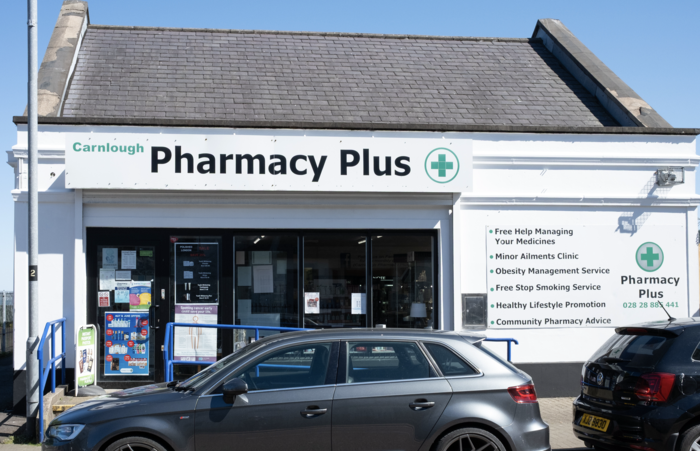
The Northern Ireland health minister Mike Nesbitt has said the Government cannot remove clawback arrangements to allow more than £20 million to be retained by community pharmacies in the country and ease the pressure on the pharmacy network.
Nesbitt told the Northern Ireland Assembly last week that allowing pharmacies to keep the money “with no additional service provision or benefits for patients” was “a bridge too far”.
Community Pharmacy Northern Ireland (CPNI) has urged the Government to adjust or remove discount clawback arrangements to ease the strain on pharmacies, many of whom have struggled to pay their wholesaler bills.
CPNI recently warned that nearly 90 per cent of pharmacies could not pay their wholesaler bill in January this year.
Danny Donnelly, the member of the legislative assembly for East Antrim, urged the Government to remove the clawback to help pharmacies exposed to high wholesaler bills meet their costs. He also warned there were fewer wholesalers in Northern Ireland after the departure of one from the country.
Margin significantly exceeded guaranteed level
In response, Nesbitt said: “The actual annual margin achieved by community pharmacies in Northern Ireland has significantly exceeded the guaranteed level and, when that is coupled with the fact that any excess in margins is not recouped by us, we cannot consider the removal of discount clawback at this time, I am afraid.”
Nesbitt said the Department of Health (DH) will “engage with wholesalers to ensure the continuity of supply of medicines to patients and members of the public is assured” but reminded the Assembly that commercial arrangements between pharmacies and wholesalers was ultimately an issue for them.
“Community pharmacies access medicines via a range of commercial arrangements, with different pharmaceutical wholesalers operating within a UK-wide supply chain for medicines,” he said.
“Those commercial arrangements are agreed between the wholesaler and the community pharmacy business and operate in a competitive market. Wholesalers compete on price, service levels, delivery speed and credit terms.”
Nesbitt insisted he was aware “that pharmacists are feeling particular pressures from price points” but said regular discussions with CPNI “have yet to find a joint landing space when it comes to what we think is the right thing to do about investing in community pharmacy”.
“I want those discussions to continue until we are in agreement,” he said.
Community pharmacy will ‘collapse’
Warned by Colin McGrath, the MLA for South Down, that community pharmacy will “collapse” if the DH fails to improve funding, Nesbitt said he had “sat down and listened” to people working in the sector “about their concerns”.
However, Nesbitt reiterated that it was not possible to remove the clawback.
“I have been told that provision has increased by almost £60 million since April 2018. We are coming towards the end of this financial year,” he said.
“We started with a £600 million shortfall in the Department. I said that that was unprecedented and unmanageable, and I was correct on that, because it is only through the Treasury reserve claim of up to £200 million, which we will have to pay back, that we hope to balance the books.”
Insisting the DH was “finishing £200 million light”, Nesbitt added: “Going into next year, our starting position is at least £800 million short. I would love to do more for community pharmacy.
“Community pharmacy and GPs are central to the shift-left agenda, and I want them to get more. I want everybody, when they wake up in the morning, to feel content and to look forward to delivering health and social care services, but that is not where we are.”


