Labour didn’t have the money to expand pharmacist prescribing to complex conditions
Neil Trainis,
02 Jun 2026 5 Min
5 Min

Neil Trainis,
02 Jun 20265 Min
Neil Trainis,
02 Jun 20265 Min


Community Pharmacy England chief executive Janet Morrison has said 2026-27 contractual talks with the Government failed to produce funding for pharmacists to prescribe for complex conditions because Labour “didn’t have enough money”.
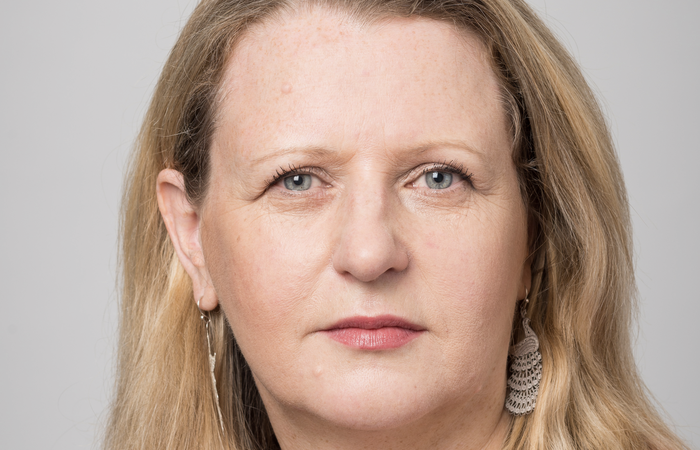
Speaking to the pharmacy press yesterday about the negotiations, which saw community pharmacy’s global sum increase by £340 million and independent prescribing (IP) added to Pharmacy First and the pharmacy contraception service, Morrison (pictured) said improving the sector’s core funding to help keep pharmacies “stable, open and with the lights on” and medicines supply was the primary focus of CPE’s talks with NHS England and the Department of Health and Social Care.
She denied that CPE or the Government lacked confidence in community pharmacists safely and effectively prescribing for complex conditions beyond Pharmacy First and the pharmacy contraception service (PCS), such as depression and other long-term conditions.
However, she said the Treasury needed to seriously invest in IP and warned, the “governance, clinical structures, infrastructure, digital and training of staff and preparedness” must be in place. Morrison described that as a “really huge” piece of work.
“The reason (Labour) couldn’t be more ambitious…we all know the potential, we’ve seen it demonstrated through the IP pathfinders, those 200 pilots, not just covering minor ailments but covering all sorts of other areas in terms of long-term condition management, in terms of women’s health and other areas, they didn’t have enough money,” she said.
“You could write the biggest spec you like (but) realistically, there’s not enough money here to actually make sure we can provide the core funding for all pharmacies to keep them stable, open and the lights on.
“The tightness of this contractual framework, of us trying to ensure it’s sufficient for medicines supply, there’s sufficient money to create headroom for the SAF (single activity fee), which is basically our core funding, and then also for clinical services.”
Morrison said CPE proposed to Labour that IP “should be a national enhanced service where they fix the commissioning framework and the pricing, costing, nationally but it’s commissioned locally”.
GP prescribing wasn’t built in a day, nor can ours
Insisting there is “tons of ambition” to expand IP, she said: “GP prescribing wasn’t built in a day, nor can ours. When we met with (pharmacy minister Stephen Kinnock), we said to him ‘this has got to be a serious commitment, not just for this year, but that you’re going to be able to back it up to develop its potential in future years’.
“That’s going to need the money. There’s no point having fabulous services if we can’t keep the lights on. Fundamentally, that’s what it’s about.”
CPE’s director of NHS services Alastair Buxton said community pharmacy will “see more exciting developments in prescribing at a local level through local commissioning”.
“We proposed a national enhanced service to help structure that commissioning. That’s still something that DHSC and NHS England (NHSE) can agree with us to make it easier for integrated care boards (ICBs) to commission a service,” he said.
However, Buxton also warned “significant amounts of clinical governance and structures need to be put in place to make the prescribing service effective and safe”.
“That includes all the EPS infrastructure,” he said. “It’s worth noting that our colleagues in Scotland and Wales may be ahead in terms of prescribing more generally but both countries are using bits of paper still for prescribing and England certainly don’t want to go backwards having been there and fully electronically prescribing in primary care for well over a decade.”
Support more local commissioning
Buxton said NHS England will issue guidance to support ICBs “as part of commissioning at a national level as well as guidance for pharmacy owners as well.”
“They will provide a really important foundation over and above the national commissioning in Pharmacy First and PCS which can then be used by ICBs at that local level to commission some of those small, clinical, challenging areas,” he said.
“So, we’re laying some foundations here with NHS England and DHSC to support more local commissioning and we will continue to support our colleagues in the LPCs to make the most of those opportunities at a local level.”

Buxton, though, cautioned that even when pharmacists do prescribe for complex conditions, they “can’t do it independently of general practice because they have the overall, overarching clinical responsibility for the patient”.
“Our view is that adding elements of the national service in terms of Pharmacy First, contraception, makes sense clinically and practically,” he said.
“But where you’ve got to look at further developments as they look clinically perhaps more interesting in terms of long-term condition management, menopause, weight management, whatever it may be, because of that need for the relationship with the general practice, there’s a need for relationships at a local level.
“That’s a role for the NHS to facilitate. You know the relationships between general practice and community pharmacy are variable across the country, with some people who have fantastic relationships and some at the other end of the spectrum.
“So, there’s some local work required there to get GPs bought into that. We envisage more national commissioning when the money is right, building on the existing national services.”
What prescribing services will ICBs commission this year?
When asked what pharmacy prescribing services he thought ICBs will be able to commission this year, Buxton said it was down to those Boards and LPCs to “come up with the types of services and conditions”.
“I don’t know what ICBs are going to want to take forward or going to be able to afford to take forward,” he said.
“But certainly in the pathfinder, hypertension management, lipid management, cardiovascular risk in a more general sense, weight management, menopause, wider women’s health, there’s lots of options (and) we’ve got individual pharmacists who have developed specialties, skin conditions, dermatology.
“One of our committee members Mike Hewitson developed his IP specialty in that area and that was one of his areas for the pathfinder. There’s so many people on waiting lists to see a dermatologist who, with a more skilled primary care clinician like a trained IP who’s done some extra training on dermatology, could actually be taken off those waiting lists.
“So, I think there’s a lot of opportunities for ICBs that want to think innovatively.”
Buxton used North-East and North Cumbria ICB’s use of IPs in its Covid medicines delivery units and its exploration of “micro-management in community pharmacy, post-diagnosis by the urology team in secondary care” as examples of pharmacist prescribing expanding into new areas.
“This is another interesting further development in terms of starting to work with physicians at secondary care. It would certainly be a new development for community pharmacy,” he said.
When pressed to confirm that NHSE will agree to a national structure for the commissioning of prescribing services with CPE, Buxton said: “It’s theoretically feasible. We made that proposal. They haven’t bitten on that because they wanted to pursue their proposals, making sure they could tick the manifesto box. We’re still open to discussing that for sure.”