Exclusive: NPA chair lifts the lid on crippling impact of increasing medicines prices
Neil Trainis,
30 Apr 2026 1 Min
1 Min

Neil Trainis,
30 Apr 20261 Min
Neil Trainis,
30 Apr 20261 Min


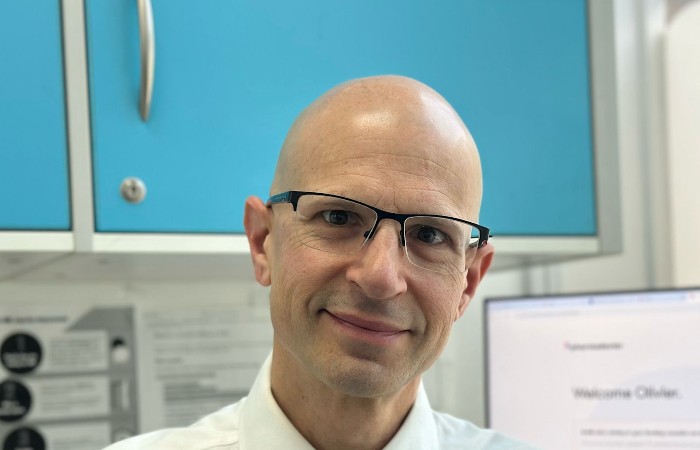
The National Pharmacy Association chair Olivier Picard has lifted the lid on the impact rising drug prices are having on community pharmacy by revealing he loses over £4,000 a month on one medicine alone across the four pharmacies he owns.
Picard (Picard), who operates his pharmacies in the Home Counties under Newdays Pharmacy Ltd, gave Independent Community Pharmacist the names of drugs which have leapt in price since February this year, including heart medications Bisoprolol 1.25mg (36 pence to £4.95), Carvedilol 25mg (60 pence to £3.89), Carvedilol 3.125mg (28 pence to £2.39) and Flecainide 50mg (£1.42 to £2.86).
He said Apixaban 5mg tablets, blood thinners that prevent strokes, had risen from 66 pence on March 3 this year to £6.31 on April 27, generating a £1,000 loss on that medicine in each of his four pharmacies.
When asked how much his medicines bill in total has increased by since January, Picard said: “It is very difficult to quantify the losses but take Apixaban 5mg. My pharmacies dispense it approximately 300 times a month in each pharmacy.
“The price concession has been announced at £2.80. So, every time I dispense it, I lose £3.51. That’s over £1,000 in loss on this medication alone each month in every single one of my pharmacies.”
Other medicines that now cost more are blood pressure medicines Nifedipine 5mg capsules (£41.52 to £63.39), Perindopril 8mg (£1.03 to £4.37) and Ramipril 1.25mg, which Picard said is not available from any suppliers but has a price concession of £1.60 having been 83 pence in February.
Cholesterol-lowering medications Rosuvastatin 5mg tablets (24 pence to £1.11) and Rosuvastatin 10mg tablets (31 pence to £1.11), bladder control drug Tolterodine 1mg tablets (£1.05 to £10.96) and the antibiotic Chloramphenicol eye drops (£1.25 to £5.20 “from short-liners”) have also risen in price.
Ask patients to try another pharmacy
Calling on Labour to fix a “fundamentally broken medicines system in England that cannot keep up with these cost increases”, Picard said: “If you add Ramipril, Bisoprolol and others where the price has rocketed recently and where the concession has been announced way below the actual cost of the medicines, then potentially, the losses are in the thousands every month. And the problem is getting worse.”
He said drug price rises had increased the pressure on his pharmacies to such an extent that they give patients prescriptions and ask them to try another pharmacy for their medicine “to protect the bottom line”.
“We are in a position now where we cannot afford to dispense at a loss,” he said. “Our GPs are refusing to issue replacement scripts. It’s bonkers and the system is simply not working.”
There have been reports that pharmacists across the country have dipped into their pensions or remortgaged their houses to cushion the pressure of rising overheads and drug prices to keep their pharmacies open.
Picard said although he has not had to use his personal savings, he has been affected. “I have not taken a dividend since the turn of the year to protect the business and make sure I can pay my wholesalers and my staff each month,” he said.
“I spend one hour a day per pharmacy making phone calls to source basic medicines like paracetamol, aspirin and now it seems Ramipril, Bisoprolol and Apixaban, as well as over 200 others.”
Drugs shortages inevitable if Strait of Hormuz does not open soon
Picard said even though there are “no immediate shortages due to the conflict in the Middle East”, he had heard reports from manufacturers that shortages are “inevitable” if the Strait of Hormuz does not open soon.
“Most medicines do not travel through the Strait of Hormuz but ingredients sourced from the region are in short supply and transportation costs are significantly higher than before the conflict began,” he said.
“I suspect medicines are available but the conflict in the Middle East is pushing production and transportation costs of drug manufacturing to such a level that the price the NHS is willing to pay for drugs simply doesn’t cover the cost of manufacturing them in the first place, especially after having them shipped to the UK.
“It’s more a pricing issue than a supply issue probably. March saw the highest number of Government-issued price concessions on record and I expect this to continue to increase in the coming months as the situation in the Middle East develops.”