



 1 Min
1 Min In Evidence Review

Follow this topic

Bookmark

Record learning outcomes
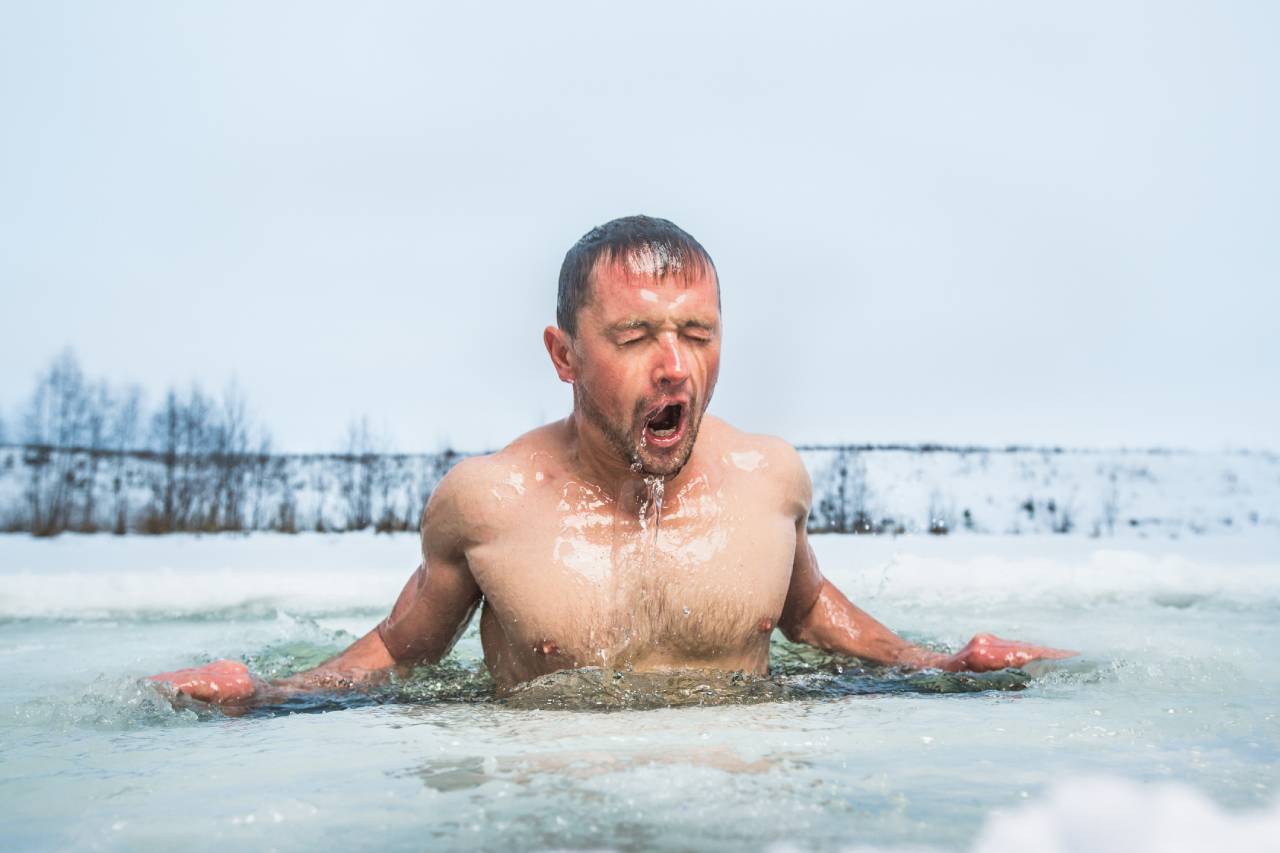
Cold water immersion (CWI) has become a popular activity. It involves immersing the body either partially or fully in cold water, at temperatures ranging from 10–15°C. While CWI has been used in various cultures for centuries, it is only more recently that it has been promoted in sport settings and as a means of self-care among the general population. But does it lead to improvements in health?
Post-exercise CWI to accelerate recovery
Exercise-induced muscle damage occurs after high-intensity or new forms of exercise – in particular, eccentric muscle contractions. Typically, this muscle damage gives rise to delayed onset muscle soreness, elevated levels of creatine kinase, together with localised inflammation, and a reduction in muscular strength and functionality.
Consequently, the quest for effective recovery interventions among athletes has become a central theme in sports science research. CWI has been advocated as a way of accelerating recovery post-exercise through a reduction in muscle stiffness, eliminating fatigue, decreasing exercise-induced muscle damage, and in recovering sports performance.
However, a 2023 meta-analysis of studies concluded that while CWI did reduce delayed onset muscle soreness following exercise, it had no lasting effect after 24 and 48 hours. What’s more, other data suggests a downside to post-exercise CWI especially among those undertaking resistance training (RT) (i.e. weight training).
A recent review concluded that CWI immediately following bouts of RT may actually decrease any muscle gains.
Enhanced mood and wellbeing
Research suggests that regular swimming in cold water might lead to improvements in mood. This seems entirely possible given the physiological response to CWI. The initial response involves changes in cardiorespiratory function characterised by inspiratory gasp, hyperventilation and increased heart rate.
Moreover, whole-body exposure to cold releases the neurotransmitters serotonin, dopamine and beta-endorphin. Each of these is thought to have a role in the regulation of emotion, stress and reward processing; hence low levels are thought to be factors in the development of depression, anxiety and emotional disturbances.
Some observational data indicates that people can expect to see improvements in mood, even after a single session, and an enhancement of general wellbeing. But these findings are from non-randomised trials and in the only randomised trial to date, there was no significant difference in mood following CWI between those exposed to cold water or non-cold water controls.
It is clear from the recent meta-analyses that CWI leads to a significant increase in inflammation immediately and one hour after immersion, suggesting an acute inflammatory response.
In addition, there appears to be a significant reduction in stress 12 hours post-CWI, although this effect diminishes 24 hours post-exposure. What’s more, CWI had no real effect on immune function but there was a 29% reduction in self-reported sickness absence among participants who took cold showers.
Given the lack of long-term follow-up, it remains uncertain whether changes in either inflammation or immunity are long-lasting. Despite this, there does seem to be some evidence for an improvement in sleep quality but again this comes from a study that included only men.
Some data suggests an improvement in quality of life following 30, 60 or 90-second cold showers for a total of 30 days. However, the improvements were no longer significant after three months.
Stress reliever?
There appears to be some early data indicating that CWI might help with inflammation, stress, immunity, quality of life and sleep. But with a wide variation in study protocols, it becomes difficult to offer meaningful recommendations.
Despite this, with the potential to reduce stress or improve sleep quality, it means that CWI may have an important adjunctive role in stress management, as a way of improving overall wellbeing.
There is no doubt that those who practise cold water immersion feel that it is beneficial to them. The challenge, moving forward, is for research to show that there is the potential to improve health and wellbeing for a much larger proportion of the general population.

Share:


In Evidence Review