



 Melanoma checklist
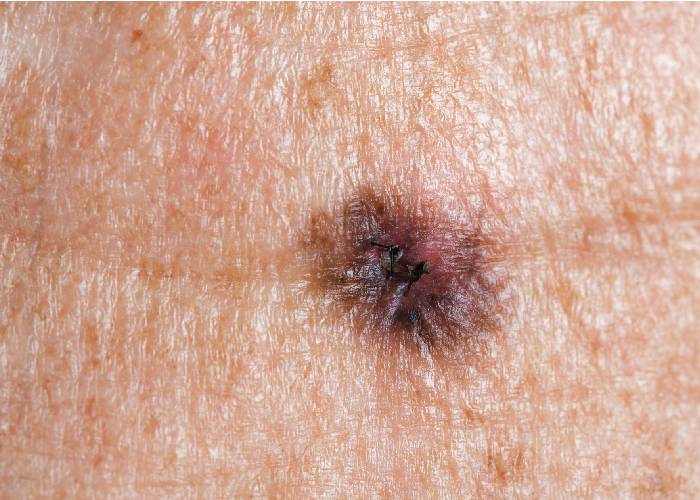
The ABCDE checklist (see below) has been developed to help differentiate between a normal mole, a seborrhoeic keratosis and a melanoma.
- Normal moles are usually round or oval, with a smooth edge, and no more than 6mm (1/4 inch) in diameter
- Seborrhoeic keratoses (also known as seborrhoeic warts, basal cell papillomas, senile keratoses) are very common, harmless growths on the skin. They are much more common than skin cancers. Seborrhoeic keratoses are often pigmented (pink, light/dark brown) and usually have a characteristic ‘stuck on’ appearance.
A dark seborrhoeic keratosis can look similar to a melanoma. Seborrhoeic keratoses are not infectious and do not become malignant. Once present, they usually stay, and new ones often appear over the years. They are usually not treated although they can be removed if they are troublesome (e.g. catching on clothing).
ABCDE melanoma checklist
- Asymmetry: melanomas have two very different halves and an irregular shape
- Border: melanomas have an uneven or ragged border
- Colours: melanomas will be a mix of two or more colours
- Diameter: melanomas are larger than 6mm (1/4 inch) in diameter
- Enlargement or Elevation: a mole that grows over time or is raised is more likely to be a melanoma