



 Managing actinic keratoses
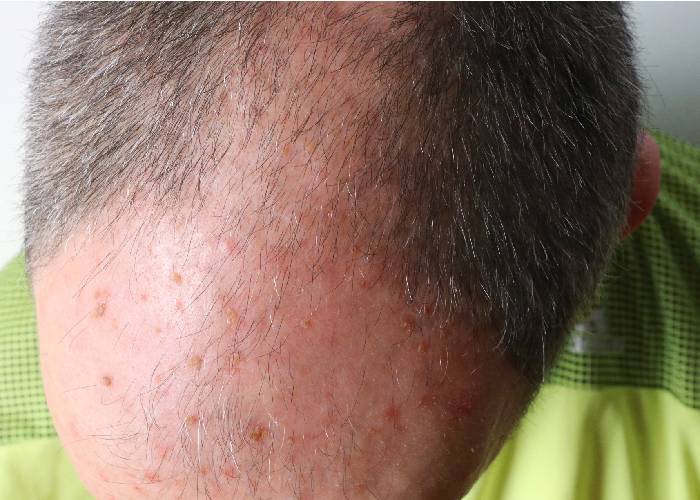
No treatment or treatment with emollient only is considered satisfactory for mild AK. Simple patches of very dry skin should resolve with regular (two to four times per day) moisturiser use.
Patients with large numbers of AK should take nicotinamide 500mg twice daily; this has been shown to reduce the numbers of AK and NMSC.1
For AK that require treatment, the options are either removal (by curettage) or destruction by means of cryotherapy, topical drug treatment or photodynamic therapy (PDT). The latter involves applying a photosensitiser, methyl aminolevulinate, and exposing the area to red light.
All the topical treatments for AK are directed at destroying the sun-damaged cells so they all, to a greater or lesser extent, induce inflammation in the skin and the affected area will look much worse before it heals. The skin may weep, peel, crack or even blister and then crust or scab over. The area can be itchy or sore, painful and burning. This is caused by the abnormal cells dying and it is a sign that the treatment is working.
After completing the treatment, such reactions will settle over a few weeks. Patients need to be aware of this because it may be important for the timing of their treatment.
The appearance of AK is a sign that the skin has reached the limit of its tolerance to sunlight and that sun protection measures are needed (see below).
Sun protection and skin cancer prevention
- Avoid exposure to UV light – stay in shade and stay indoors between 11am and 3pm
- Avoid burning – sunburn is a sign of significant skin damage
- Cover up – wear a wide-brimmed hat, good quality sunglasses and loose clothing that covers skin
- Use a broad spectrum sunscreen with an SPF of at least 30 (for UVB) and a star rating of 4-5 (for UVA). Apply generously and reapply every two hours if it is washed, rubbed or sweated off
- Avoid sunbeds altogether. They are not a safe alternative to lying outside in the sun
- Sunbeds were banned in Australia in 2015 and the incidence of malignant melanoma in the under-55s is now falling
- Organ transplant recipients should use a high factor (SPF 50) sunscreen on all exposed skin, including lips, when outdoors. This is because they have a 10- to 250-fold higher risk of developing skin cancer.