


 Introduction & module overview
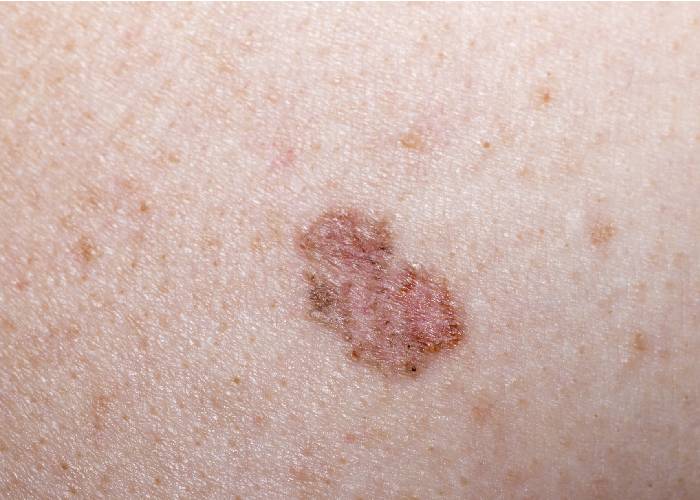
Excessive UV exposure is linked to almost all skin cancers. Malignant melanoma is one of the most common cancers in young adults and the incidence of skin cancer of all types continues to grow. The majority of skin cancers are preventable, according to Cancer Research UK. Malignant melanoma, non-melanoma skin cancers (NMSC) – basal cell carcinoma and squamous cell carcinoma – and actinic keratoses (AK) are all considered under the heading of skin cancer.
Community pharmacies are often the first port of call for people who are concerned about suspicious lesions on their skin, so it is important to be able to advise on the best course of action. It is also helpful to be able to explain the treatment pathway for suspected skin cancers and the differences between melanomas, NMSC and actinic keratoses. It is also important to be aware of the current NICE guidance on dealing with these cancer types.
Community pharmacy teams are well placed not only to deliver general advice about sun safety but also to identify those at high risk and reinforce sun safety messages. NICE now recommends year-round daily vitamin D supplements for all adults living in the UK and this represents another opportunity for community pharmacists to deliver this key public health message and advise on suitable products.
In this module we cover sun protection and the management of primary skin cancers and AK. The management of metastatic disease is beyond its scope.
In the UK each year about 16,000 new melanomas and 150,000 NMSC – of which about 75 per cent are basal cell carcinomas (BCC) and 25 per cent squamous cell carcinomas (SCC) – are diagnosed. NMSC are most common in older age groups, typically those over 70 years of age.
Actinic keratoses are very common. In the UK, 19-24 per cent of those over 60 years of age have at least one AK and the prevalence increases steadily with age. Actinic keratoses are managed with a number of topical agents, which bring their own demands for support and advice.