




 Combogesic®: an alternative to codeine-containing OTC products
COMBOGESIC®: AN ALTERNATIVE TO CODEINE-CONTAINING OTC PRODUCTS
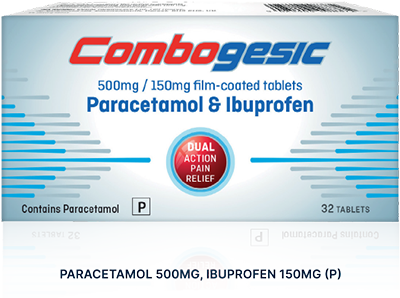
Combogesic® provides an alternative pain relief option. This is beneficial when codeine is not tolerated due to side effects, contraindications or due to patient preferences to avoid opioids.
A systematic review of 26 clinical trials showed that adding codeine to paracetamol produced only a modest increase in analgesic effect.6 Conversely, Combogesic®’s synergistic combination of paracetamol and ibuprofen is 80% MORE EFFECTIVE than paracetamol alone.7
COMBOGESIC® PROVIDES A FAST AND EFFECTIVE
ALTERNATIVE TO OVER-THE-COUNTER CODEINE.
FAQs ABOUT COMBOGESIC®
> CLICK THE TOGGLES BELOW TO FIND OUT MORE ABOUT COMBOGESIC®
Combogesic® is a unique combination of paracetamol 500mg and ibuprofen 150mg, two active ingredients that work together in different, yet complementary ways to help relieve pain (paracetamol and ibuprofen), reduce fever (paracetamol) and reduce inflammation (ibuprofen) at the same time. Combogesic® was developed as a more effective form of pain relief than paracetamol or ibuprofen alone.
AT 500MG AND IBUPROFEN AT 150MG?
Clinical trials confirm the unique 3.3:1 ratio used in Combogesic® - paracetamol at 500mg and ibuprofen at 150mg - is a gold standard synergistic treatment balancing maximum pain relief from both compounds with a lower dose of ibuprofen to reduce risk of gastric side effects.8 In addition, the unique 3.3:1 ratio used in Combogesic® delivers a distinct synergistic effect in acute pain.
Combogesic® provides temporary relief for a wide range of pain including headache, migraine, muscular pain, back pain, period pain, toothache, aches and pains associated with cold and flu, and sore throat, as well as fever.9
PARACETAMOL & IBUPROFEN SEPARATELY?
Paracetamol and ibuprofen administered at the same time show an additive, synergistic reduction in pain scores.10 Alternate staggered dosing of each individual active ingredient by separate administration has not been shown to produce a statistically significant difference in pain scores, suggesting that the synergistic effect is lost with alternate dosing of paracetamol and ibuprofen. This indicates that the co-administration of the two active ingredients - paracetamol and ibuprofen - is crucial for the synergy to be effective.10
COMBOGESIC® SHOULD NOT BE TAKEN?
Combogesic® should not be used if pregnant or trying to become pregnant, or if the patient has a stomach ulcer, impaired kidney function or heart failure; is allergic to paracetamol, ibuprofen, aspirin or other anti-inflammatory medicines; or under 18 years of age. Unless a doctor has advised otherwise, Combogesic® should not be taken by people with asthma; people over 65 years of age; or alongside other medicines containing paracetamol, ibuprofen, aspirin or other anti-inflammatory medicines.8 Patients are advised to always read the label and consult a healthcare professional before taking for the first time.
Combogesic® is licensed for adults only. They should take 1–2 tablets with a large glass of water. Repeat the dose every 6 hours, as required, up to a maximum of 6 tablets in 24 hours. Combogesic® should not be taken for longer than three days, unless advised otherwise by a healthcare professional. Combogesic® should not be taken alongside any other medicines containing paracetamol or ibuprofen.
REFLECTION POINT - CUSTOMER SCENARIO
USE THE INFORMATION YOU HAVE LEARNT TO REFLECT ON THE FOLLOWING SCENARIO AND THINK ABOUT WHAT INFORMATION YOU CAN GIVE HIM.
When you have done so, click the reveal button to check if you are right.

A 35-year-old man approaches the pharmacy counter and asks for some advice. He has been experiencing toothache for the last two days and tells you that he’s waiting to see his dentist tomorrow. He has been taking paracetamol for the pain but it isn’t completely relieving it. He isn’t taking any other medication and hasn’t got any other symptoms. He needs to get to work for the rest of the day and has an important presentation to give.
You could talk to the customer about suitable pain relief options for toothache until he can see the dentist. While codeine could be added in as part of a combination product with paracetamol, it might not be appropriate for the customer due to its potential side effects, such as drowsiness. An alternative option would be to consider using Combogesic®, which combines paracetamol and ibuprofen to provide fast and effective analgesia.
UNDERSTANDING THE CUSTOMER’S SPECIFIC IDEAS, CONCERNS AND EXPECTATIONS CAN HELP YOU TO MAKE THE MOST APPROPRIATE RECOMMENDATION FOR THE PATIENT’S SITUATION.