


 Cultural attitudes to physical activity
Cultural attitudes to physical activity
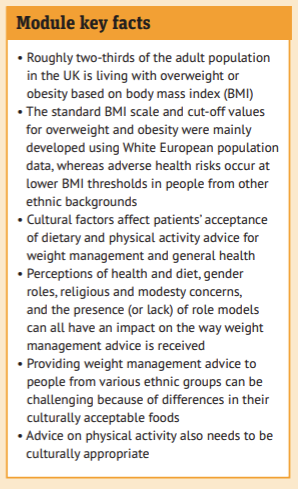
Although increased physical activity is an integral part of good weight management, several cultural barriers may affect participation. Common examples include long working hours to meet family and household responsibilities, as well as concerns in some cultures about the acceptability of wearing ‘Western’ exercise clothing.
In addition, the gym-centred Western exercise model does not resonate with all cultures. Among Chinese populations, for example, traditional forms of exercise such as tai chi involve slower movements and gentle rhythms that are viewed as beneficial for overall health and balance.
As a result, framing exercise as a form of health preservation may be more effective.
Another example, often seen in Middle Eastern cultures, is the strong emphasis on communal and family responsibilities. Physical activity may sometimes be viewed as ‘selfish’ if it takes time away from family commitments. In some cultures, work, academic achievement and family responsibilities are prioritised, leaving little time for exercise.
Possible solutions
One way to address these challenges is to recommend culturally appropriate forms of physical activity, as these may feel more acceptable and therefore more sustainable.
For example, one study involving African women recruited through churches found that a culturally specific dance intervention reflecting African heritage significantly reduced body fat and BMI.
Other initiatives, such as Black Girls Do Run, an England Athletics-affiliated running group and charity, have increased representation of Black women in distance running, challenged stereotypes and built confidence through movement.
Remember – promoting culturally appropriate forms of physical activity is more likely to resonate with people from different ethnic backgrounds.
Conclusion
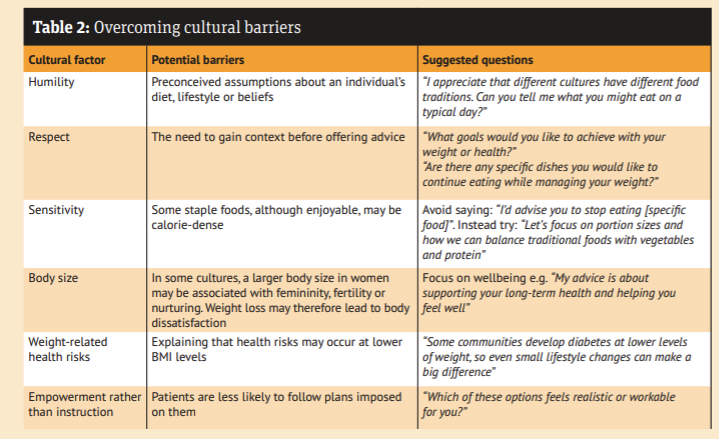
Providing weight management advice to people from different ethnic backgrounds requires pharmacy teams to understand and respect cultural norms and practices. It is important to recognise that many patients are unlikely to abandon culturally significant foods.
Instead, the focus should be on portion control and introducing healthier adaptations to traditional meals.
Similarly, advice aimed at increasing physical activity must align with cultural expectations if it is to be accepted, acted upon and sustained.
As overweight and obesity continue to be major public health concerns, alongside increasing ethnic diversity within the UK population, pharmacy teams must develop the cultural competence needed to deliver effective and appropriate weight management advice across all the communities they serve.