

 Scope of practice and legal responsibilities
Scope of practice and legal responsibilities
Prescribers must operate within their defined scope of practice, making sure they only prescribe for conditions they feel confident to manage. This involves understanding the limits of their knowledge and skills, and referring patients to other healthcare professionals when necessary.
Ensuring patient safety is obviously paramount. A thorough assessment should be carried out considering the patient history, potential drug interactions and contraindications, as well as any monitoring parameters during treatment.
There is a legal requirement to obtain informed consent from patients before initiating treatment, which involves explaining the benefits, risks and alternatives for the prescribed medicine.
Maintaining accurate and detailed records of all prescribing decisions is crucial and should include the rationale for prescribing, patient assessments and any follow-up actions. All relevant legal and ethical guidelines should be adhered to, including staying up to date with changes in legislation and professional standards.
Prescribing decisions and social circumstances
The social circumstances of a patient can significantly impact prescribing. For example, patients with limited financial resources may be unable to afford treatment if it is not free at the point of dispensing and they may also struggle to access healthcare services such as follow-up appointments.
Living conditions may prevent patients from storing and administering their medicines safely, and may also have an impact on their underlying health and medication effectiveness (e.g. because of exposure to damp, allergens or pollutants).
Patients with strong social support networks are more likely to adhere to treatment plans, while those who are socially isolated may need additional support and follow-up.
Social isolation and loneliness can also exacerbate mental health problems, influencing the choice of medicine and the need for a holistic approach from social agencies as well as prescribers.
Effective communication is crucial in order for pharmacists to understand the needs of their patients and ensure they in turn understand their treatment. It is therefore vital to try to overcome any language barriers that may exist.
Cultural beliefs and practices can also influence attitudes towards certain medicines and treatments, and this requires sensitivity and consideration when making prescribing decisions.
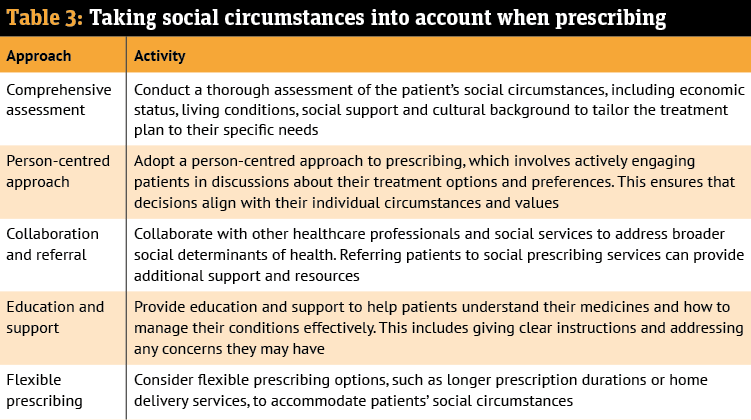
Table 3 (below) summarises ways of taking a patient’s social circumstances into account when making prescribing decisions.