


 Overcoming personal barriers
Overcoming personal barriers to becoming a prescriber
Experience has shown that there are barriers to overcome to achieving a prescribing qualification, such as time constraints, financial worries, lack of confidence, skill gaps and legal concerns. However, each can be overcome with the right planning and support.
Balancing work, personal life and additional training can be challenging, but there are flexible learning options available for prescribing training programmes.
Pharmacists should look for the most suitable courses to meet their needs in terms of length and flexibility of learning.
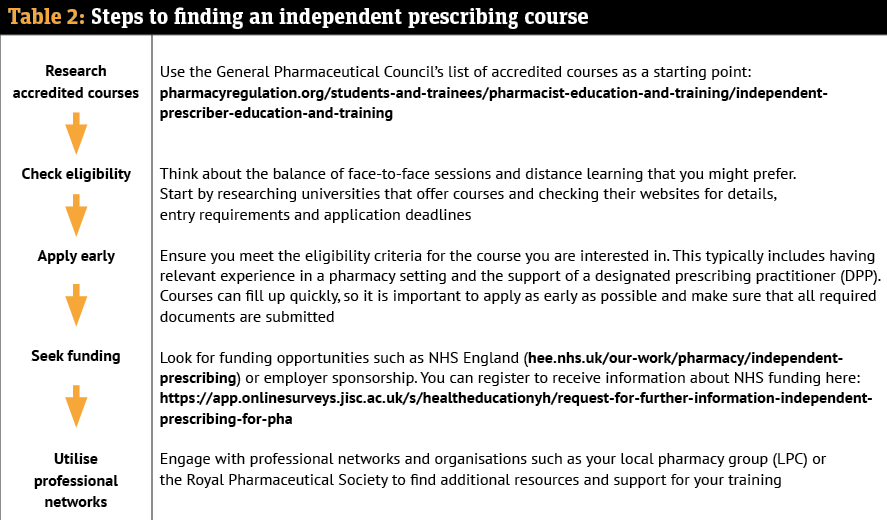
Some courses are shorter than others and have fewer postgraduate credits, but still meet the necessary learning outcomes. The GPhC has a list of accredited providers. See Table 2 for details.
The cost of training and certification can be a significant investment but there are increasing numbers of NHS and employer-sponsored programmes available.
Information on the former can often be obtained from the university providing the prescribing course, or from local pharmacy groups and ICBs.
Pharmacists who are unsure about acquiring the skills needed to take on prescribing responsibilities can seek guidance and encouragement from experienced prescribers.
It is also possible to start with a smaller, more manageable scope of prescribing and gradually increase that scope as confidence is gained.
Feeling unprepared due to gaps in clinical knowledge can be overcome by engaging in CPD and gaining hands-on experience through shadowing opportunities.
Navigating the regulatory requirements and legal responsibilities associated with prescribing can seem complex, but there are plenty of resources available that can help with familiarisation.