



 9 Min
9 Min In Practice scenarios

Follow this topic

Bookmark

Record learning outcomes
By Professor Paul Rutter, University of Portsmouth
Problem representation
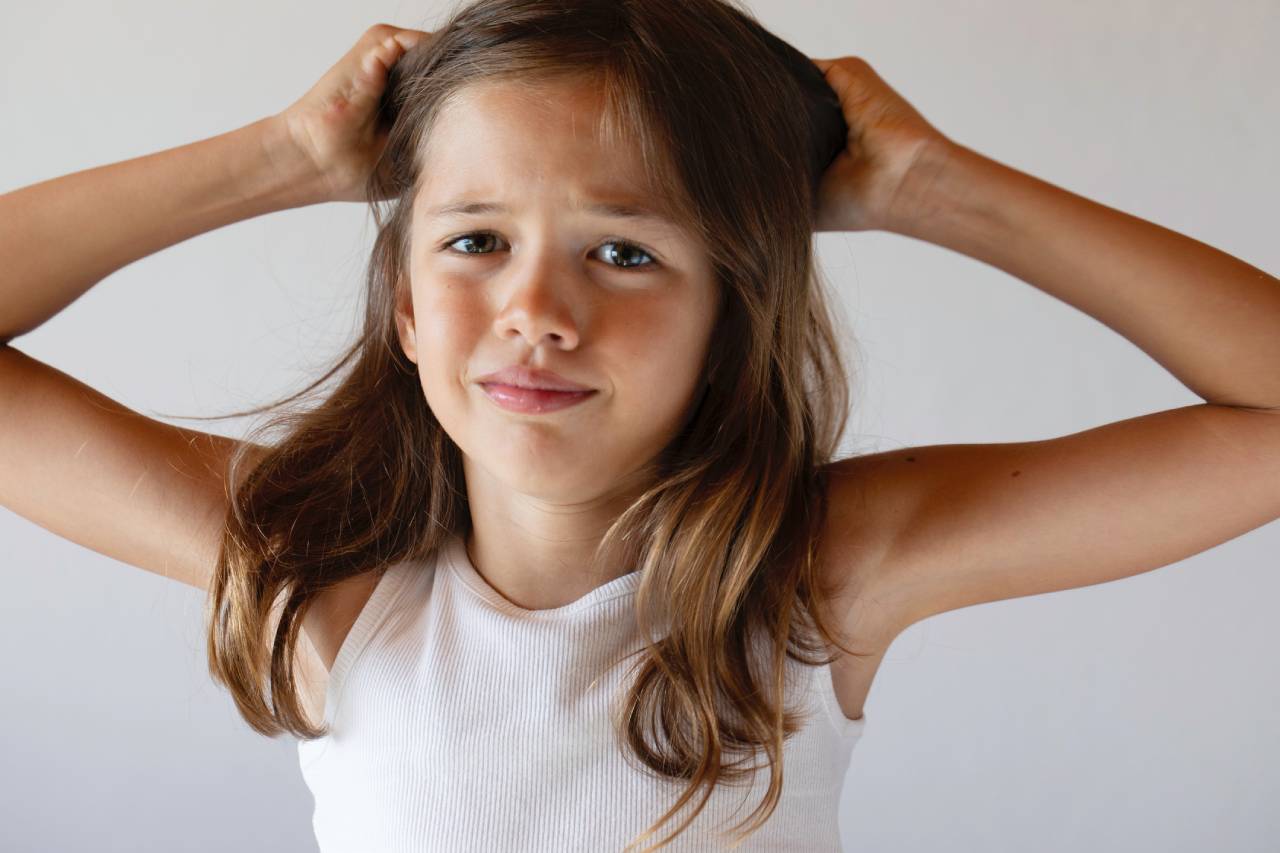
An 8-year-old girl with a history of eczema presents with acute scalp itching seemingly unresponsive to a prescribed shampoo.
Hypothesis generation
Scalp pruritus is frequently encountered and may extend to other body areas. It is usually dermatologic in origin but can be neuropathic, systemic or psychogenic.
Likely diagnoses
- Dandruff
- Dermatitis (allergic or irritant)
- Dry skin
- Head lice
- Psoriasis
Possible diagnoses
- Atopic dermatitis
- Discoid lupus erythematosus
- Folliculitis decalvans
- Lichen planopilaris
- Lichen simplex
- Seborrhoeic dermatitis
- Stress
- Systemic disease
- Tinea capitis
Critical diagnoses
- Malignancy e.g. lymphoma, leukaemia, multiple myeloma
- Skin cancer.
Key points: scalp itching
- Common symptom associated with many skin conditions but can occur in absence of any skin lesions
- Associated symptoms of soreness, scale and flaking skin are usual
- Accurate diagnosis may require mycology testing and biopsy
Continued information gathering
Given the presentation, all likely diagnoses seem possible, so it would be useful to know what shampoo the doctor prescribed. They tell you they cannot remember the name, but it smelt like “the stuff you resurface a road with”. This description fits with a tar-based product and suggests the doctor thought the problem was likely to be psoriasis or seborrhoeic dermatitis.
You ask if you can look at their daughter's scalp. Examination reveals mild erythema restricted to the crown/occipital areas. You observe no dryness or flaking of the skin on the scalp, nor the presence of a previous or current head lice infestation.
Given your inspection, the GP's assessment and the child's history of eczema, then psoriasis, seborrhoeic dermatitis and eczema/dermatitis seem the most likely diagnoses.
Problem refinement
Dermatitis affecting the scalp is usually precipitated following exposure to an irritant. Enquiry into any recent use of new hair products, however, finds that none have been purchased.
It seems that the GP's assessment is correct and it is likely that the parents have not used the product for long enough for it to have cleared up the problem. The only caveat to this is that fungal infections of the scalp, although relatively uncommon, do tend to present in the scalp area seen with your patient.
Red flags
None apparent. Other scalp conditions tend to occur in older patients, cause hair loss or are associated with skin lesions away from the scalp.
Management
Self-care options
Continuing the tar-based product is appropriate because symptoms are mild and these preparations can be used for both psoriasis and seborrhoeic dermatitis.
Prescribing options
Alternative treatments could be considered depending on the response to the tar-based product and whether the diagnosis leans towards psoriasis or seborrhoeic dermatitis. For psoriasis, a corticosteroid solution can be used; for seborrhoeic dermatitis, ketoconazole shampoo may be appropriate.
Safety netting
You tell the parents that the redness and itching on their daughter's scalp is probably a mild form of psoriasis or seborrhoeic dermatitis, and that the shampoo prescribed by the doctor is appropriate. However, it will take time to work, and improvement would generally be expected over a four-week period. You advise them to continue using the shampoo on their daughter.
Causes of itchy scalp
Likely diagnoses
Dandruff
The scalp will be dry and itchy. Flakes (white or yellow) of dead skin are usually visible in the hair close to the scalp and are visible on the shoulders and collars of clothing.
Dermatitis
All forms of dermatitis cause redness, skin dryness, irritation and pruritus to varying degrees, and may present with papules and vesicles. Itching is a prominent feature and can often lead to scratching by the sufferer. Dermatitis is generally caused by direct irritation after a substance has been applied to the scalp.
Dry skin
Signs and symptoms of dry skin (xerosis) vary between individuals, but the condition is typically characterised by abnormally dry, itchy and scaly skin due to atrophy of the skin barrier and reduced skin hydration. The skin can feel tight and uncomfortable. In moderate or severe cases, the skin can crack and fissure. Symptoms can be seasonal and are often worse in winter.
Head lice
Scalp itching is seen in around a third of patients. It is caused by an allergic response to lice saliva and can take weeks to develop.
Psoriasis
In mild cases, psoriasis may cause slight scalp redness; in severe cases, it may involve the whole scalp, with marked inflammation and thick scaling. Itch is common. The redness often extends beyond the hair margin and is commonly seen behind the ears.
Possible diagnoses
Atopic dermatitis
Although this is more associated with children, it can affect any age group. Itch is a key symptom. Location of rash varies with age and, in children, flexures are often affected. In adults, hand involvement is common. It is characterised by dry skin, pruritus, erythema, excoriations, scaling and lichenification. Scalp involvement is possible but rare.
Discoid lupus erythematosus
This condition presents with a wide range of symptoms that vary between individuals. Symptoms often flare and remit. Red, scaly, often coin-shaped plaques develop on the face and scalp. Itch may occur but is not prominent. Resolution of lesions tends to leave scarring and hair loss.
Folliculitis decalvans
This causes mild itch, discomfort or pain with associated hair loss often around the crown. The affected area of the scalp becomes red and swollen, and may form scaly areas, scabs and crusts. It is also known as tufted folliculitis because of the 'toothbrush' appearance in long-standing cases, where multiple hair shafts emerge from a single hair follicle. It usually affects middle-aged men.
Lichen planopilaris
It usually affects young adult women and typically presents as smooth white multiple patches of hair loss that can merge to form large irregular patches. Itch, discomfort and pain may also be present. Both this and folliculitis decalvans are uncommon.
Lichen simplex
Lichen simplex can present with single or multiple lesions that are seen on the arms, legs, neck and scalp that look scaly and red. The skin may feel dry, thickened and rough to the touch, and is often very itchy.
Seborrhoeic dermatitis
In adults where scalp involvement is present, symptoms can range from mild (dandruff-like) through to yellowish scales/crusts. Itch is common. Typically, the face is also affected around the nasolabial folds, across the eyebrows, and behind the ears. Lesion involvement away from the scalp tends to be well defined appearing dry and red with varying degrees of scaling.
Stress
Some patients describe an intense urge to scratch or pick at the skin, without an associated skin disease or other underlying cause — known as functional itch disorder. This has been associated with mental health disorders and worsening stress.
Systemic disease
Itch can be a symptom of a few chronic systemic conditions, although it tends to be uncommon and is often generalised rather than limited to the scalp.
More prominent features will also be present if the patient is undiagnosed. For example, in anaemia, shortness of breath, fatigue, headache and cognitive dysfunction are usual; in diabetes, thirst, tiredness and frequent urination; in liver disease, fatigue, nausea and jaundice. Thyroid dysfunction shows unexplained weight changes, heat/cold intolerances, sleep issues and GI upset.
A medical history should always be sought to check for the possibility of a pre-existing condition as the cause of itching.
Tinea capitis
Symptoms are characterised by scaling and itching of the scalp, broken hairs and patches of alopecia. The scalp may show a black dot appearance caused by broken-off hair stubs and a degree of erythema. Common areas of involvement include the occipital, parietal and crown regions.
Critical diagnoses
Malignancy e.g. lymphoma, leukaemia, multiple myeloma
Lymphoma is most strongly associated with pruritus affecting up to 30% of patients. Unexplained weight loss, night sweats, unexplained fevers, fatigue or lymphadenopathy can be experienced but pruritus notoriously predates other symptoms by months. Lymphoma, although more common in older people, is one of the cancers seen in younger adults.
Skin cancer
A lesion that does not heal, bleeds easily, changes size or colour and itches should always be viewed with caution.
Now check your understanding of itchy scalp by answering the following questions:
1. Which ONE of the following clinical features most strongly suggests scalp psoriasis over seborrhoeic dermatitis?
- a. Greasy yellow scale
- b. Involvement of postauricular area
- c. Pruritus worsened by stress
- d. Response to antifungal shampoo
- e. Well-demarcated erythematosus plaques extending beyond the hairline
2. Chronic scalp pruritus without visible primary skin lesions might suggest which ONE of the following?
- a. Androgenetic alopecia
- b. Contact dermatitis
- c. Lichen planopilaris
- d. Seborrhoeic dermatitis
- e. Systemic cause
3. Which ONE of the following clinical features best differentiates tinea capitis from seborrhoeic dermatitis in a pruritic scalp?
- a. Patchy alopecia with broken hairs
- b. Presence of erythema
- c. Pruritus
- d. Response to corticosteroids
- e. Scaling
4. Scalp pruritus associated with hair loss in a young woman is suggestive of which ONE of the following conditions?
- a. Dermatitis
- b. Folliculitis decalvans
- c. Lichen planopilaris
- d. Lichen simplex
- e. Seborrhoeic dermatitis
5. Which ONE of the following conditions is associated with autoimmune pathophysiology?
- a. Dermatitis
- b. Folliculitis decalvans
- c. Lichen simplex
- d. Lichen planopilaris
- e. Seborrhoeic dermatitis
Answers: 1.e 2.e 3.a 4.c 5.d

Share:


In Practice scenarios