




 1 Min
1 Min In Clinical

Follow this topic

Bookmark

Record learning outcomes
Learning objectives
After reading this feature you should be able to:
- Recognise the role pharmacy teams can play in facilitating pain management
- Identify and apply the various pain assessment tools that are available
- Discuss the proposals to better optimise naloxone use.
Before discussing pain management options, it is important to understand how pain is affecting the patient by carrying out a proper assessment.
Key facts
- According to the British Pain Society, 10 million Britons suffer pain almost daily
- Acute pain is generally straightforward to treat with analgesics
- Chronic pain can be more difficult to manage and leads to low mood, anxiety, poor sleep and reduced movement.
The best way to assess pain is by asking the patient open questions and actively listening, says OTC brand Care’s expert pharmacist, Karen Baker. “A patient can be asked to describe the pain, where it is located, what may have caused the pain, and how severe it is. Further questions such as the timing of the pain, intensity, and exacerbating and relieving factors are useful when determining the best course of action.”
It is essential to check what the person has tried previously and any prescription or over-the- counter medications they are taking, she adds. Dylan Jones, community pharmacist, independent prescriber and member of the RPS Welsh Pharmacy Board, prescribes analgesics for acute pain conditions such as injuries, ear infections, dental pain and back pain.
“I have prescribed naproxen, codeine and dihydrocodeine,” he says. “A lot of people actually refuse painkillers, but it depends on the level of pain they are in. I ask patients to describe the severity of their pain on a scale of one to 10. I also watch them walk if the pain is in their foot or leg, or I ask them to elevate their arm to where they feel comfortable. Everyone has a different pain threshold.”
Tracy Brown, a prescribing support pharmacist, set up a pharmacist-led pain clinic in Govanhill Health Centre in Glasgow, in November 2020. The three GP practices in the health centre can refer patients who have chronic pain into her pharmacist-led pain clinic.
“We ask the GPs to exclude any red flags first and also exclude any patients being seen by a neurologist or rheumatologist,” she says. “Our aim is to improve medication usage. Patients may be on high doses of medicines that aren’t working,
so their pain isn’t well controlled.
“We assess them with the Brief Pain Inventory (BPI) system. We ask patients to measure their pain on a scale out of 10, and also to rate things like mood and sleep. We ask them to talk about their pain story in their own words and about how much more difficult their life is due to their chronic pain.”
Pain assessment tools
Various pain assessment tools are available. These include:
- The Visual Analog Scale is used to measure acute and chronic pain. A patient is asked to record their pain intensity along a 100mm horizontal line and this rating is then measured from the left edge (usually labelled ‘no pain’)
- The Brief Pain Inventory assesses pain severity using a simple numerical scale from 0 to 10
- The Leeds Assessment of Neuropathic Symptoms and Signs (LANSS) pain scale involves a patient-completed questionnaire and a brief clinical assessment.
Therapeutic management
Acute pain is generally straightforward to treat with analgesics, depending on the severity of the pain. Dylan Jones makes sure that patients take their analgesics responsibly. “I try to stick to prescribing just one pack [of analgesics] as a short-term measure,” he says. “This means they only use the analgesics for around two weeks and then have to go to their GP if they want more.
“I may also recommend heat and cold therapy such as wheat bags, depending on the type of pain, or supports such as knee braces. Customers can buy these in the pharmacy, which they can’t from a GP surgery, which is a benefit of the pharmacy setting. I also direct customers straight to a physiotherapist if this is appropriate.”
Chronic pain can be more difficult to manage and can lead to low mood, anxiety, poor sleep and reduced movement if it persists. While some people benefit from analgesics, pain medication should be used alongside practical non-drug approaches, such as physical activity and mental health support.
“We teach patients the difference between acute and chronic pain,” says Tracy Brown. “Patients may be frustrated as they have been referred for scans and X-rays and nothing has come up. It is important to explain that chronic pain is real and a condition in itself, and to educate them early on in the journey that medication isn’t the answer.”
Long-term cancer-related pain is often managed with a stepwise approach to medication, using non-opioid medicines for mild pain up to strong opioids for severe pain. The problem with using this ‘ladder’ approach for non-cancer chronic pain is that this type of pain can be unpredictable and continue for many years.
Non-medicine treatments may be more useful, such as electrical stimulating techniques (TENS machines), acupuncture, advice about activity and increasing physical fitness, and psychological treatments, such as cognitive behavioural therapy and mindfulness.
“The first thing we do is reassure patients that we are going to help them control their pain and explain that a pain medicine isn’t working if they are still scoring 9 or 10 on the scale,” says Brown. “We help the patient self-manage their pain, sometimes with social prescribing and help for mental health, and try to help them get back to exercising.
“We may introduce analgesic gels or a TENS machine but if someone is in a lot of pain over three months and the measures aren’t working, or they are coming in to buy stronger painkillers and have become reliant on them, it is important to refer them to their GP.”
Role for natural supplements?
To support individualised treatment plans, natural supplements should be considered as a sustainable pain relief option, says Dr Alastair Dickson, GP and health economist.
“Natural supplements are playing an increasingly important role in the treatment of chronic pain conditions, and many individuals with osteoarthritis or other joint problems have turned to these remedies.
“For instance, the galactolipid GOPO, which is derived from rose-hip (Rosa canina), has been shown in randomised, placebo-controlled clinical trials to reduce arthritis joint pain and reduce consumption of paracetamol by 40 per cent.”
Opioid prescribing
Opioids may help with acute pain, but there is little evidence that they can help long-term persistent pain and their sedative properties and addictive nature continue to cause concern. Guidelines from NICE state that chronic primary pain should not be treated with opioids, or even paracetamol. In Scotland, SIGN guidelines on the management of chronic pain state that opioids can be prescribed for chronic pain, in certain cases.
Despite these guidelines, prescribing opioids for the management of non-cancer pain is on the rise. According to a survey of over 4,000 adults aged 16 to 75 for BBC News in May 2022, a quarter of people in the UK are living with chronic pain – and nearly a quarter of these are being prescribed opioid painkillers in a bid to ease their pain.
All drugs prescribed for pain should be subject to regular review to evaluate continued efficacy, says the Faculty for Pain Medicine (FPM). Tracy Brown recommends signposting patients to resources on opioids on the MHRA website and also to live well with pain (a not-for-profit educational website created by clinicians).
“We need to help patients understand more about the long-term side-effects of the medication they are on and also how high their dose is,” she says. “Often, if patients are on full-dose tramadol and co-codamol, they are not aware of what this equates to when compared with morphine.”
Post-surgical use of opioids is thought to be an important source of problems, says the Faculty of Pain Medicine. On discharge, patients must be advised how to self-administer medicines safely, wean themselves off analgesics and dispose of unused medications.
According to Dr Nicholas Levy, a consultant anaesthetist in West Suffolk, who wrote about opioid stewardship in the BMJ in January 2021, a recent UK study found that 14.6 per cent of people given opioids for the first time became long-term opioid users within a year.
He wrote that, “appropriate prescribing of opioids should be a priority, focusing where possible on non-pharmacological strategies, including referral to wellbeing services, physiotherapy, exercise and weight loss programmes, as well as alternative therapies such as mind-body therapy and acupuncture.”
Many people with chronic pain stop doing everyday activities as they think this will make their pain worse, says Tracy Brown. “They become isolated and focused on their pain,” she says, “so encourage them to join activity groups to give them something else to focus on.
“The Footsteps Festival run by Live Well With Pain is a collection of online events for chronic pain patients on anything from book reviews on pain management to online cookery and mindfulness courses. The Flippin Pain campaign (flippinpain.co.uk) has good learning resources for both patients and healthcare professionals.”
Take-home naloxone services from pharmacy
In June 2022, the Government’s Advisory Council on the Misuse of Drugs (ACMD) made a series of recommendations to optimise the use of naloxone and called for take-home services from pharmacies to be nationally contracted...
The recommendations followed an open consultation launched by the Government in September 2021 about potential amendments to the Human Medicines Regulations (2012), so that take-home naloxone could become more widely available in the UK.
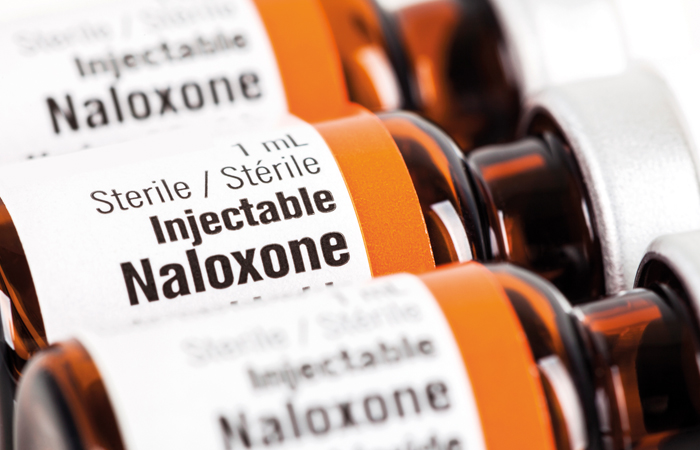
Naloxone is commonly used as an emergency treatment for people who overdose on opioids (e.g. heroin, methadone or morphine). If it is administered immediately, the medicine can reverse an overdose in a short period.
The number of people who have been administered naloxone has increased over the past 10 years, and evidence shows an association between administration of naloxone and a reduction in opioid overdose-related deaths. More needs to be done to widen access to, and increase uptake of, naloxone in the UK.
According to the ACMD, pharmacies are key providers of take-home naloxone and a UK agreement on the role of community pharmacies in distributing naloxone would promote collaborative working across the four home nations. There needs to be more training for pharmacists on how to provide brief interventions related to take-home naloxone and how to administer both intranasal and intramuscular naloxone, the group added.
Trusting relationships
In the Government’s consultation, many respondents expressed support for pharmacists being able to supply take-home naloxone due to their convenient locations and opening hours, and because pharmacy teams already see people who use drugs on a regular basis through substitute prescribing, and needle and syringe programmes. Respondents felt that this level of contact could produce trusting relationships between pharmacists and people who use opioids.
Scotland’s National Naloxone Programme (NNP) was formally launched in 2010 and implemented in 2011. All 14 health boards, including all 15 prisons, are involved in the national programme. In Scotland, it is recommended that all pharmacies stock naloxone for use in an emergency, and to supply it free of charge to those who may witness an overdose.
“In Scotland, the naloxone services are run by the alcohol and drugs partnerships across each health board,” says Laura Wilson, policy and practice lead at the Royal Pharmaceutical Society in Scotland. “Any pharmacist can get involved by contacting the health board. Most of the training is online, which makes it much more accessible.”
Brief interventions
To supply take-home naloxone, pharmacy teams undertake training in brief interventions and what to discuss when supplying the medication, says Laura Wilson. “Pharmacies have to deliver training to the patients and their families as well, such as when to know if and when someone needs naloxone, calling the emergency services and keeping the person safe from themselves and other people.”
The Turning Point charity is a leading provider of health and social care services, working with people who need support with drug and alcohol use, mental health, offending behaviour, unemployment issues or learning disabilities. The charity “strongly encourages all opiate users to accept and carry naloxone, and try to work through any reasons given for refusal. Since the pandemic, we have posted naloxone out to clients as well as leaving it with local pharmacies to ensure it continues to remain accessible,” it says.
The charity has responded to the Government consultation. “We believe that naloxone should be supplied and stocked in as many locations as possible,” says Dr David Bremner, chief medical officer and consultant addiction psychiatrist at Turning Point.
“Turning Point has been expanding the use of naloxone into homelessness, prison and probation services as well as pharmacies, and provides ongoing training in all our substance misuse services. Empowering people to use naloxone has proved invaluable.”


In Clinical
Let’s get clinical. Follow the links below to find out more about the latest clinical insight in community pharmacy.