





 18 Min
In Clinical reviews

Follow this topic

Bookmark

Record learning outcomes
Stroke is a leading global cause of mortality and morbidity. By contrast, a transient ischaemic attack (TIA) is rarely fatal and usually resolves within 24 hours without lasting damage. Nevertheless, it is an important warning sign of an impending stroke. Community pharmacists can help identify and reduce modifiable stroke risk factors and support patients after suffering a stroke. These roles will expand as more pharmacists qualify as independent prescribers.
|
||||||||
|
||||||||||||
Mortality and morbidity
NICE defines stroke or transient ischaemic attack as an acute neurological event, presumed to be vascular in origin, that leads to cerebral ischaemia, infarction or haemorrhage. Put simply, stroke occurs when the blood supply to part of the brain is interrupted by a blockage (ischaemic stroke) or rupture of a blood vessel (haemorrhagic stroke).
Ischaemic stroke is the most common type, accounting for about 85% of cases. UK hospital data shows that 92,414 patients were admitted with stroke in 2024/25.
Globally, around 12 million new strokes occur each year, causing more than 7 million deaths, while one in four adults are predicted to experience a stroke during their lifetime.
Age is the most important risk factor, with stroke more likely after 55 years. Stroke is also a leading cause of adult disability in the UK – two-thirds of stroke survivors live with disability after the event.
A TIA involves the acute onset of focal neurological symptoms followed by complete resolution and is a recognised risk factor for future stroke. The subsequent 90-day risk of stroke may be as high as 18%.
A recent systematic review and meta-analysis found that approximately one in five patients is at risk of stroke within 10 years of a TIA – and 10% of subsequent strokes are likely to be fatal. The global prevalence of TIA was estimated from more than 20,000 records at almost 2%, rising to just over 5% in people aged over 65 years.
Signs and symptoms
Recognising the key signs and symptoms of stroke is crucial to reducing delays in acute care. The phrase “time is brain”, adapted from “time is muscle” in acute coronary care, reflects the progressive loss of nervous system tissue during a stroke. For every minute that a large-vessel ischaemic stroke remains untreated, the average patient is estimated to lose 1.9 million neurons, 13.8 billion synapses and 12km of axonal fibres.
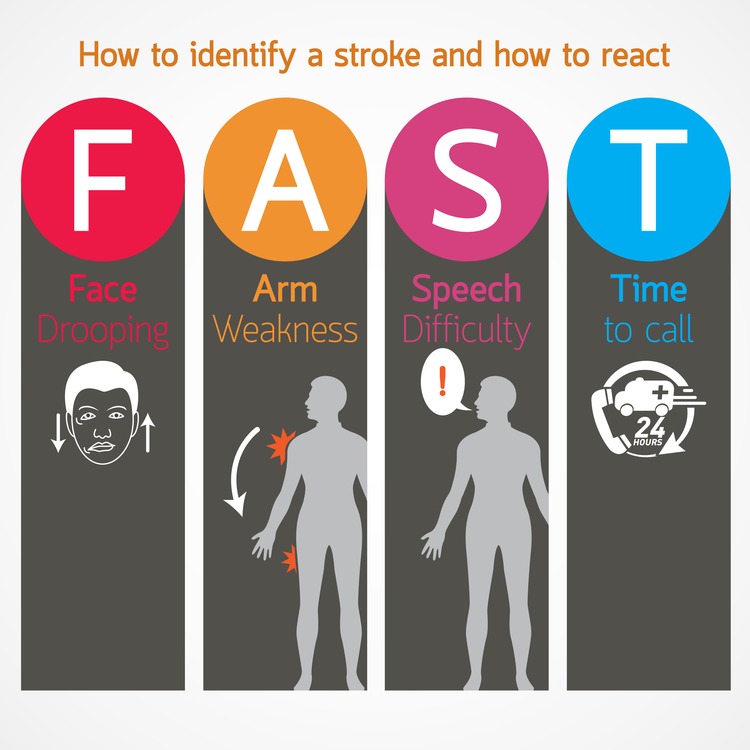
Ischaemic and haemorrhagic strokes typically have a sudden onset. The FAST acronym can be used to rapidly assess for possible stroke or TIA:
- Face – sudden unilateral weakness or numbness. Ask the patient to smile and check for drooping on one side of the mouth
- Arms – sudden unilateral weakness or numbness. Ask the patient to raise both arms and check whether one drifts downwards or feels weak
- Speech – slurred speech or difficulty finding words. Ask the patient to repeat a simple sentence and check whether their speech is clear and understandable
- Time – if any of these signs are present, call an ambulance.
Although not as widely used, two additional features are sometimes added to FAST, making it BE-FAST for pre-hospital assessment:
- Balance – any observed loss of balance, increased falls, headaches or dizziness
- Eyes – any sudden changes in vision e.g. double or blurred vision.
However, a recent systematic review concluded that the evidence was actually insufficient to show that adding these two factors was particularly beneficial.
A haemorrhagic stroke will typically result in a sudden and severe headache, often described by patients as the worst headache of their lives, which reaches its maximum intensity within seconds to minutes, accompanied by a sensitivity to light.
Ischaemic stroke: common differentials
Hypoglycaemia
When stroke or TIA is suspected, first exclude hypoglycaemia with a finger-prick blood glucose test because neuroglycopenia can mimic stroke symptoms. Suspect neuroglycopenia at a blood glucose level of <3–4mmol/L. Oral glucose or intravenous dextrose should resolve the symptoms.
Hemiplegic migraine
A hemiplegic migraine (HM) can occur in people who experience migraine with aura. Symptoms include unilateral weakness (hand numbness and arm weakness), together with speech difficulties (slurring and inability to speak clearly). Unlike a stroke, HM symptoms develop gradually; with ischaemic stroke, onset is sudden and maximal.
Bell’s palsy
Although Bell’s palsy and stroke can both cause facial paralysis, several features help distinguish them. Bell’s palsy usually develops progressively over several hours or days, affecting both the upper and lower face, whereas stroke tends to have a sudden onset and predominantly affects the lower face. Bell’s palsy is not usually associated with limb weakness or changes in speech or vision, which may occur with stroke.

Todd’s paralysis (or paresis)
This neurological condition can develop in those with epilepsy, in which the seizure is followed by a temporary period of unilateral paralysis. The condition can present with hemiparesis (unilateral muscle weakness), aphasia (speech difficulties) or focal sensory disturbances that can mimic an ischaemic stroke. Distinguishing between the two can be difficult and is best left to emergency care physicians.
Risk factors for stroke and TIAs
Stroke and TIAs share the same underlying risk factors, which may be grouped as either cardiometabolic, modifiable or non-modifiable. A 2016 global study of nearly 27,000 patients across 32 countries identified 10 modifiable factors, which were responsible for more than 80% of strokes.
Table 1 summarises these factors and their population attributable risk (PAR) values: the estimated proportion of stroke cases in a population attributable to each factor.
| Table 1: Stroke risk factors and population attributable risk | |
| Risk factor | Population attributable risk (%) |
| Hypertension | 47.9 |
| Physical inactivity | 35.8 |
| Dyslipidaemia | 26.8 |
| Poor diet | 23.2 |
| Abdominal obesity | 18.6 |
| Depression/psychological stress | 17.4 |
| Cigarette smoking | 12.4 |
| Cardiac causes (e.g. atrial fibrillation) | 9.1 |
| Heavy alcohol intake | 5.8 |
| Diabetes | 3.9 |
Secondary care management
Detailed secondary care management of ischaemic stroke is beyond the scope of this article. Once the diagnosis is confirmed and intracerebral haemorrhage excluded, treatment may include thrombolysis with alteplase or tenecteplase.
For suspected TIA, aspirin 300mg is given immediately, while for people with ischaemic stroke it is given 24 hours after thrombolysis (unless contraindicated) and continued for at least 14 days to reduce the risk of a further event.
Secondary prevention
After a stroke or TIA, the risk of a further stroke increases over time. The cumulative risk is 3.1% at 30 days, 11.1% at 1 year and 26.4% within 5 years. Pharmacological treatment should therefore be optimised to minimise this risk. Table 2 summarises secondary prevention measures based on the National Clinical Guideline for Stroke. (Long-term exposure to air pollution has emerged as a potential stroke risk factor.)
| Table 2: Interventions and targets for patients with ischaemic stroke | |
| Intervention/risk factor | Targets and comments |
| Antiplatelet therapy |
For patients in sinus rhythm, dual antiplatelet therapy (DAPT) with aspirin 75mg daily and clopidogrel 75mg daily is commenced on day 15 (i.e. once aspirin 300mg has been stopped). The aspirin is then stopped after 21 days and patients continue on clopidogrel. Although unlicensed, long-term treatment with clopidogrel 75mg daily is recommended for patients with a TIA. For those with evidence of either paroxysmal or permanent atrial fibrillation, rather than DAPT, patients are started on anticoagulant therapy e.g. a direct oral anticoagulant (DOAC). |
| Hypertension | Systolic blood pressure <130mmHg (home measurements <125mmHg). For patients under 55 years, treatment is started with an ACEi or ARB. For patients 55 or over, or of Afro-Caribbean origin (any age), a dihydropyridine calcium channel blocker or thiazide-like agent is used. Add ACEi or ARB if target not achieved. |
| Lipid modification | Patient started (if required) on high-intensity statin (e.g. atorvastatin 80mg daily) with aim for fasting LDL cholesterol <1.8mmol/L. If not achieved after 4-6 weeks, ezetimibe 10mg daily added. |
| Lifestyle modification | Increased consumption of fruits and vegetables, physical activity, stopping smoking, moderate alcohol consumption and maintaining a healthy weight can significantly reduce all-cause mortality following a stroke. |
Haemorrhagic stroke
Antiplatelet and anticoagulant therapy is contraindicated following a haemorrhagic stroke unless the patient has a specific indication such as severe atrial fibrillation or mechanical heart valves. Instead, secondary prevention measures focus on blood pressure control and lifestyle modification (see Table 2), although statin therapy is generally not used following a haemorrhagic stroke.
Other considerations after a stroke
- Health and social care needs – assessment of the patient’s ability to undertake personal care e.g. dressing, toileting, eating/drinking.
- Provision of advice and support – refer patients to support groups such as the Stroke Association (see Resources).
- Ability to work – occupational health teams have a significant role in assessing an individual’s ability to continue working and/or the need for workplace interventions.
- Driving – the DVLA provides guidance on an individual’s fitness to drive (see Resources).
Where do community pharmacists fit in?
Pharmacists can contribute across the stroke pathway, from identifying and managing risk factors to supporting secondary prevention after discharge, as described below:
Primary prevention: risk factor management
As Table 1 shows, hypertension is the most common risk factor for both ischaemic and haemorrhagic stroke. The Hypertension Case-Finding Service enables pharmacists to screen people aged over 40 years for undiagnosed high blood pressure and refer those with persistently raised readings for further assessment and treatment.
During blood pressure checks, pharmacists can also look for possible atrial fibrillation (AF) by assessing pulse rate, rhythm and strength. AF typically causes an irregular rhythm, variable pulse intensity and a normal or rapid rate (>100 beats/min). Any irregularity should prompt GP referral for a 12-lead ECG.
In addition, pharmacies can screen for other modifiable risk factors, such as smoking status, physical activity, alcohol intake, obesity and cholesterol levels, and provide appropriate advice where necessary. Some pharmacies can perform cholesterol testing to help identify dyslipidaemia.
Finally, pharmacists can provide educational advice on stroke risk – particularly the ACT FAST intervention – to alert patients to the key signs of a potential stroke.
Secondary prevention
After discharge from hospital, community pharmacists can support patients who have experienced a stroke in several ways:
Medication review
A medicines review (for instance, via the NHS Discharge Medicines Service in England) allows pharmacists to assess the patient’s understanding of each medicine and reconcile the current regimen with the intended discharge plan. This is particularly important because multiple changes may have been made during admission.
Reconciliation can reduce medicines-related harm, maintain essential secondary prevention treatment, and identify omissions, duplications, inappropriate doses, contraindications, interactions or unnecessary medicines. Recommendations should be communicated to the GP or stroke team.
Medicines adherence
Long-term medicines adherence reduces the risk of recurrent stroke, disability and mortality. Many stroke survivors will be prescribed an antiplatelet, one or more antihypertensives, lipid-lowering treatment and, where relevant, glucose-lowering therapy. Pharmacists can explore barriers such as cognitive impairment or difficulty remembering doses, then tailor support to improve adherence.
Assessing swallowing ability
Dysphagia is a common complication following stroke that can significantly affect a patient’s ability to take medicines safely and effectively. Pharmacists can help assess whether prescribed medicines and their formulations suit the individual patient. In general terms, assess whether the patient can swallow:
- Whole tablets or capsules
- Small tablets
- Liquids or thin fluids
- Thickened fluids
- Medicines mixed with soft food.
Review any treatment in conjunction with the speech and language therapist (SALT). In some instances, it may not be necessary to change all solid tablets into a liquid alternative.
The Specialist Pharmacy Service (SPS) suggests considering the patient’s ability to swallow food and fluids first before selecting a particular formulation change. Some oral tablets can be crushed; modified-release and gastro-resistant tablets cannot.
Some guidance is available on choosing medicines when the patient has swallowing difficulties. It is necessary to check which medicines are best given or taken with soft food; the SPS also provides advice on this.
Finally, although a licensed formulation is preferable, an unlicensed or ‘special’ formulation can be used when this is not possible. If required, the GPhC requires a pharmacist prescriber to accept responsibility for the medicine and be satisfied that no currently licensed alternatives meet the patient’s needs, and that sufficient evidence or experience demonstrates the product’s safety and efficacy.
Potential prescribing roles
As pharmacist prescribing grows, there are increasing opportunities to optimise secondary prevention treatment after stroke or a TIA.
Hypertension
Working within an agreed clinical pathway, prescribing pharmacists can ensure patients reach the recommended blood pressure target (<130/80mmHg) through dose titration and appropriate sequencing of antihypertensive drugs. Pharmacists can monitor blood pressure and adjust antihypertensive therapy when patients experience adverse effects.

Dyslipidaemia
Pharmacist prescribers can undertake lipid reviews to optimise treatment. This may include assessing adherence, reviewing lipid results, managing statin-associated adverse effects and, where clinically appropriate, prescribing or escalating lipid-lowering therapy.
Antiplatelet therapy
Pharmacist prescribers can help ensure that antiplatelet therapy remains appropriate for the patient’s diagnosis and current guidance e.g. aspirin and clopidogrel should not be continued together long term. The role also includes reviewing adherence, assessing bleeding risk and identifying clinically significant interactions.
Pharmacists can also support CYP2C19 genotype testing to identify loss-of-function alleles, particularly in people of East Asian or South Asian ancestry. These alleles reduce clopidogrel effectiveness and increase the risk of further stroke. Ticagrelor and prasugrel are suitable alternatives.
Anticoagulant therapy
Pharmacist prescribers could support secondary prevention by ensuring that patients with AF are appropriately managed. Working within a clearly defined clinical governance framework and in line with current NICE guidance, pharmacist prescribers could initiate or adjust a DOAC dose where appropriate, considering factors such as renal function, age, weight, interacting medicines, HAS-BLED score to estimate bleeding risk, and adherence to treatment.
Conclusion
Community pharmacists are well placed to identify stroke risk and optimise medicines for secondary prevention. Through blood pressure checks, medicines reviews and conversations about adherence and lifestyle, they can help reduce the risk of recurrent events and improve long-term outcomes. As independent prescribing becomes more established, further opportunities will emerge for pharmacists to take a more active role in managing cardiovascular health and optimising medicines use in this therapeutic area.
| Resources |
|
Stroke Association: www.stroke.org.uk Different Strokes: differentstrokes.co.uk DVLA: www.gov.uk/government/publications/assessing-fitness-to-drive-a-guide-for-medical-professionals |
|
||||||||||||||||||||||||||||||||||||||

Share:


In Clinical reviews