




 14 Min
 In Clinical reviews

Follow this topic

Bookmark

Record learning outcomes
|
||||||||||
|
Glucose monitoring is valuable when the right person tests at the right time, understands the result and knows what to do next. The key distinction is between testing with a clinical purpose and testing simply for its own sake.
A reading is not an outcome. Rather, it is information that may support a decision to administer insulin, treat hypoglycaemia, adjust therapy, prepare for driving or respond to illness.
| A blood glucose reading is not an outcome in itself – it is information to support good condition management |
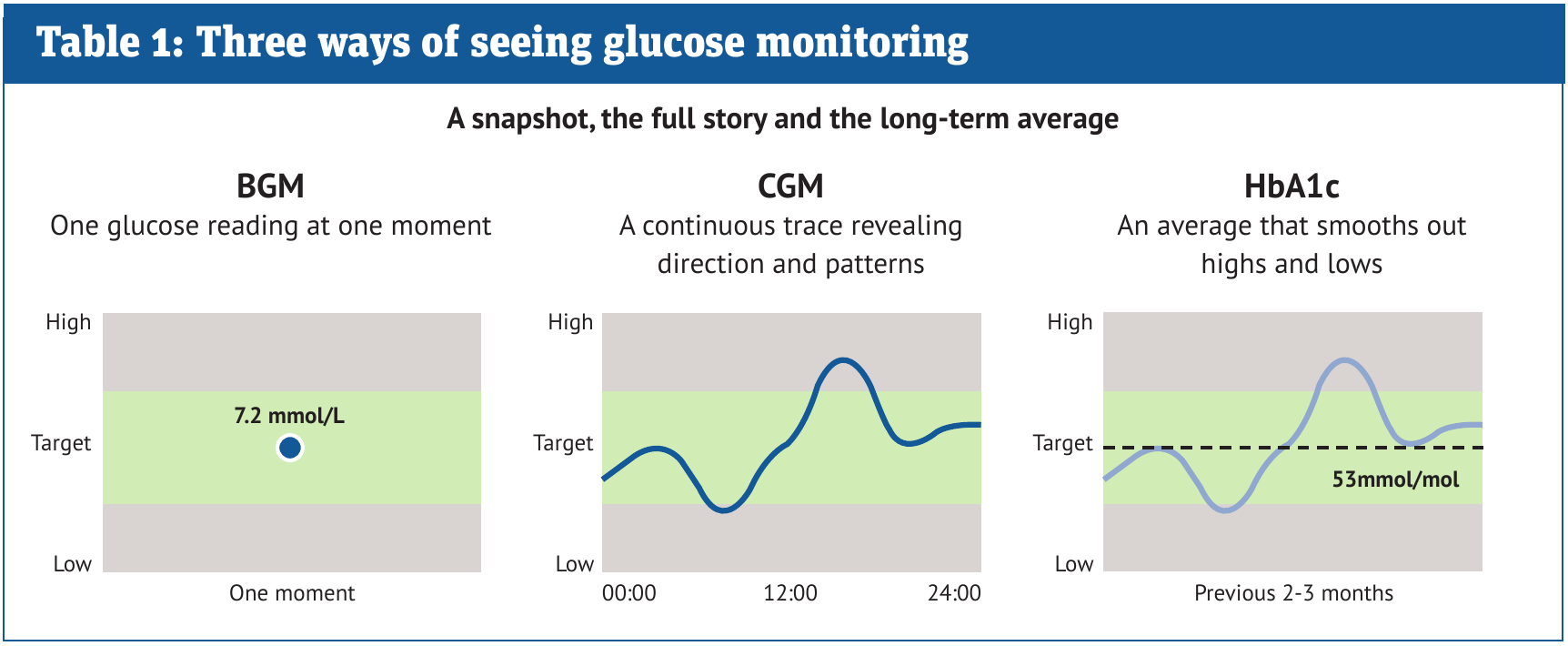
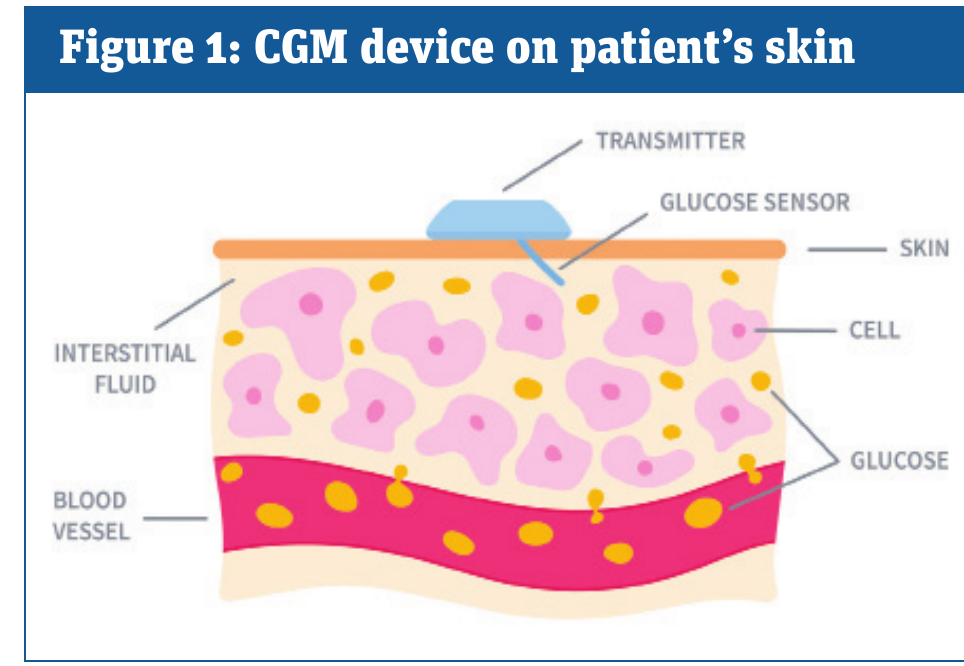
Capillary blood glucose monitoring (BGM) is like a photograph: a finger-prick gives a snapshot of one moment. Continuous glucose monitoring (CGM) is more like a film: a sensor measures glucose in interstitial fluid repeatedly throughout the day and night, showing where glucose has been, where it is now and where it is heading.
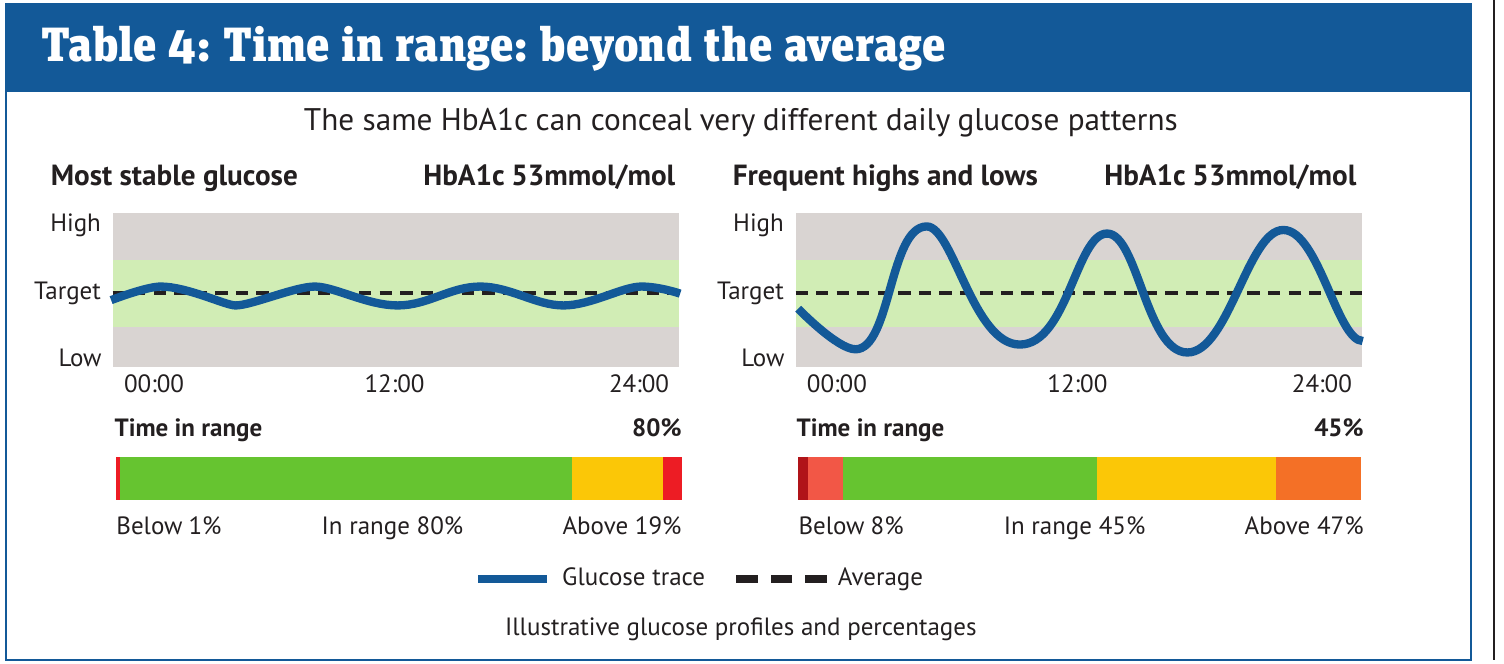
HbA1c measurement adds a third perspective – estimating average glycaemic exposure over the preceding weeks, but without showing day-to-day variability or whether high and low readings are cancelling one another out. Two patients can have identical HbA1c readings but very different glycaemic profiles and treatment needs.
These three tools answer different questions and should complement – rather than compete with – one another.
Who should use BGM?
NICE advises against routine self-monitoring for adults with type 2 diabetes unless they are using insulin, have documented or suspected hypoglycaemia, take a medicine that raises hypoglycaemia risk – such as gliclazide – particularly alongside driving or using machinery, or are pregnant or planning a pregnancy.
Short-term monitoring may also help when starting oral or IV corticosteroids, or to confirm suspected hypoglycaemia.
In practice, daily testing is usually unnecessary for people taking metformin, SGLT2 inhibitors, DPP-4 inhibitors or GLP-1 receptor agonists, as it adds cost and anxiety without changing/improving management of the condition.
However, not being on insulin is not itself a reason to stop testing: anyone taking a sulfonylurea such as gliclazide should be testing, as should anyone with symptoms of hypoglycaemia, acute illness or a time-limited aspect, such as Ramadan or a new diagnosis. Type 1 diabetes, multiple daily insulin injections and insulin-treated gestational diabetes all require structured, frequent testing as a baseline.
Steroids need particular care. Morning prednisolone typically raises glucose from late morning into the evening, so a fasting-only reading can miss this entirely.
Joint British Diabetes Societies guidance recommends once-daily testing, before or after lunch or the evening meal, for people at higher risk or with symptoms, increasing to four times daily if readings persist above 12mmol/L.
Two checks pharmacists should not miss
Driving: Ask what the person drives and which medicines they use – the rules differ by licence group and by drug. By law, anyone starting insulin must notify the DVLA.
Group 1 (car and motorcycle) drivers using insulin, sulfonylureas or glinides should test at the start of a journey and at least every two hours while driving.
Group 2 (bus/lorry) drivers using insulin, sulfonylureas or glinides must test at least twice daily – including on non-driving days – with a check at the start of the first journey, a further check within two hours of starting driving, and then every two hours after that.
Since the DVLA’s November 2025 update, medically approved, non-adjunctive CGM may be used in place of finger-prick testing at these times in both Group 1 and Group 2 drivers, but a backup meter must still be carried in case the sensor fails or gives an unexpected reading.
Alarms should supplement – not replace – the person’s own hypo awareness and should be set above 4.0mmol/L while driving. Anyone who becomes dependent on an alarm to notice a drop in blood glucose must stop driving and notify the DVLA.
Annual review: NICE recommends a structured review at least once a year for adults who self-monitor. This should cover technique, testing frequency, interpretation, impact on quality of life, continued benefit, and whether the person knows what action to take with a result.2
A useful single question captures most of these aspects: “What do you do differently because of this reading?”. If the answer is “nothing”, the monitoring plan itself needs a review, not just the supply of a device.
Making BGM safer and less wasteful
Meter choice is not trivial. A non-formulary meter may leave a patient unable to obtain compatible strips, while repeats or electronic repeat dispensing issued without a review can generate waste.
Bulk switching of devices based purely on acquisition cost can disrupt people with visual impairment, dexterity problems, cognitive impairment, or routines built around a specific device and a carer who knows it well. At every supply or review it is worth confirming that:
- The meter, strips and lancets are compatible and in date
- Hands are washed with soap and water, and dried before testing
- A fresh lancet is used each time
- The result is recorded with enough context to interpret it later
- The person knows what range of readings requires action, what that action is, and who to contact
- Lancets should go in an approved sharps container, not the household bin.
Who qualifies for CGM
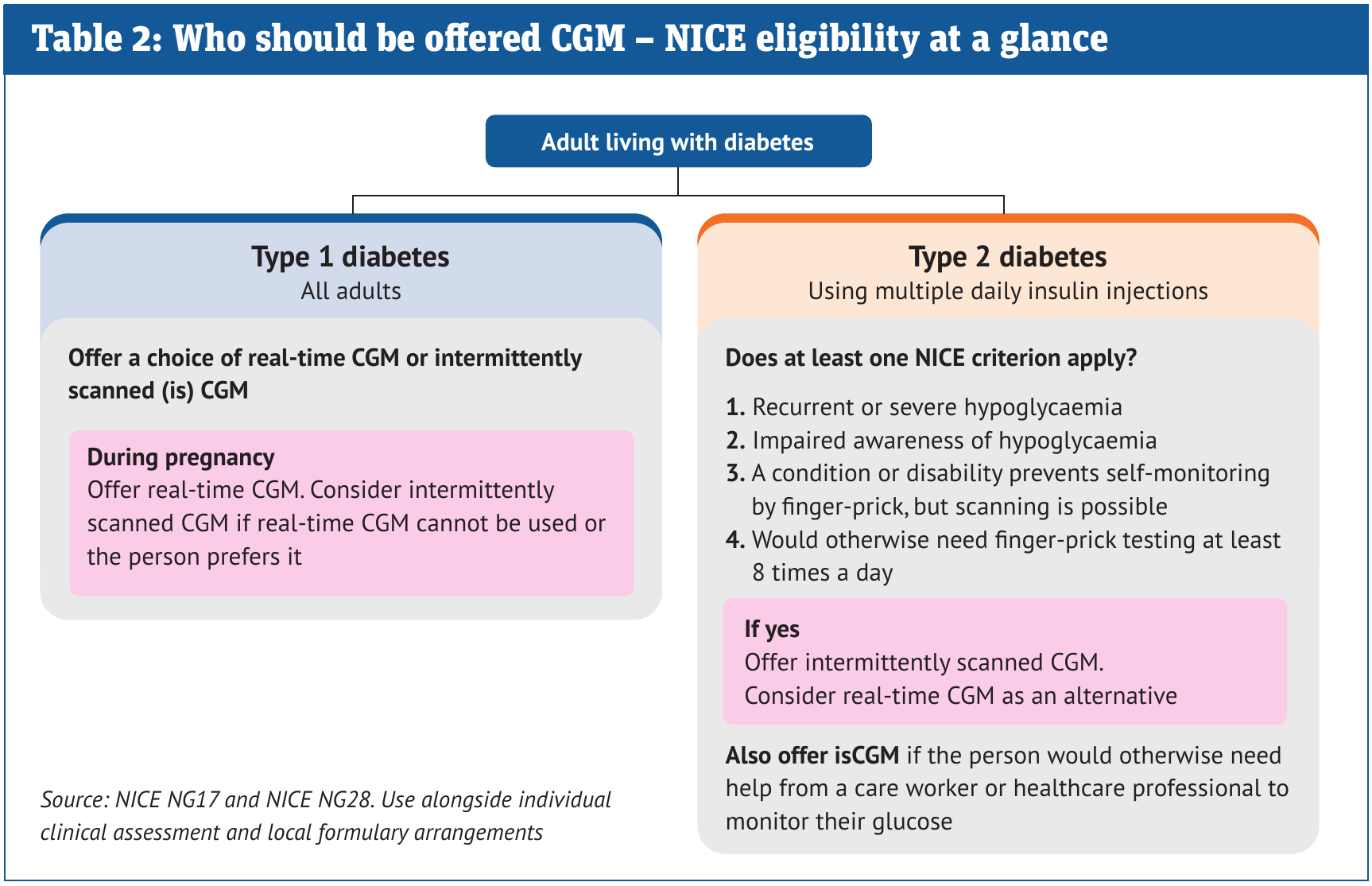
All adults with type 1 diabetes should be offered a choice of real-time (rtCGM) or intermittently scanned CGM (isCGM), based on their preferences, needs, characteristics and the functionality of the devices available. This includes anyone who is pregnant.
For type 2 diabetes, eligibility is tied to insulin use. NICE recommends CGM for adults on multiple daily insulin injections who have recurrent or severe hypoglycaemia, impaired hypoglycaemia awareness, a condition or disability (including a learning disability or cognitive impairment) that prevents capillary testing but not CGM use, or who would otherwise be advised to test at least eight times a day.
It should also be offered to insulin-treated adults who would otherwise need a carer or healthcare professional to check their blood glucose for them.
|
Practical problem solving with CGM: troubleshooting tips
|
Commissioned devices vary by integrated care board but commonly include FreeStyle Libre 2 Plus and Libre 3, Dexcom ONE+, Dexcom G7, GlucoRx Aidex and Accu-Chek SmartGuide.
It is worth knowing your local ICB’s commissioning policy, because in practice whether a patient can have CGM sometimes depends on local policy as much as on the NICE recommendation itself.
Device choice should consider alarms, scanning requirements, accessibility, ability to share data, and whether the person can realistically use it day to day. It should never assume smartphone ownership: manufacturers offer standalone reader devices for people who are digitally excluded.
Access only first step
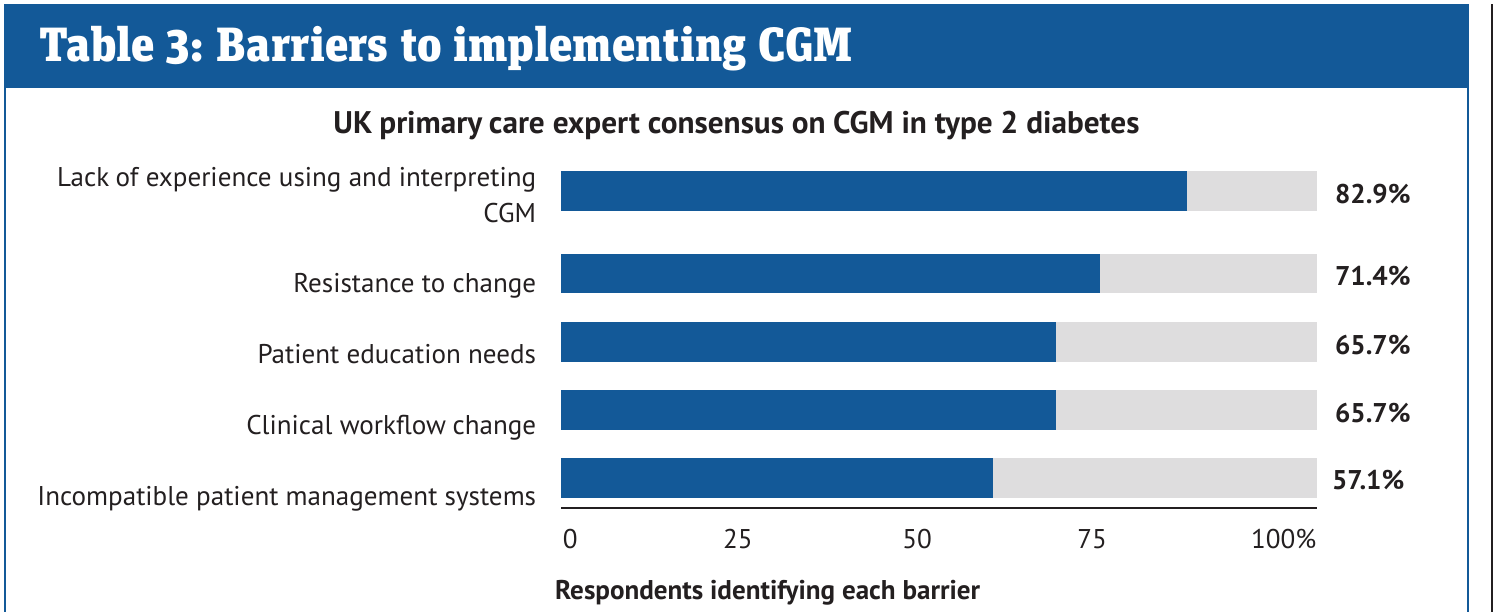
Prescribing a sensor does not guarantee benefit. In a UK primary care expert consensus, 83% of respondents identified a lack of experience using and interpreting CGM in type 2 diabetes as a barrier, alongside resistance to change (71%), patient education (66%), clinical workflow change (66%), and incompatible patient management systems (57%).
Training needs to extend beyond device initiation to interpreting time in range (TIR), time below/above range, variability and the ambulatory glucose profile (AGP) – and, crucially, how those findings should change treatment.
There is also inequity in access. Prescribing data in England shows marked geographical variation, with prescribing lower in areas of higher deprivation and in places with larger South Asian and Afro-Caribbean populations. Ethnicity and deprivation together accounted for 47% of prescribing variance in type 1 diabetes and 77% in type 2 diabetes.
Closing that gap needs more than making CGM technically available. Services need to actively identify eligible people who aren’t accessing the technology, rather than waiting for confident, digitally enabled patients to ask.
Where pharmacists can support
For pharmacists, the opportunity goes well beyond checking whether a device has been prescribed. At the next diabetes review, prescription query or device conversation, pharmacists should:
- Start safely
- Verify the indication for BGM or CGM: stop automatic, unreviewed supply
- Check backup equipment is compatible, in date and understood
- Review technique, hypo treatment, sick day advice and driving requirements
- Use the data
- Open the CGM report – not only the latest reading or estimated HbA1c
- Look for hypoglycaemia first, then repeated patterns. Agree one achievable change
- Close the loop
- Identify eligible people not receiving CGM, including those unlikely to ask
- Document the interpretation, action, safety-netting and follow-up date.
Remember:
Right person – right equipment – meaningful interpretation – agreed action.
A reading is never the outcome – the decision it leads to is. That is what needs to be right, every time. Sometimes this means stopping monitoring that no longer serves a purpose. At other times, it means starting technology that does.
|
Either way, the goal for community pharmacists is the same: empowering patients to self-manage a condition that shapes their everyday lives. Used appropriately, blood glucose testing can provide another opportunity for pharmacy teams to engage patients in their own care and support better long-term outcomes.
|
References
|

Share:


In Clinical reviews