



 1 Min
1 Min In Analysis

Follow this topic

Bookmark

Record learning outcomes
Less than a century ago, parents dreaded a visit from the ‘strangling angel of children’ – diphtheria, caused by Corynebacterium bacteria. Dead tissue covers the nose, tonsils and throat in a thick, grey-white coating that makes breathing and swallowing difficult.
In 1942, about 60,000 people contracted diphtheria and some 4,000 died from the infection. The same year, however, the Government introduced routine diphtheria immunisations.
As a result, over 80 years later, in 2024 just 12 people developed diphtheria in England.
Positive impact
It is all too easy to forget the morbidity and mortality once wrought by diphtheria, tuberculosis, measles and other vaccine-preventable diseases. Indeed, one estimate suggests vaccinations saved 154 million lives worldwide between 1974 and 2024, which includes 146 million children aged under 5 years.
Vaccination accounted for 40% of the fall in infant mortality worldwide during this time. In 2024, a 10-year-old was 44% more likely to survive to their next birthday than if they were not vaccinated. Older people also benefited.
Those aged 25 and 50 years were 35% and 16% more likely to survive to their next birthday compared with no vaccination.1
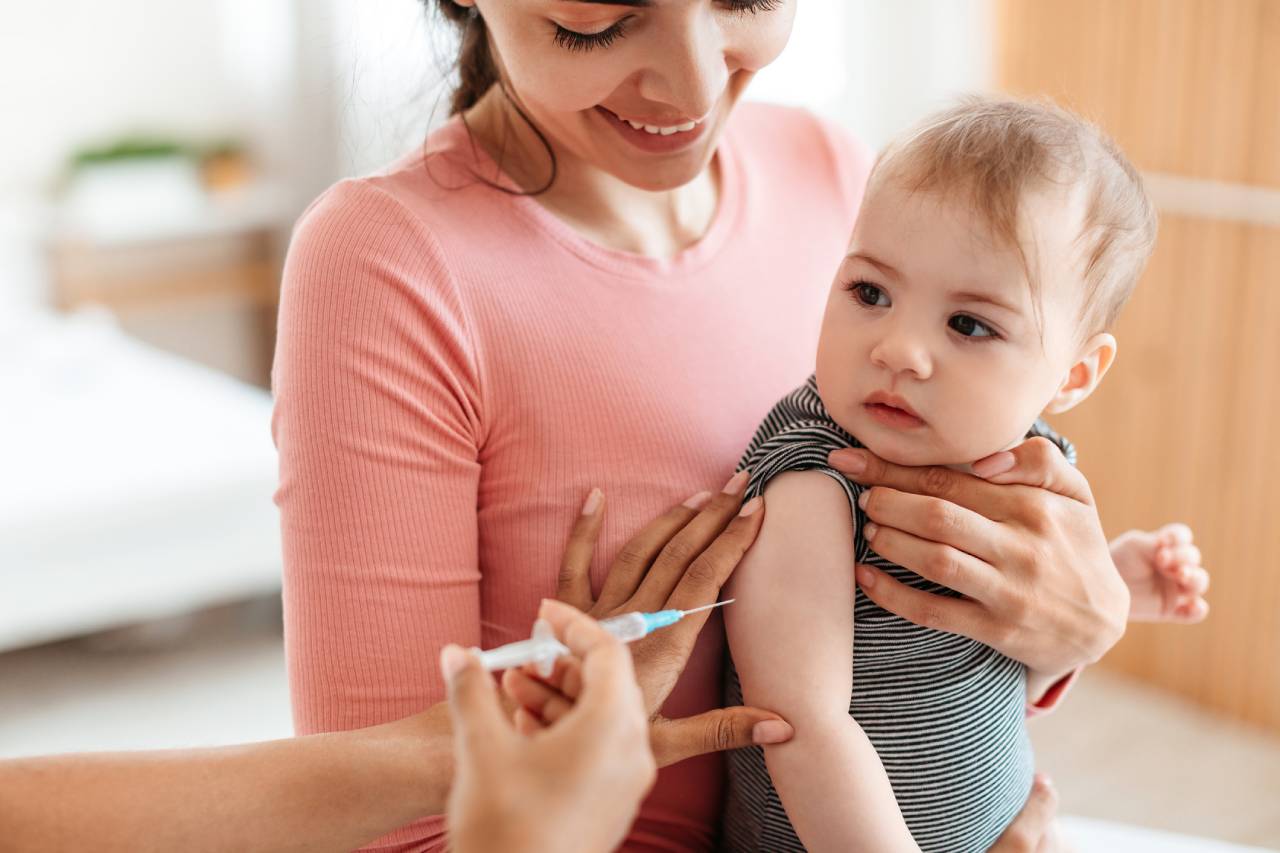
The UK’s comprehensive childhood immunisation programme (see Table 1 below) undergoes regular review. Since January this year, for example, children born on or after July 1, 2024 can receive the six-in-one DTaP/IPV/Hib/HepB vaccine.
This protects against diphtheria, tetanus, pertussis (whooping cough), polio, Haemophilus influenzae type b and hepatitis B virus, when they are 18 months old.
Additional protection
Some children may need additional vaccines such as babies born to mothers with hepatitis B and to prevent tuberculosis. In the early 19th century, tuberculosis, caused by Mycobacterium tuberculosis and several closely related bacteria, killed one in four people.
Indeed, before antibiotics, about half of those who contracted tuberculosis died from the infection.2
Yet tuberculosis is some way from being consigned to the pages of medical history. According to the UK Health Security Agency (UKHSA), tuberculosis notifications in England increased by 13.5% in 2024 compared with 2023.
This marked the largest annual increase since enhanced national surveillance began in 1999. Rates of tuberculosis were highest in London, the Midlands and the most deprived areas of England.
Most (81.9%) tuberculosis notifications were in people born outside the UK. So, infants in parts of the country with a high tuberculosis incidence (defined as 40/100,000 or more) and children with a parent or grandparent born in a high incidence country should usually be considered for vaccination.
England has a low incidence of tuberculosis (8.5 cases per 100,000 of the population) compared with many other countries. Yet England is not on track to meet the World Health Organization (WHO) target of eliminating tuberculosis by 2035.3
Missed targets
During 2023-24, none of the childhood vaccine programmes in England reached the WHO 95% coverage target.4
The UKHSA reports that in the UK between October and December 2025, 92.5% of children had received the first dose of the pneumococcal conjugate vaccine by their first birthday, 91.0% received meningococcal group B jab and 90.8% the 6-in-1 vaccine.
Uptake of the rotavirus vaccine was even lower: 88.8%. At five years, 93.5% and 92.6% of children had received the 6-in-1 jab and the first dose of the measles, mumps and rubella (MMR) vaccine.
Coverage across all childhood vaccine programmes has gradually declined since 2013-144, which fuelled resurgences in certain serious diseases. In England, for example, 14,879 new laboratory confirmed cases of whooping cough were reported to the UKHSA during 2024, the highest number since the Pertussis Enhanced Surveillance Programme began in 1994.
It is a similar story with measles. Before the measles vaccine’s introduction in 1968, between 160,000 and 800,000 people in the UK contracted measles per year. The number of cases peaked every two years and about 80% of the population developed measles during childhood.
About 100 people died from measles each year. “There were 2,911 confirmed measles cases in England in 2024, the highest number in over two decades, and a child died in July 2025,” a paper in the BMJ notes.4
Social inequality
As is so often the case, it is the deprived sections of the population who shoulder most of the burden imposed by poor vaccine coverage. The decline in uptake of the MMR vaccine, for instance, disproportionately affects children from disadvantaged areas.4
Furthermore, a recent paper analysed first-dose coverage for vaccines protecting against human papillomavirus (HPV), meningococcal groups A, C, W and Y (MenACWY) and tetanus, diphtheria and inactivated polio virus (Td/IPV) across 150 local authorities in England.5 Between 2020 and 2024, greater socioeconomic deprivation “was consistently associated” with lower vaccine coverage. Indeed, the differences in vaccine coverage between the most and least socioeconomically deprived quintiles more than doubled during this time.
In 2024, the absolute differences between the most and least deprived quintiles were: 17.7% for HPV in females; 18.2% for HPV in males; 16.8% for MenACWY; and 16.9% for Td/IPV. “The consistency of these findings suggests [that] the effect of deprivation on coverage is not vaccine-specific,” the authors comment.
Improving access
Further research needs to characterise the most influential factors that drive vaccine uptake in different populations. Contributory factors may include: school attendance (some vaccines are usually administered at school), lower literacy, digital exclusion and difficulty securing informed consent. “Addressing these inequalities will require sustained targeted interventions to improve awareness of and access to vaccination,” the authors comment.
Against this background, recent proposals bolster pharmacists’ ability to improve vaccine coverage. For example, the National Cancer Plan for England envisages that, from this year, community pharmacists will start administering the HPV vaccine to young people who did not receive the jab at school.
This and other changes to enhance HPV vaccine uptake will contribute to delivering the Government’s commitment to eliminating cervical cancer by 2040. Pharmacists should remind patients and caregivers that HPV vaccinations also protect against some malignancies of the head and neck, mouth, vagina, vulva, penis and anus.
Meanwhile, in January, the Department of Health and Social Care (DHSC) announced proposals to amend the Human Medicines Regulations 2012 “to support the ongoing supply and deployment of vaccinations”.
The proposals include allowing community pharmacists “to deliver COVID-19 and influenza vaccination services off the registered premises under a patient group direction”. So community pharmacies “can deliver outreach services tailored to the needs of the populations they serve, increasing access to COVID-19 and influenza vaccines,” the DHSC comments.
Countering misconceptions
Pharmacists can help counter the myths, misconceptions and disinformation swirling around immunisation. Vaccine scepticism did not, however, emerge with the discredited claim that the MMR vaccine causes autism.
In 1885, for example, up to 100,000 people attended a demonstration in Leicester against compulsory smallpox vaccination.6 But since then, social media has provided the antivaccination movement with a persuasive platform.
Some vaccine misinformation in the far reaches of the conspirasphere is, frankly, bizarre. Certain sites claim, for instance, that Covid-19 vaccines contain microchips to track people and collect personal information.
At first sight, some vaccine misinformation seems more plausible. Thiomersal, a derivative of ethyl mercury, was used as a preservative in some vaccines. Anti-vaxxers highlighted theoretical concerns about children exposed to thiomersal in vaccines. According to the Green Book, however, reviews by regulatory authorities concluded that there is no evidence of an association between thiomersal-containing vaccines and neurodevelopmental disorders, including autism.
Nevertheless, pharmacists can reassure parents that vaccines routinely given to children in the UK no longer contain thiomersal. Only the anthrax vaccine contains the preservartive.
Pharmacy input
So how can pharmacists and their teams most effectively address vaccine misinformation in children and adults? A review considered 34 studies exploring communication strategies to counter vaccine misinformation.7 Scare tactics, such as graphic images of infected children and communicating with certainty, actually increased belief in misinformation. Pharmacists should acknowledge uncertainty around vaccine efficacy or risks,7 such as vaccines can cause side-effects, but need to help people keep the risks, perceived or otherwise, in perspective.
Vaccines can cause injection site and systemic adverse reactions, such as fever, malaise, myalgia, irritability, headache and loss of appetite. The onset of these reactions, which are usually mild and self-limiting, depends on the vaccine, the recipients’ age and biological response.
The Green Book suggests that fever may start within a few hours of receiving tetanus-containing vaccines, but seven to 10 days after a measles vaccine.
Pharmacists can reassure parents that serious adverse events are rare. For example, myocarditis (inflammation of the heart muscle) occurs in eight to 15 cases per million Covid-19 vaccine doses. Thrombosis with thrombocytopenia syndrome (blood clots and low platelet counts) occurs in two to six cases per million doses.8
Debunking misinformation, providing accurate information and communicating uncertainty had mixed results and need further investigation. The most promising approaches include communicating the weight of evidence and scientific consensus regarding vaccines and related myths, using humour and warning about misinformation.7
Successful interventions
Against this background, community pharmacies in Tower Hamlets provided targeted inter-ventions to address the main barriers that hinder access to Covid vaccination. Pharmacists held one-to-one conversations remotely or when people who were more likely to be vaccine hesitant visited the pharmacy. The conversations were patient-centred and the person would not feel pressurised to have a vaccination. Patients could reflect on the discussion and return for vaccination. Pharmacies also worked to improve vaccination rates among care-home staff.9
Between June and December 2022, pharmacies undertook 3,098 consultations. Almost half (45.2%) of patients decided to get vaccinated against Covid, 27.9% remained undecided and 26.9% declined. Of those who agreed to get vaccinated, 55.2% were immunised in the pharmacy and 31.3% booked an appointment. Pharmacists referred 11.1% and 2.4% to a local vaccine centre and their GP respectively.9
“The data highlight the potential community pharmacy has to increase vaccine uptake in vaccine hesitant populations by having more informative conversations with patients,” comments Community Pharmacy England.
The data “also indicate the crucial role and impact that pharmacies have within the community at improving access, with [over half] of patients choosing to get vaccinated in pharmacy”.9
The HPV vaccine catchup and changes to the Human Medicines Regulations 2012 may reflect a growing recognition that community pharmacists can improve immunisation uptake beyond flu and Covid-19.
Vaccines are one of medicine’s most remarkable successes. Yet the UK consistently misses coverage targets. In part, we may be victims of the oustanding success of vaccinations. Patients and healthcare professionals alike simply forget just how unpleasant, feared and often deadly vaccine–preventable diseases, such as diphtheria, measles and polio, really are. This must change.
| Age given | Diseases vaccines protect against | Vaccine |
|---|---|---|
| 8 weeks | Diphtheria, tetanus, pertussis (whooping cough), polio, Haemophilus influenzae type b (Hib) and hepatitis B (HepB) | DTaP/IPV/Hib/HepB 6-in-1 vaccine |
| Meningococcal group B (MenB) | MenB | |
| Rotavirus gastroenteritis | Rotavirus | |
| 12 weeks | Diphtheria, tetanus, pertussis, polio, Hib and hepatitis B | 6-in-1 vaccine |
| Meningococcal group B | MenB | |
| Rotavirus gastroenteritis | Rotavirus | |
| 16 weeks | Diphtheria, tetanus, pertussis, polio, Hib and hepatitis B | 6-in-1 vaccine |
| Pneumococcal (13 serotypes) | Pneumococcal conjugate vaccine (PCV) | |
| 1 Year old | Pneumococcal | PCV |
| Measles, mumps, rubella and varicella (chickenpox) | MMRV | |
| Meningococcal group B | MenB | |
| 18 months | Diphtheria, tetanus, pertussis, polio, Hib and hepatitis B. Measles, mumps, rubella and varicella (only if born on or after July 1, 2024) | DTaP/IPV/Hib/HepB MMRV |
| 3 years, 4 months | Born on or after January 1, 2025: diphtheria, tetanus, pertussis and polio | dTaP/IPV |
| Born on or before December 31, 2024: diphtheria, tetanus, pertussis, polio, measles, mumps, rubella and varicella | dTaP/IPV MMRV |
|
| 12–13 years | Cancers and genital warts caused by specific human papillomavirus (HPV) subtypes | HPV |
| 14 years | Tetanus, diphtheria and polio | Td/IPV |
| Meningococcal groups A, C, W and Y | MenACWY | |
| See annual flu letter | Influenza (each year from September) | Live attenuated influenza vaccine (LAIV) Inactivated flu vaccine if LAIV is contraindicated or otherwise unsuitable |
- Lancet 2024;403:2307–2316
- Thorax 2018;73:702–703
- Available at: GOV.UK tuberculosis report
- BMJ 2025;390:r1500
- Eurosurveillance 2026;31:2500586
- BMJ 2002;325:430–2
- Vaccine 2023;41:1018–1034
- Vaccine 2025;66:127842
- Available at: CPE RSV and pertussis vaccination service

Share:


In Analysis
It’s time to delve deeper into health discussions. Broaden your understanding of a range of pharmacy news and topics through in-depth analysis and insight.